

#YoungWomenSay 2018
#YoungWomenSay, a partnership with Say It Forward, features blogs from incredible young women from around the world and harnesses the power of storytelling and social media to drive attention to their lived experiences, dreams, and aspirations. This year’s campaign featured stories from 18 inspiring young women leaders from 14 countries in every region of the world. Read their blogs, check out the campaign’s Twitter moment, and watch the Instagram story.
#YoungWomenSay, a partnership with Say It Forward, features blogs from incredible young women from around the world and harnesses the power of storytelling and social media to drive attention to their lived experiences, dreams, and aspirations.
This year’s campaign featured stories from 18 inspiring young women leaders from 14 countries in every region of the world. Read their blogs, check out the campaign’s Twitter moment, and watch the Instagram story.
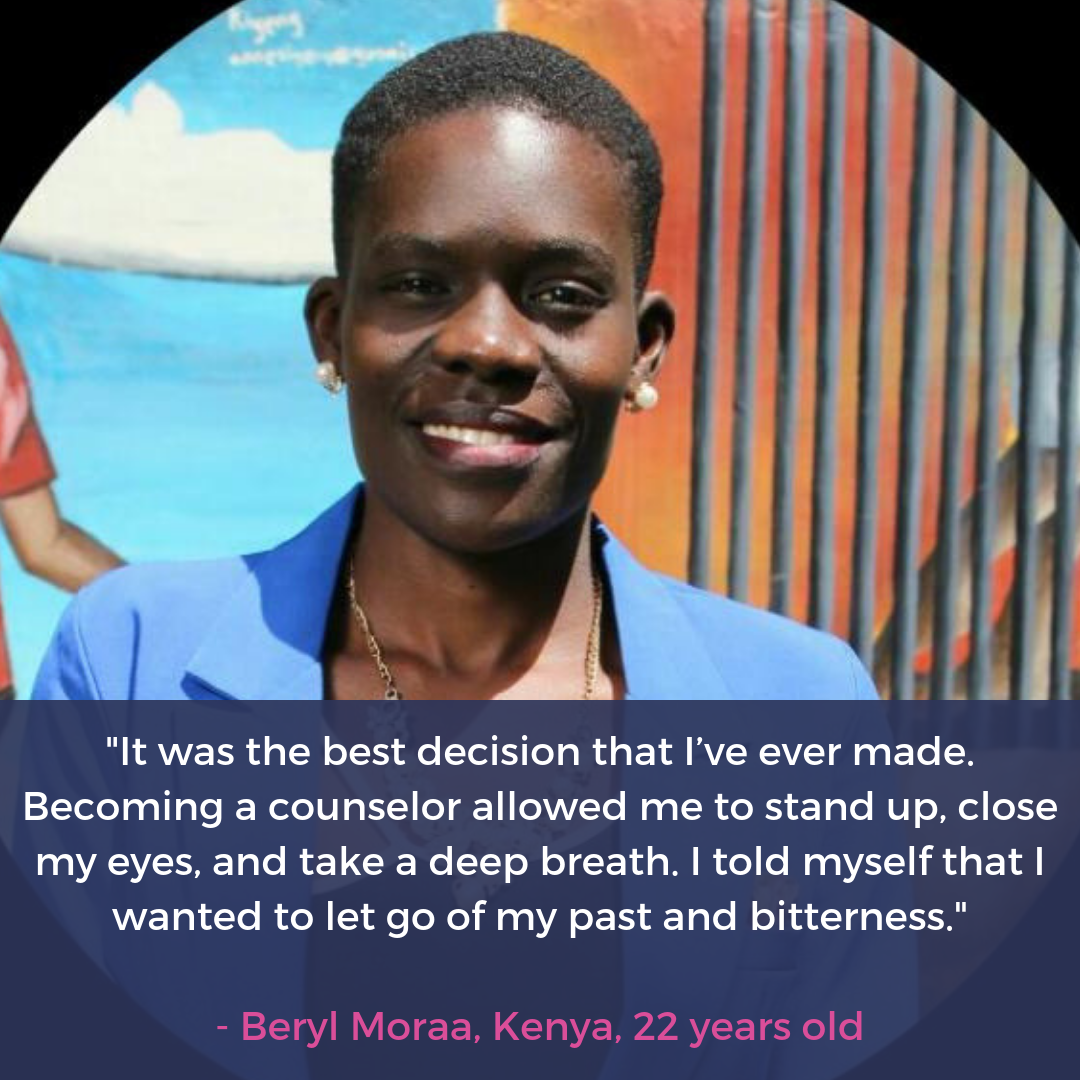

Time to Get Personal - #YoungWomenSay
I’m the middle child and only daughter. I was confused throughout most my childhood about what it meant to be the only girl in my family, alongside my three brothers. But my confusion was almost always sedated by my persistence, or what my mother calls stubbornness. Whenever I reflect on my aspirations and what I value in my work and personal life, I cannot help but think of my mother as the person who has had the greatest influence on my perception and ambitions.
By: Nana Abuelsoud, Egypt
Originally posted on Say It Forward for #YoungWomenSay
I’m the middle child and only daughter. I was confused throughout most my childhood about what it meant to be the only girl in my family, alongside my three brothers. But my confusion was almost always sedated by my persistence, or what my mother calls stubbornness. Whenever I reflect on my aspirations and what I value in my work and personal life, I cannot help but think of my mother as the person who has had the greatest influence on my perception and ambitions.
When I was young, it felt as though I was trying to catch up with my mom’s unfulfilled dreams - her dream to pursue higher education, fall in love, travel, and work. I studied languages because she wished she spoke English. While it could be unsatisfying to attempt to live someone else’s dream, mirroring my mother’s ambitions has laid the foundation of who I am today.
Growing up, there were always certain activities I was deprived of, like basketball practice or karate that my brothers were enrolled in. I was allowed everything equally, but with a certain restrictions. I could go play marbles on the street with my friends, but must be home when the sun sets, while my brothers were allowed to come home hours later. As I got older, these time stipulations took on a different form, turning into a curfew that weaved anxiety into my daily routine.
During my sophomore year of university, life took a different turn. Due to family circumstances, I had to start working. My work schedule made a mockery of my curfew. Becoming the breadwinner, along with turning 18, shifted the power dynamics within my family.
That same year, I travelled abroad for the first time. My participation in cross-cultural initiatives and exposure to different backgrounds challenged me, as people would nonchalantly throw stereotypical judgements in my face. I began feeling like I had to explain my reality to everyone, both people at home and others abroad. By that time, mere coincidence led me to an online course on women’s health and human rights. And that was it! The course was not just stats and figures; it made room for interviews with women who were taking the lead in their communities. It added faces to the figures. It felt personal and eye-opening, with references to “rights,” not just legal jargon. At the time, I had never seen anything like it. I finally found the language to articulate what stood in my way, and I have been learning ever since.
Every time I think about this accidental virtual journey, I think about how issues surrounding health had never resonated with me earlier in life. I had never imagined engaging with this sector of work when I was making future plans. I wonder if it’s because some disciplines - like health, law, and governance - are often constructed and gendered to feel distant and remote to women. Many women in my context have not been allowed to engage in these personal and political ideas.
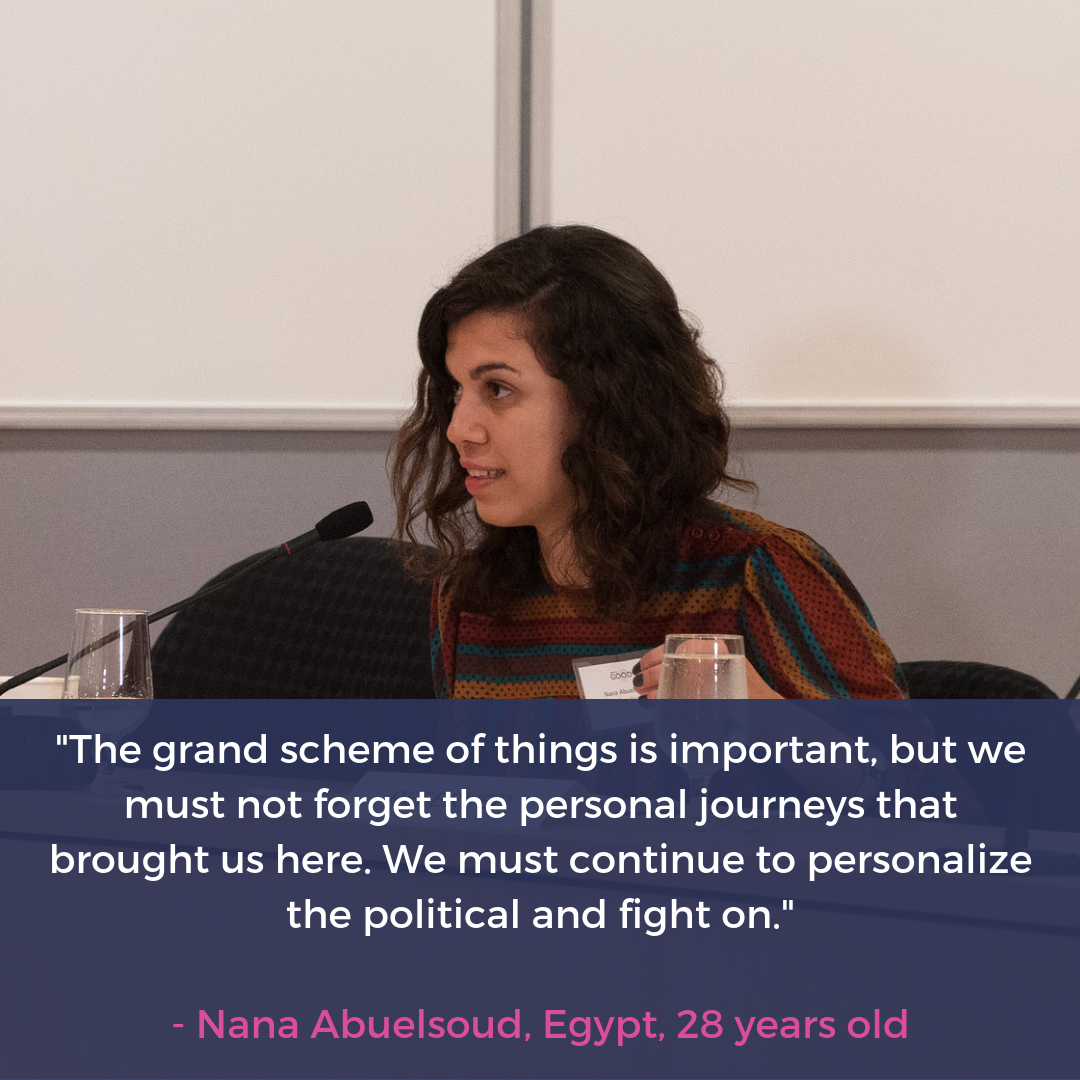
I think this is the reason things are not changing and social and political violations are not being uprooted. For most of us, our interest starts from a personal place, but by the time we roll up our sleeves, all we see are numbers. This field of work tends to look at issues from a global lens, making local realities feel distant at times. The grand scheme of things is important, but we must not forget the personal journeys that brought us here. We must continue to personalize the political and fight on.
-
#YoungWomenSay is a partnership with Say It Forward in support of International Youth Day 2018 and culminating on International Day of the Girl. The campaign features blogs from incredible young women from around the world, and is designed to harness the power of storytelling and social media to drive attention to their lived experiences, dreams, and aspirations.
We invite you to follow Say It Forward on Twitter, Facebook, and Instagram and follow The Torchlight Collective on Facebook, Twitter, Instagram, and use our hashtag, #TheTorchlightCollective.

Dig Deep and Keep Going - #YoungWomenSay
I do all of the things other young people my age do, like hang out with my friends, watch Youtube and Netflix, and listen to music. There are days when I don’t feel pretty and days when I feel great about myself. But there is one thing about me that you couldn’t guess just by looking at me. I’m HIV-positive.
By: Ashley Rose Murphy, Canada
Originally posted on Say It Forward for #YoungWomenSay
I do all of the things other young people my age do, like hang out with my friends, watch Youtube and Netflix, and listen to music. There are days when I don’t feel pretty and days when I feel great about myself. But there is one thing about me that you couldn’t guess just by looking at me. I’m HIV-positive.
Let me explain. I had a rough start in life. I was born to a mother who was a drug user, alcoholic, and, at times, violent. We lived in one of the roughest public housing blocks in Toronto. When I was only a couple of weeks old, I was taken from her and put into a foster home. Two weeks later, that foster mom took me to the hospital where they had to put me on a respirator. They did blood tests and found out that I had contracted HIV from my birth mother.
This was my first experience with HIV stigma. My first foster mom didn’t want anything to do with me after the test results came back and abandoned me in the hospital. When I was six months old, my medical team started looking for a palliative care home for me. They told prospective foster parents that I was expected to live another month. Clearly, I had other plans.
Finally, they found the Murphys, who brought me home to love and care for me. I kept improving, getting stronger, and reaching developmental milestones. When I was seven years old, my parents told me that I have HIV. They told me not to tell anyone because some people don’t understand HIV and might be mean to me. I didn’t understand why I had to keep it a secret. I hadn’t done anything wrong, I was just a kid who was born with a virus.
So, instead, I told EVERYONE - kids at school, people at the park, cashiers, you name it. I had neighbors who wouldn’t allow me on their property, kids who were not allowed to play with me, and one mom who tried to withdraw a birthday party invitation. In high school, a friend’s parents said I had to use disposable dishes and cups when I visited their house.
Although my doctors set low expectations for me, my parents set high ones. We learned that the things that made us different from other people could be turned into our strengths. We discovered that there was no such thing as “normal.” Everybody has something that sets them apart from others and we were taught not to be ashamed of those differences. Because I have such a big family - 10 kids in my adoptive family and eight more biological siblings - we also learned that if you wanted that last cookie, you were going to have to speak up and act fast. So we became advocates for ourselves and each other.
When I was 12, I was elected Vice President of the Student Council and invited to attend my first WE Day, a event to inspire young changemakers. When I got home, I told my mom that I wanted to tell my story to kids to prevent them from contracting HIV and educate them against discriminating towards others with HIV.
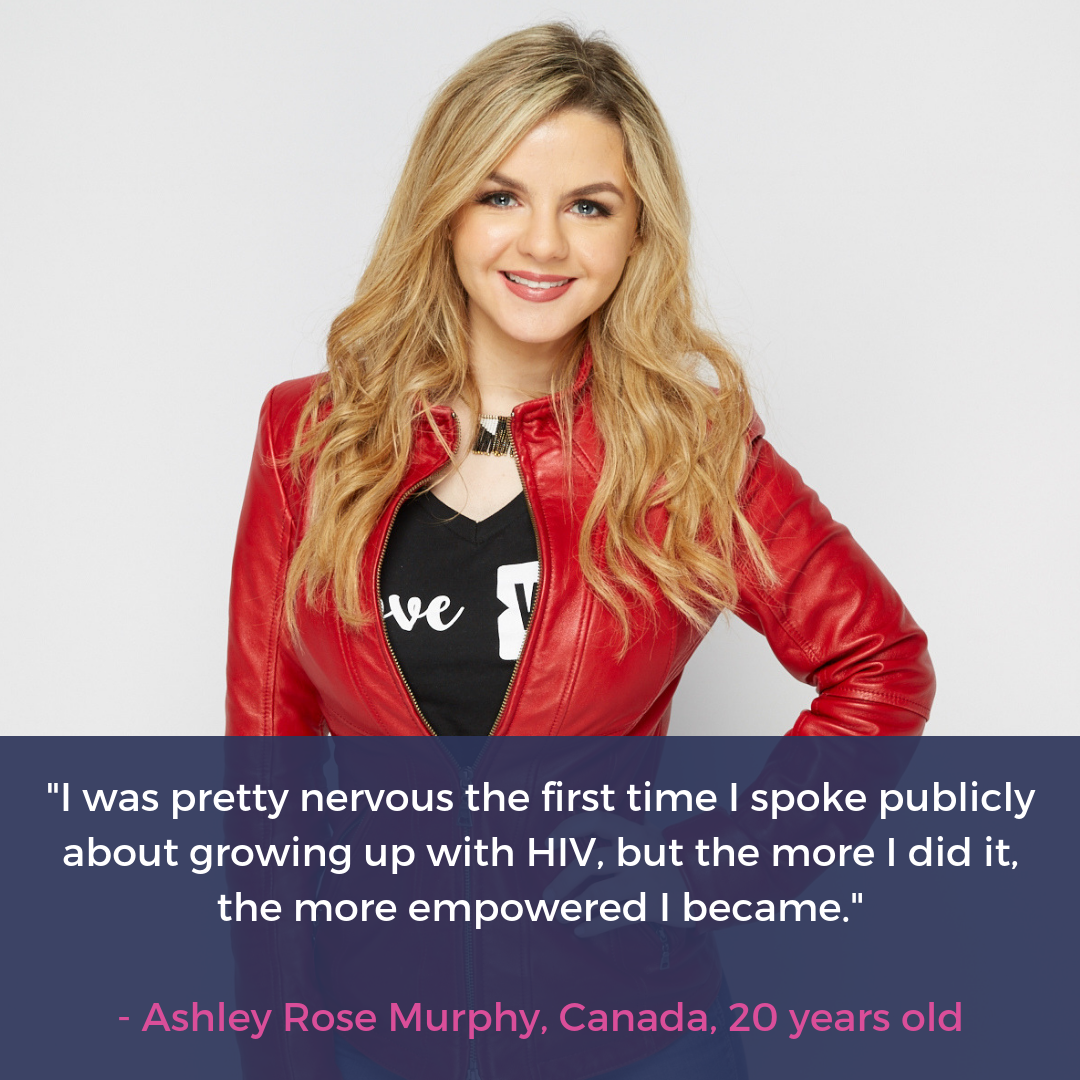
Since starting my public speaking efforts four years ago, I have found what I am made of and what inspires me. I was pretty nervous the first time I spoke publicly about growing up with HIV, but the more I did it, the more empowered I became. People were coming up to me and thanking me for speaking up. Since then, I have spoken at the United Nations General Assembly, UNAIDS headquarters, and TedX Conference.
I hope my voice can help others raise theirs. To other young women wanting to change the world, I encourage you to:
Find yourself. Don’t be ashamed of what makes you unique. Look for the different pieces of your identity. Get comfortable with them. Show people the real you and then be gracious enough to accept them as they are too.
Find your community. Connect with people who appreciate your wonderful self and tolerate your awful self, because we all have both sides. Find people who will have your back, no matter what.
Find your voice. Our voices and stories are powerful. Stand up and share your story and your passions with others. You might start out with a whisper, but the more you speak up, the bigger your impact.
Stay motivated. When you are going through a tough time, remember that it happens to everyone. Dig deep and find the strength you need to get through it, it’s there.
And, finally, use your time, your hands, and your words to do something good every single day.
-
#YoungWomenSay is a partnership with Say It Forward in support of International Youth Day 2018 and culminating on International Day of the Girl. The campaign features blogs from incredible young women from around the world, and is designed to harness the power of storytelling and social media to drive attention to their lived experiences, dreams, and aspirations.
We invite you to follow Say It Forward on Twitter, Facebook, and Instagram and follow The Torchlight Collective on Facebook, Twitter, Instagram, and use our hashtag, #TheTorchlightCollective.

Persevere: Greatness Awaits You - #YoungWomenSay
I grew up in what was referred to as a squatters community or captured land. Families living there were below the poverty line. It meant that most were living in poor conditions and seeking a way out. Some women sought refuge in sexual relationships which, more often than not, resulted in early motherhood. I too wanted a better life. Through the help of mentors and teachers who could see my potential, I started to perceive good in myself as well.
By: Trace-Ann Gooden, Jamaica
Originally posted on Say It Forward for #YoungWomenSay
I grew up in what was referred to as a squatters community or captured land. Families living there were below the poverty line. It meant that most were living in poor conditions and seeking a way out. Some women sought refuge in sexual relationships which, more often than not, resulted in early motherhood. I too wanted a better life. Through the help of mentors and teachers who could see my potential, I started to perceive good in myself as well.
At age nine, I enrolled in my local Red Cross chapter with help from my primary school teacher, who paid for my enrollment and uniform. The more I got involved in the Red Cross, the more my ambition to become a nurse grew.
When I was a child, there was a lot of stigma and discrimination around people living with HIV/AIDS. The Red Cross equipped me with the knowledge to see people with HIV/AIDS as who they truly are - human beings who needed care, love, and support. In high school, I became president of my Red Cross chapter, leading my team to win national competitions. During this time, I also developed a keen relationship with my faith that has helped me build my integrity and values.
In high school, I failed a mathematics course that was a qualifier for me to enter nursing school. I tried to re-register, but my principal at the time thought it was a waste of time to do so for just one class. Since I couldn’t enroll in nursing school, I volunteered with my church for a year while I continued to study for the math exam. At the end of the year, I took the math exam and passed. I began university to pursue my passion to become a nurse.
Being a nurse has not only opened the door for me to help others, but has also allowed me advance myself as a citizen. Nursing gave me the opportunity to take my first international trip as a youth delegate at the International Conference on Family Planning in Ethiopia. I also help underserved communities through health fairs and have joined forces with the youth information center in my community to lead a program called “Youth Advance.” This program gives young people an outlet to learn more about how they can become part of efforts to achieve universal healthcare and advocates for their own lives.
My encouragement to other young women is to take charge of your own life. There comes a point when you sit and examine where you are and where you want to be. If you are not where you want, then then it’s time for action.
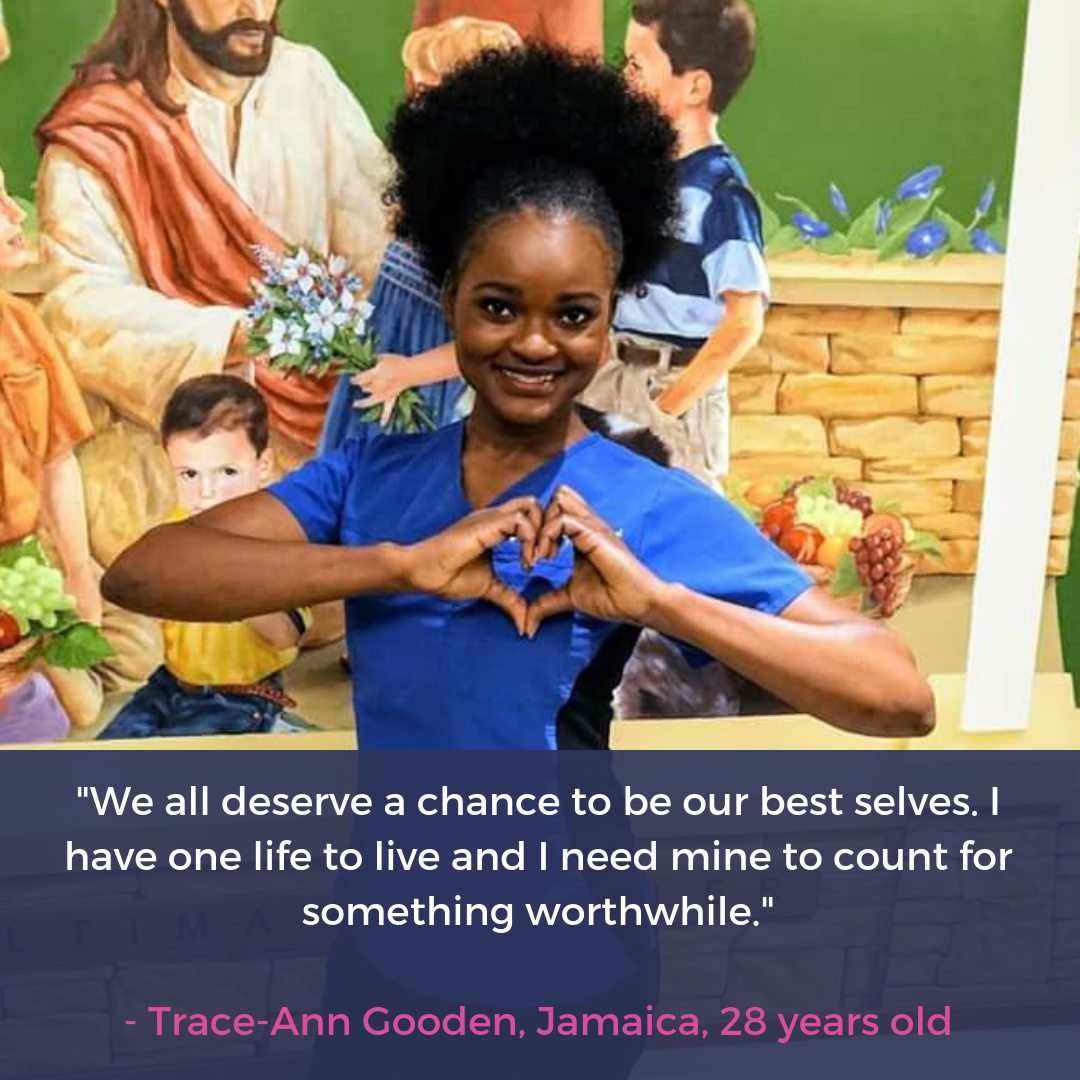
I know this is just the beginning of great things. Certainly, I am not where I was and I know I have more to achieve. We all deserve a chance to be our best selves. I have one life to live and I need mine to count for something worthwhile.
-
#YoungWomenSay is a partnership with Say It Forward in support of International Youth Day 2018 and culminating on International Day of the Girl. The campaign features blogs from incredible young women from around the world, and is designed to harness the power of storytelling and social media to drive attention to their lived experiences, dreams, and aspirations.
We invite you to follow Say It Forward on Twitter, Facebook, and Instagram and follow The Torchlight Collective on Facebook, Twitter, Instagram, and use our hashtag, #TheTorchlightCollective.

She Chose to Walk Away - #YoungWomenSay
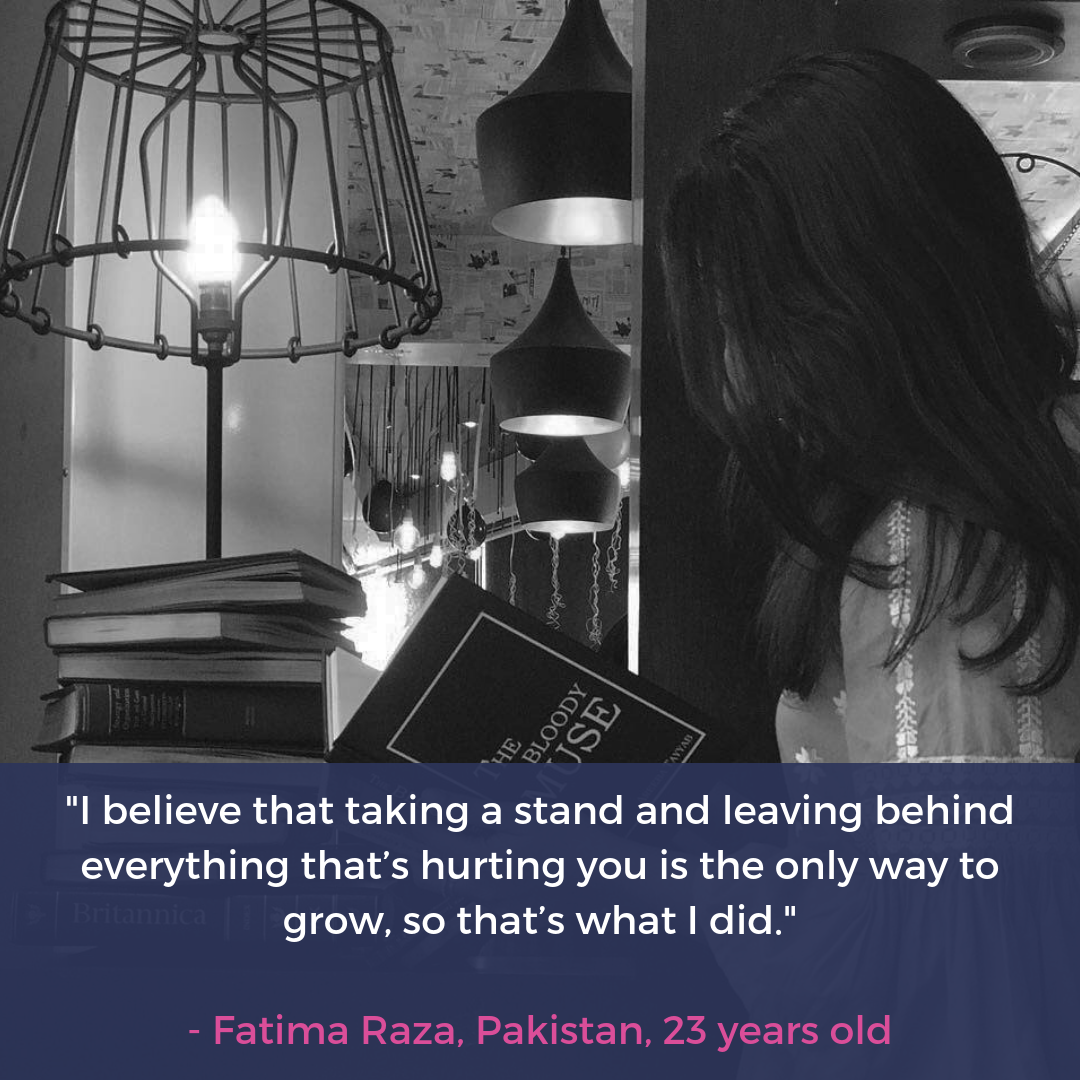
Being born into a Pakistani family, it’s not easy to stop listening to what people are saying about you: about the way you dress, you walk, you talk, or you smile. I had to choose between walking away or giving in to people’s expectations. I chose to walk away from the negative aspects of my life and find myself. I believe that taking a stand and leaving behind everything that’s hurting you is the only way to grow, so that’s what I did.
By: Fatima Raza, Pakistan
Originally posted on Say It Forward for #YoungWomenSay
Being born into a Pakistani family, it’s not easy to stop listening to what people are saying about you: about the way you dress, you walk, you talk, or you smile. I had to choose between walking away or giving in to people’s expectations. I chose to walk away from the negative aspects of my life and find myself. I believe that taking a stand and leaving behind everything that’s hurting you is the only way to grow, so that’s what I did.
She knew she could struggle, but she had the choice to sparkle.
She knew she could beat herself up, but she had the choice to praise herself instead.
She knew she could hide the scar, but she had the choice to be the star.
She knew she could cry again, but she had the choice to try again.
She knew she could not avoid the existence of pain, but she had the choice to believe in the existence of gain.
She knew she could give up, but she had the choice to act up.
She knew she could lose hope, but she had the choice to cope.
She knew she could keep lingering on, but she had the choice to keep forging on.
She knew she could fade away, but she had the choice to run away.
She knew she could keep waiting, but she had the choice to keep walking.
She knew she had the choice;
And so, she chose to walk away.
-
#YoungWomenSay is a partnership with Say It Forward in support of International Youth Day 2018 and culminating on International Day of the Girl. The campaign features blogs from incredible young women from around the world, and is designed to harness the power of storytelling and social media to drive attention to their lived experiences, dreams, and aspirations.
We invite you to follow Say It Forward on Twitter, Facebook, and Instagram and follow The Torchlight Collective on Facebook, Twitter, Instagram, and use our hashtag, #TheTorchlightCollective.

Leading a Generation of Tech Enthusiasts for the Environment / Kuongoza Kizazi cha Wanateknolojia kwa ajili ya Mazingira - #YoungWomenSay
Very few people recognize the role that women play in environment conservation. Research shows that women are more heavily impacted by climate change and natural disasters. Yet, the media seems more keen to portray women as vulnerable victims of environmental disasters and rarely highlights the many innovative solutions that women - especially young women - are using to combat climate change.
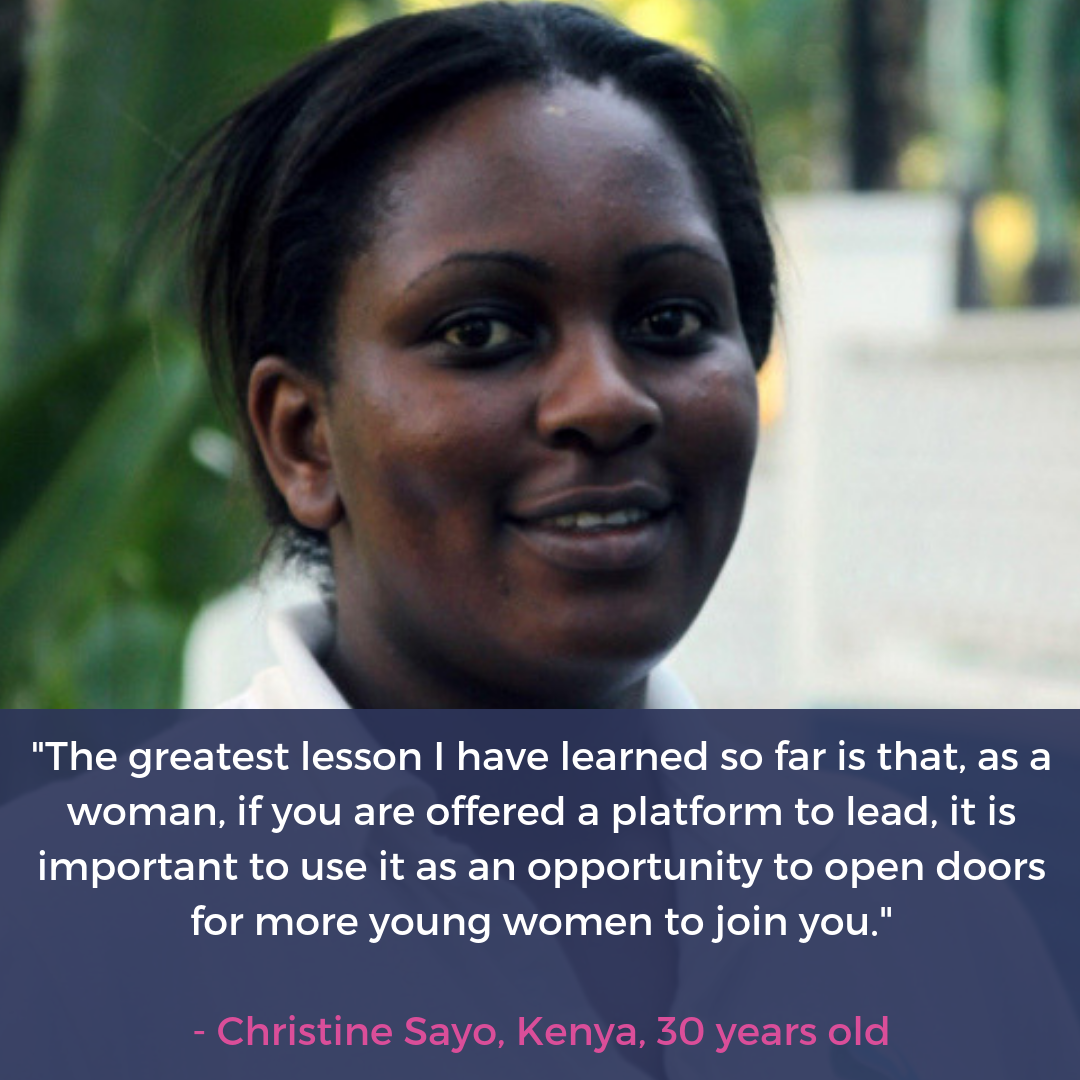
By: Christine Sayo, Kenya
Translated by Paul Nganga Mutua
Originally posted on Say It Forward (English and Kiswahili) for #YoungWomenSay
Very few people recognize the role that women play in environment conservation. Research shows that women are more heavily impacted by climate change and natural disasters. Yet, the media seems more keen to portray women as vulnerable victims of environmental disasters and rarely highlights the many innovative solutions that women - especially young women - are using to combat climate change.
In 2016, I attended the Africa Summit for Women and Girls in Tech Conference in Accra, Ghana. I was amazed by how many women and girls were leading various projects in technology. I was in awe as so many incredible speakers took to the podium to share their initiatives on making technology more friendly for women and girls. I too wanted to do something to make a difference in society through tech. My interest was sparked.
It was around that time that the Lets Do It (LDI) Foundation was looking for someone to lead their operations in Kenya. The position required someone with knowledge and skills in environment and technology to lead a project on data collection and mapping of trash points in order to inform clean up activities across the country. I did not hesitate to take up the position when they offered.
It's been over a year now and I can confidently say this is one of the most fulfilling things I have ever done. My first task as the country coordinator for LDI Kenya was to test out the app. It was a really exciting to feel part of a crew that was working to change the world! Being able to contribute ideas and feedback for the app and eventually see the final product - the World Clean Up app - was an incredible experience.
Being a young woman in leadership has not been smooth sailing, though. There is pressure to always deliver the very best. Society tends to put women in leadership positions on much higher pedestals than their male counterparts so that one misstep makes people quick to generalize and argue that women should not be in charge. My best defense on such occasions is to ensure that my work speaks for itself.
Since taking on this new role, I have grown more confident and can now walk into meetings and address potential donors and partners without fear. I have come to greatly appreciate the women leaders I meet, as I now understand what it means to be a woman in leadership. I have met other women leading equally innovative projects and learned from their successes and challenges.
The greatest lesson I have learned so far is that, as a woman, if you are offered a platform to lead, it is important to use it as an opportunity to open doors for more young women to join you. I always encourage the young women on my team to attend meetings and speak out because I know how young women can be intimidated, silenced, and critiqued. As young women, we need not compete with each other, but work together to break the glass ceiling - not just for ourselves, but for the generations that will follow.
-
Ni watu wachache sana wanaotambua mchango wa wanawake katika uhifadhi wa mazingira. Utafiti unaonyesha kuwa wanawake huathirika pakubwa na mabadiliko ya hali ya anga na majanga ya kimaumbile. Hata hivyo, vyombo vya habari mara nyingi huelekea kuwasawiri wanawake kama waathiriwa wa majanga yanayohusishwa na mazingira, bila kuangazia juhudi mbalimbali za wanawake, na hasa wasichana, katika kupambana na mabadiliko ya hali ya anga.
Mnamo mwaka wa 2016, nilihudhuria Kongamano la Wanawake na Wasichana Wapenda Teknolojia lililofanyika mjini Accra, Ghana. Nilishangazwa na idadi kubwa ya wanawake na wasichana wanaoongoza miradi mbalimbali ya kiteknolojia. Nilivutiwa sana na wengi waliotoa hotuba za kusisimua kuhusu jinsi ya kuifanya teknolojia kitu cha kuchangamkiwa na wanawake na wasichana. Niliingiwa na hamu kubwa ya kuchangia katika maendeleo ya kijamii kupitia teknolojia. Ilhamu yangu ikawa imepata mwamko wa ajabu.
Wakati huo ndipo Wakfu wa Let’s Do It ulipokuwa unamtafuta mtu ambaye angeongoza shughuli zake nchini Kenya. Nafasi yenyewe ilihitaji mtu mwenye ujuzi na uelewa wa mazingira na matumizi ya teknolojia ambaye angesaidia katika ukusanyaji wa data na kubainisha zilikokuwa sehemu za takataka kama njia ya kurahisisha uondoaji wa takataka hizo nchini kote. Sikuweza kukubali nafasi kama hiyo inipite.
Ni zaidi ya mwaka sasa na ninaweza kusema kwa hakika kuwa hiki ndicho kitu cha kuridhisha zaidi nilichowahi kufanya. Jukumu langu la kwanza kama kiongozi wa Wakfu wa Let’s Do It Kenya lilikuwa kufanyia majaribio kitumizi cha kiteknolojia cha shughuli za wakfu huo. Niliona fahari kuu kuwa miongoni mwa kundi lililofanya kila juhudi ili kuleta mabadiliko makubwa ulimwenguni. Kuweza kuchangia maoni na kutoa ripoti kuhusu mafanikio ya kitumizi hicho, jambo lililofanikisha kubuniwa kwa Kitumizi cha Kimataifa cha Usafishaji Mazingira, kulinipa furaha isiyomithilika.
Kuwa kiongozi wa kike wa umri mdogo hakujakuwa jambo rahisi. Unalazimika kuhakikisha kuwa kazi yako haina dosari. Jamii ina matarajio makubwa zaidi juu ya wanawake wanaoshikilia nafasi za uongozi kuliko katika wanaume. Pana mwelekeo wa kukashifu wanawake wanapofeli katika uongozi, jambo linalosababisha imani ya jumla kwamba wanawake hawawezi kuwa viongozi wazuri. Hivyo, nimejitahidi kufanya bidii ili kazi yangu iwe bora na kuniletea sifa nzuri.
Tangu nianze kutekeleza majukumu yangu katika Wakfu wa Na Tulitende, nimejiamini zaidi na sasa ninaweza kuhudhuria mikutano na kuwazungumzia wafadhili na washirika bila woga. Nimetokea kuwaheshimu sana wanawake wanashikilia nyadhifa za uongozi ninaokutana nao kwa sababu ninafahamu changamoto wanazokabiliana nazo wanawake katika uongozi. Nimeweza kuingiliana na wanawake wengine wanaoendeleza miradi mbalimbali na kujifunza mengi kutokana na ufanisi wao, na changamoto wanazokumbana nazo.
Kitu muhimu ambacho nimejifunza ni kuwa, kama mwanamke, ni vyema kutumia nafasi zetu za uongozi kuwafungulia njia wanawake wachanga ili nao waweze kujiendeleza. Napenda kuwatia moyo wanawake ninaofanya kazi nao kuhudhuria mikutano na kujieleza bila woga kwa sababu ninajua namna wanawake wachanga wanavyoweza kudhalilishwa, kunyamazishwa na kukashifiwa. Kama wanawake wachanga, hatuhitaji kushindana wenyewe
kwa wenyewe, bali kufanya kazi kwa pamoja ili kufikia kilele cha maendeleo, sio kwa ajili yetu tu bali pia kwa manufaa ya vizazi vijavyo.
-
#YoungWomenSay is a partnership with Say It Forward in support of International Youth Day 2018 and culminating on International Day of the Girl. The campaign features blogs from incredible young women from around the world, and is designed to harness the power of storytelling and social media to drive attention to their lived experiences, dreams, and aspirations.
We invite you to follow Say It Forward on Twitter, Facebook, and Instagram and follow The Torchlight Collective on Facebook, Twitter, Instagram, and use our hashtag, #TheTorchlightCollective.

It Will Never Rain Roses / ვარდებს არასდროს იწვიმებს - #YoungWomenSay
I was born and raised in a very small town in Georgia, a country located in the Caucasus region. Living in Georgia in the 1990s was challenging as the country was suffering from socio-economic difficulties after the dissolution of the Soviet Union. I remember the times when we had to prepare our homework in the light of a candle or lamp, with no heating in the winter. But what didn’t need electricity were the ideas in our minds.
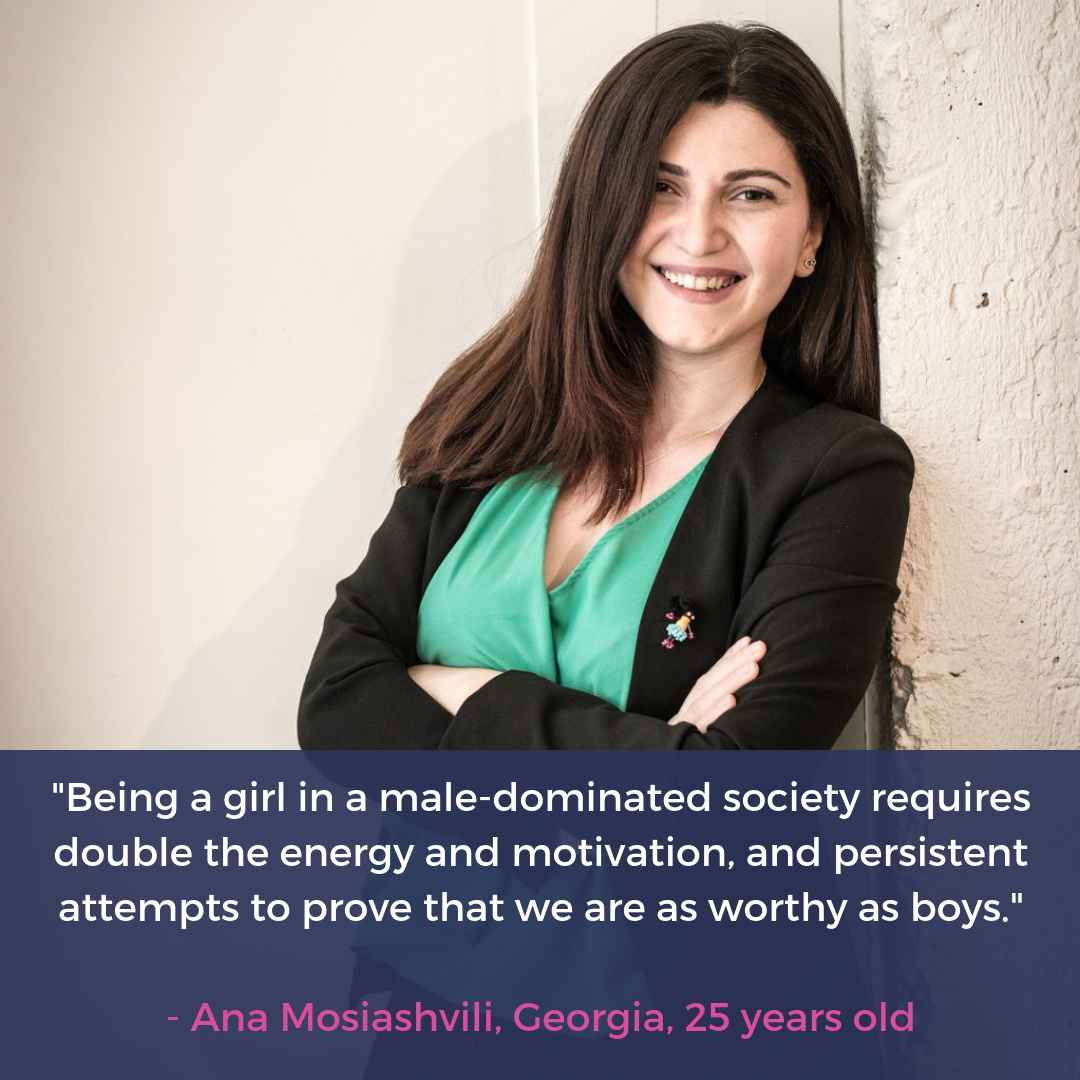
By: Ana Mosiashvili, Georgia
Originally posted on Say It Forward (English and Georgian) for #YoungWomenSay
“It will never rain roses: when we want to have more roses, we must plant more roses.”
- Mary Anne Evans, known as George Eliot
I was born and raised in a very small town in Georgia, a country located in the Caucasus region. Living in Georgia in the 1990s was challenging as the country was suffering from socio-economic difficulties after the dissolution of the Soviet Union. I remember the times when we had to prepare our homework in the light of a candle or lamp, with no heating in the winter. But what didn’t need electricity were the ideas in our minds.
Being a girl in a male-dominated society requires double the energy and motivation, and persistent attempts to prove that we are as worthy as boys. The majority of the society believes in gender stereotypes, and stigma and discrimination towards minorities remain widespread. Georgia still has a high rate of sex-selective abortions and early marriages, and a lack of access to sexual and reproductive health and rights (SRHR) information. I didn’t have access to comprehensive sexuality education and talking about SRHR was taboo.
In 2012, I attended a training of trainers on gender and SRHR and it turned out to be a milestone in my life. I learned that my knowledge in many SRHR-related topics was limited and realized that hundreds of young people in my community were just like me - with no access to information, except widely spread myths and stereotypes.
I began to understand that my peers and I are the ones who could plant roses. The path that we walked was as thorny as the roses, but we tried and it worked out. We established a non-governmental organization in my municipality called Center for Youth Development – XXI. For the past six years, we have implemented various projects on youth empowerment, youth participation, gender equality, SRHR, and human rights. We work on both a voluntary basis, as well as with some small funding.
Now, I can see those roses that we have planted are growing up. I see many young people who strive for positive change and contribute to achieving it.
Starting from the grassroots level, I became a youth advocate and currently work on the national and international level. I have participated in the development process of the Georgian Youth Policy Document and have been a member of the Youth Advisory Panel at the United Nations. I have done a fellowship program at the International Institute for Youth Development PETRI – Sofia and am a member of the Steering Committee at the European Youth Network on Sexual and Reproductive Rights (YouAct).
Despite these accomplishments, I never lose the connection to my community. I always try to bring the burning issues that I care about to high-level meetings and conferences to ensure that my participation is meaningful and reflects the voices of thousands of young people from my community. I believe that every small action can have a positive impact. There is always a way to contribute and plant roses.
-
“ვარდებს არასდროს იწვიმებს, თუ გვინდა რომ გვქონდეს უფრო მეტი ვარდი, უნდა დავრგოთ უფრო მეტი ვარდი”
- მარი ან ევანს, ცნობილი როგორც ჯორჯ ელიოტი
დავიბადე და გავიზარდე ერთ-ერთ ძალიან პატარა ქალაქში, საქართველოში. ქვეყანა, რომელიც მდებარეობს კავკასიის რეგიონში. 90-იანი წლების საქართველოში ცხოვრება საკმაოდ რთული იყო,საბჭოთა კავშირის დაშლის შემდეგ, გარდამავალ პერიოდში, მოსახლეობას სხვადასხვა სოციალურ-ეკონომიკური პრობლემა აწუხებდა. მახსოვს, ხანდახან ლამპის ან სანთლის შუქზე უნდა მოგვემზადებინა საშინაო დავალება, ხშირად ზამთარში გათბობაც კი ჭირდა. თუმცა უფრო მნიშვნელოვანი, ის იყო რომ იდეებით და განათლებით გაგვენათებინა გონება.
იყო გოგო მამაკაცებით დომინირებულ საზოგადოებაში, მოითხოვს ორმაგ ენერგიას, მოტივაციას, და მუდმივად იმის მტკიცებას, რომ ჩვენც იმდენადვე მნიშვნელოვნები ვართ, როგორც ბიჭები.საზოგადოების დიდი ნაწილი იზიარებს გენდერულ სტერეოტიპებს, ასევე არსებობს სტიგმა და დისკრიმინაცია სხვადასხვა უმცირესობის მიმართ. დღესდღეობით, საქართველოში სქესის შერჩევითი აბორტების და ნაადრევი ქორწინებების რიცხვი კვლავაც მაღალია, ასევე ახალგაზრდები ვერ იღებენ შესაბამის ინფორმაციას სქესობრივი და რეპროდუქციული ჯანმრთელობისა და უფლებების შესახებ,ეს თემა საზოგადოებაში კვლავაც ტაბუირებულია.
2012 წელს დავესწარი ტრენერთა ტრენინგს სქესობრივი და რეპროდუქციული ჯანმრთელობისა და უფლებების შესახებ და ეს აღმოჩნდა ჩემს ცხოვრებაში ერთ-ერთი გადამწყვეტი მომენტი. აღმოვაჩინე რომ, ამ საკითხის ირგვლივ ჩემი ცოდნა ძალიან მწირი იყო და მივხვდი, რომ ასობით ათასი ახალგაზრდა ჩემს საზოგადოებაში სწორედ იმ სიტუაციაში იყო როგორშიც მე - ინფორმაციაზე წვდომის მაგივრად, ჩვენც ვიზიარებდით მითებს და სტერეოტიპებს.
სწორედ ამ დროს გავიაზრე, რომ მე და ჩემი თანატოლები ვართ ისინი, ვისაც შეგვიძლია “დავრგოთ ვარდები”. გზა, რომელიც გავიარეთ ისევე ეკლიანი იყო, როგორც ვარდი, მაგრამ ვცადეთ და გამოგვივიდა. ჩვენს მუნიციპალიტეტში დავაფუძნეთ არასამთავრობო ორგანიზაცია “ახალგაზრდობის განვითარების ცენტრი - XXI”. ბოლო 6 წლის განმავლობაში, განვახორციელეთ პროექტები ახალგაზრდების გაძლიერებისა და მათი მონაწილეობის გაზრდის, ასევე ახალგაზრდებში გენდერის,სქესობრივი და რეპროდუქციული ჯანმრთელობისა და უფლებების შესახებ ცნობიერების ამაღლების მიზნით. დღესდღეობით ვხედავ, რომ ვარდები რომლებიც დავრგეთ, იზრდებიან, ვხედავ ბევრ ახალგაზრდას, რომლებიც მუშაობენ და იბრძვიან პოზიტიური ცვლილებებისათვის.
ამ წლებში მიღებული გამოცდილება, დამეხმარა ჩემი საქმიანობა გამეფართოვებინა ეროვნულ და საერთაშორისო დონეებზე. მიღებული მაქვს მონაწილეობა საქართველოს ახალგაზრდული პოლიტიკის დოკუმენტის განვითარებაში, ასევე ვიყავი გაეროს მოსახლეობის ფონდის საქართველოს ოფისის ახალგაზრდული მრჩეველთა პანელის წევრი. გავიარე ფელოუშიპის პროგრამა ახალგაზრდების განვითარების საერთაშორისო ინსტიტუტში PETRI - Sofia და ამჟამად ვარ ევროპის ახალგაზრდული ქსელის YouAct-ის აღმასრულებელი საბჭოს წევრი.
თუმცა, მიუხეადავად მიღწევებისა, არ ვკარგავ ჩემს თემთან და მუნიციპალიტეტთან კავშირს.ყოველთვის ვცდილობ იმ საკითხებს გავუწიო ადვოკატირება, რაც ყველაზე მეტად აწუხებს
ათასობით ახალგაზრდას ჩემს საზოგადოებაში. მჯერა, რომ თითოეულ, თუნდაც მცირე აქტივობას შესაძლოა ჰქონდეს პოზიტიური ზეგავლენა. მჯერა, რომ ყოველთვის არის გზა, შევიტანოთ ჩვენი წვლილი პოზიტიური ცვლილების მიღწევაში და დავრგოთ “ვარდები.”
-
#YoungWomenSay is a partnership with Say It Forward in support of International Youth Day 2018 and culminating on International Day of the Girl. The campaign features blogs from incredible young women from around the world, and is designed to harness the power of storytelling and social media to drive attention to their lived experiences, dreams, and aspirations.
We invite you to follow Say It Forward on Twitter, Facebook, and Instagram and follow The Torchlight Collective on Facebook, Twitter, Instagram, and use our hashtag, #TheTorchlightCollective.

Thinking Global - #YoungWomenSay
Growing up, people most often identified me as the “dark-skinned girl” or the “charcoal seller’s daughter.” I come from a community where most daughters end up taking over their mother’s work, and I didn’t want to sell charcoal as a profession. I woke up each day and said to myself that I needed to change.
By: Alice Mamaga Akosua Amoako, Ghana
Originally posted on Say It Forward for #YoungWomenSay
Growing up, people most often identified me as the “dark-skinned girl” or the “charcoal seller’s daughter.” I come from a community where most daughters end up taking over their mother’s work, and I didn’t want to sell charcoal as a profession. I woke up each day and said to myself that I needed to change.
At age 13, my mother encouraged me to join a youth radio program called “Curious Minds” to build my knowledge and contribute to development projects in my community. I believe that this one step led me away from a future of selling charcoal to thinking globally about the world beyond my community.
I went on to study Information Technology at university and started an NGO, the Autism Ambassadors of Ghana, during my third year of school. In my fourth year, I developed an android app called Autism Aid as my final year project. The app, which promotes Autism awareness and helps improve the lives of children living with Autism, was the best in my class.
Now, I am 26 years old and a proud digital and social entrepreneur. The Autism Aid app is the first of its kind in Ghana and West Africa, and is available for download on the Google Play Store around the world. My biggest triumph was when I won the mYouth Continental Mobile App Challenge, a competition organized by the European Union, but my most fulfilling moment is knowing that my innovative project is helping to improve the lives of children living with Autism in Ghana and across Africa.
The fact remains that many young women in Ghana find it difficult to reach their aspirations. They are often forced to conform to the career path that society envisions for them. I say no to this thinking. I believe that young women can have fulfilling and impactful careers if they get an education, work hard, and continue to be innovative. The road leading to successful careers comes with its own challenges, but determination is always the best tool to achieve your dreams.
I was courageous and determined enough to change my identity and make an impact - and I have made it. Today, people no longer call me the dark-skinned girl or the charcoal seller’s daughter. Instead, they call me the innovator of an app or the founder of an NGO.
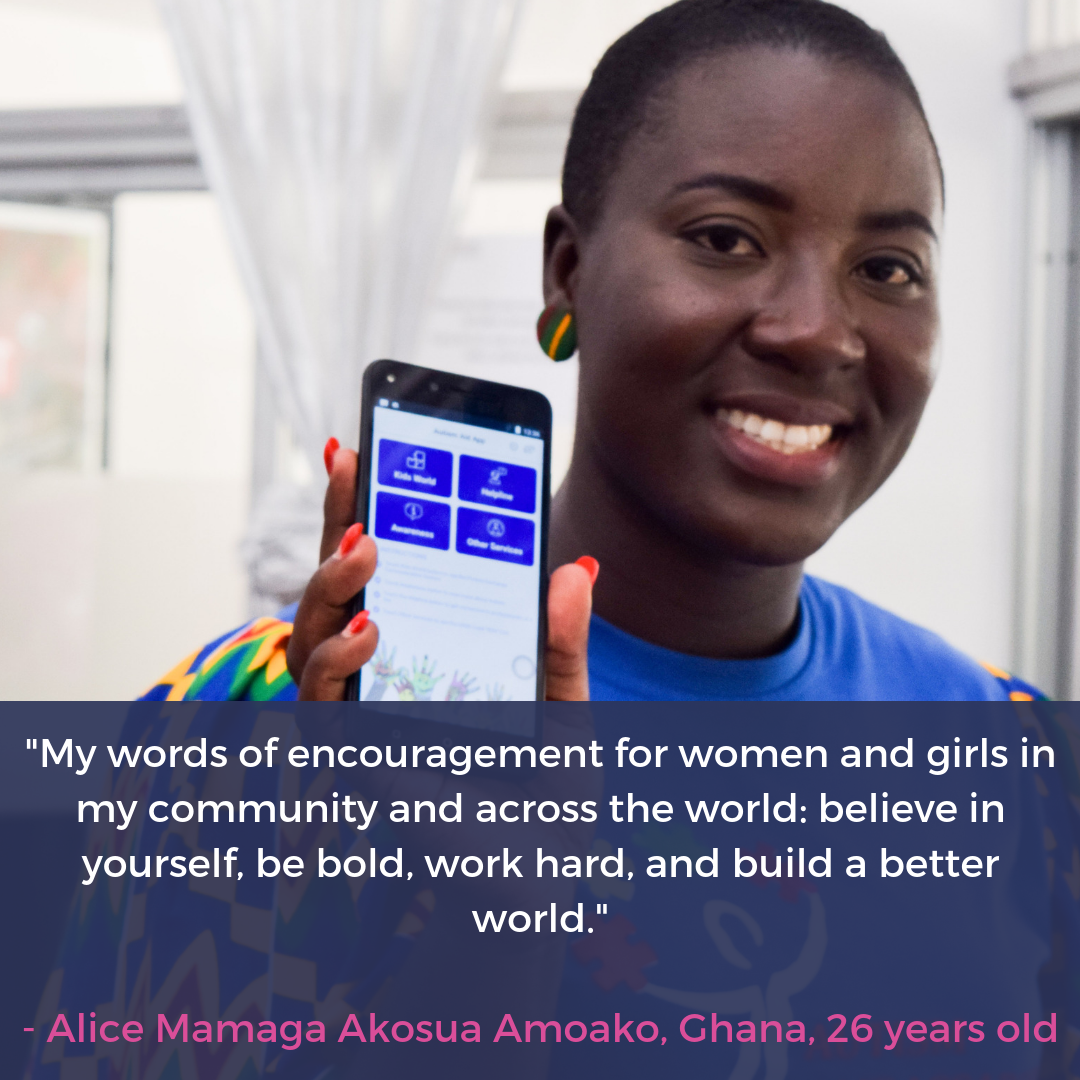
My words of encouragement for women and girls in my community and across the world: believe in yourself, be bold, work hard, and build a better world.
-
#YoungWomenSay is a partnership with Say It Forward in support of International Youth Day 2018 and culminating on International Day of the Girl. The campaign features blogs from incredible young women from around the world, and is designed to harness the power of storytelling and social media to drive attention to their lived experiences, dreams, and aspirations.
We invite you to follow Say It Forward on Twitter, Facebook, and Instagram and follow The Torchlight Collective on Facebook, Twitter, Instagram, and use our hashtag, #TheTorchlightCollective.

The Superpowers We All Have / Supermoce, Które Wszyscy Mamy - #YoungWomenSay
I remember when I was around eight or nine years old, I used to doodle encouraging messages to myself on my school notebooks. “You are really cool!” or “Kinga is amazing!” were my favorites. While I really believed in my superpowers -- which I thought were both being an optimist and knowing how to communicate with animals -- that didn’t mean that I thought I was better than anyone. My notes were just reminders that I was a strong girl who had hobbies and was surrounded by friends.
By: Kinga Wisniewska, Poland
Originally posted on Say It Forward (English and Polish) for #YoungWomenSay
I remember when I was around eight or nine years old, I used to doodle encouraging messages to myself on my school notebooks. “You are really cool!” or “Kinga is amazing!” were my favorites. While I really believed in my superpowers -- which I thought were both being an optimist and knowing how to communicate with animals -- that didn’t mean that I thought I was better than anyone. My notes were just reminders that I was a strong girl who had hobbies and was surrounded by friends.
I don’t know when or how, but this wave of pre-teenage optimism and self-confidence vanished pretty quickly. I don’t remember the transition, but I remember suddenly feeling fat, ugly, and stupid. I was ashamed of my (too big) breasts and (too many) pimples. All of a sudden, I wished I was a boy. I started to boycott skirts and dresses, and I cut my hair short. I didn’t feel I could ever compete with the idealized image of women that screamed at me from billboards, TV screens, and magazines. I no longer believed in any of my superpowers and I began to think that girls were weaker and sillier than boys.
Research shows that girls as young as six or seven-years-old start to lose faith in their talents and doubt their abilities. Another study from the United Kingdom found that 24% of 14-year-old girls (as compared to 9% of boys the same age) experience depression. And just like that, the snowball effect begins, affecting trajectories of girls around the world who may not pursue their passions because they don’t believe they are capable of achieving their dreams.
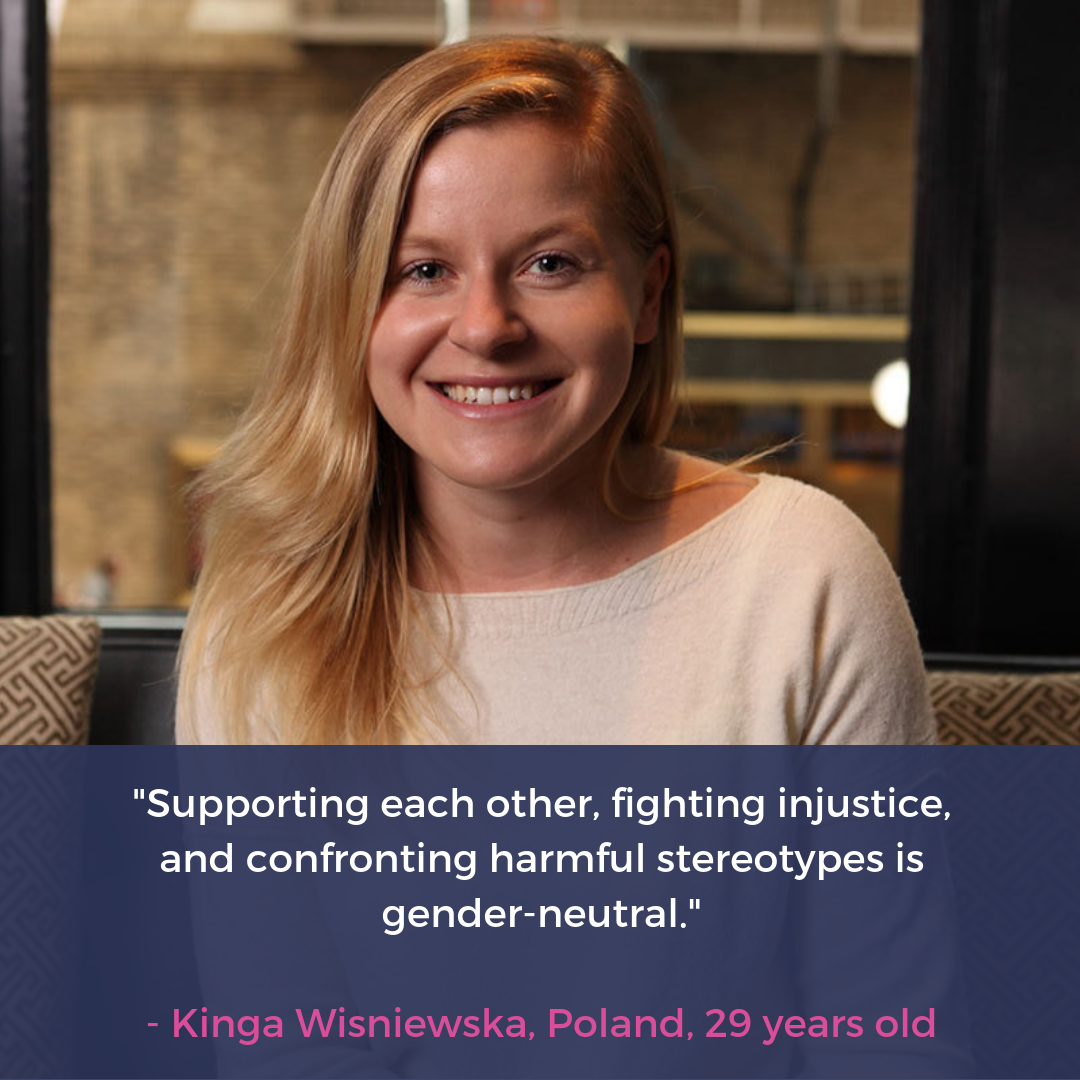
There is no one solution to gender stereotyping and the impact it can have on girls; and this by no means affects only women. But just as the damage starts early, so must our fight to eradicate even seemingly harmless stereotypes that might result in missed opportunities, depression, or gender inequalities. Boys cry. Girls can become astronauts. It doesn’t matter if girls shave their legs or not. Girls can say no. Supporting each other, fighting injustice, and confronting harmful stereotypes is gender-neutral.
It took me more than 15 years to rediscover my superpowers. I was lucky to meet people who inspired me to see that there isn’t one right way to be a woman. Self-acceptance, self-care, and self-confidence came back into my dictionary. It wasn’t an easy fight and it’s certainly not complete. But at 29, I can again scribble “Kinga is amazing!” on my notebook.
-
Pamiętam, że kiedy miałam osiem czy dziewięć lat w swoich szkolnych zeszytach często pisałam do siebie notatki. "Jesteś naprawdę fajna!" czy "Kinga jest super!" były moimi ulubionymi. Naprawdęwierzyłam w moje supermoce - za które uważałam bycie optymistką i wiedzę, jak komunikować sięze zwierzętami. Nie oznaczało to jednak, że uważałam się za lepszą od innych. Moje notatki były tylko przypomnieniem, że jestem silną, fajną dziewczyną, z ciekawymi hobby i otoczoną grupąprzyjaciół.
Nie wiem, kiedy i jak, ale ta fala przed-nastoletniego optymizmu i pewności siebie zniknęła dośćszybko. Nie pamiętam momentu zmiany, ale pamiętam, że nagle czułam się gruba, brzydka i głupia. Zaczęłam wstydzić się swoich (zbyt dużych) piersi i (zbyt wielu) pryszczy. Nagle, żałowałam, że nie jestem chłopcem. Zaczęłam bojkotować spódnice i sukienki, obcięłam włosy na krótko. Nie czułam, żebym kiedykolwiek mogła konkurować z wyidealizowanym wizerunkiem kobiet, które krzyczały na mnie z billboardów, ekranów telewizyjnych i czasopism. Nie wierzyłam już w żadne z moich supermocy i zaczęłam myśleć, że dziewczęta są słabsze i głupsze niż chłopcy.
Badania pokazują, że dziewczęta już w wieku sześciu lub siedmiu lat zaczynają tracić wiarę w swoje talenty i wątpić w swoje umiejętności. Inne badanie przeprowadzone w Wielkiej Brytanii wykazało,że 24% 14-letnich dziewcząt (w porównaniu do 9% chłopców w tym samym wieku) doświadcza depresji. I od tak zaczyna się efekt kuli śnieżnej - wpływający na trajektorie dziewcząt na całymświecie, które nie realizują swoich pasji, ponieważ nie wierzą, że są w stanie osiągnąć swoje marzenia.
Nie ma jednego sposobu na rozwiązanie problemów związanych ze stereotypami płci, i w żadnym wypadku kobiety nie są ich jedynymi ofiarami. Ale skoro szkody z nimi związane wyrządzane są tak wcześnie, musimy walczyć, aby wyplenić nawet pozornie nieszkodliwe stereotypy wśród najmłodszych dzieci, ponieważ mogą one skutkować utraconymi możliwościami, depresją lub nierównością płci. Chłopcy płaczą. Dziewczyny są silne. Mogą zostać astronautkami, jeśli zechcą. Nie ma znaczenia, czy golisz nogi. Możesz powiedzieć "nie". Jesteś naprawdę fajna!
Ponowne odkrycie moich supermocy zajęło mi ponad 15 lat. Miałam szczęście spotkać osoby, które zainspirowały mnie do zauważenia, że nie ma jednego właściwego sposobu na bycie kobietą. Samoakceptacja, dbałość o siebie i pewność siebie wróciły do mojego słownika. To nie była łatwa walka i na pewno jeszcze się nie zakończyła. Ale w wieku 29 lat mogę znowu napisać "Kinga jest super!" w moim notesie.
Photo credit: David Alexander
-
#YoungWomenSay is a partnership with Say It Forward in support of International Youth Day 2018 and culminating on International Day of the Girl. The campaign features blogs from incredible young women from around the world, and is designed to harness the power of storytelling and social media to drive attention to their lived experiences, dreams, and aspirations.
We invite you to follow Say It Forward on Twitter, Facebook, and Instagram and follow The Torchlight Collective on Facebook, Twitter, Instagram, and use our hashtag, #TheTorchlightCollective.

My Voice Is My Purpose, What's Yours? - #YoungWomenSay
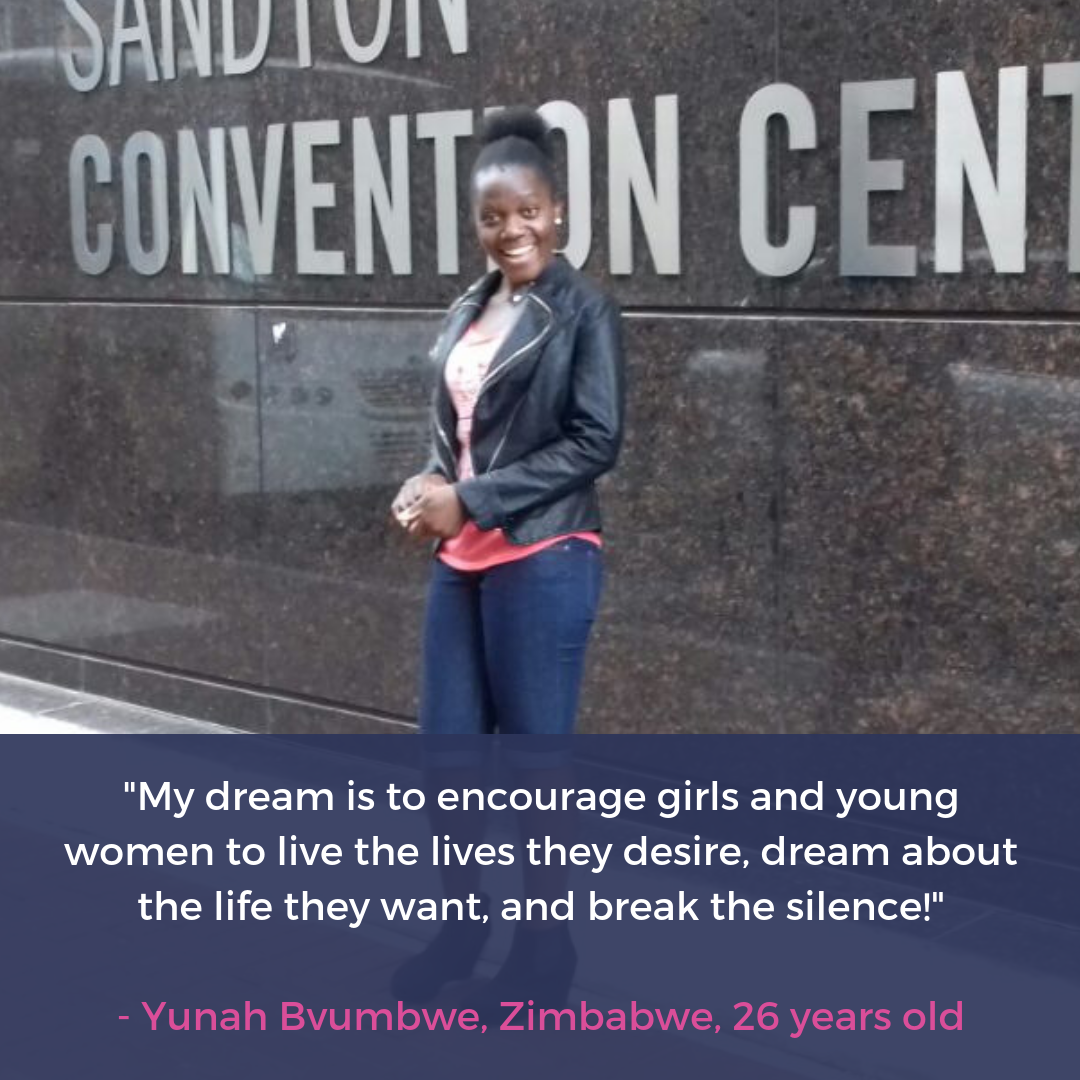
I believe in introspection, where one digs deep in their heart to search for who they really are and what their purpose is. This introspection isn’t just for personal gain, but to meaningfully improve the lives of those around them. This process led me to realize that girls and young women often suffer in silence. This has motivated me to speak louder and begin my journey of elevating the voices of the voiceless. I am eager to affect change that will make my community a better place for girls and women.
By: Yunah Bvumbwe, Zimbabwe
Originally posted on Say It Forward for #YoungWomenSay
I believe in introspection, where one digs deep in their heart to search for who they really are and what their purpose is. This introspection isn’t just for personal gain, but to meaningfully improve the lives of those around them. This process led me to realize that girls and young women often suffer in silence. This has motivated me to speak louder and begin my journey of elevating the voices of the voiceless. I am eager to affect change that will make my community a better place for girls and women.
Menstruation is a natural phenomenon to girls and women; it has no shame. Yet, even today, girls and young women in my community are still using cow dung, leaves, and unhygienic pieces of cloth during their menstruation. Every month, girls miss school because they feel shy to walk the 15 kilometers to school with cow dung or leaves stuck between their legs.
The situation is only worsened during the day because some schools don't have the facilities the girls need to wash themselves. Teachers are often forced to send these girls home until their periods are over. This is a major blow to a girl’s education because missing a few days of school every month makes it hard for her to keep up with her coursework. The lack of sanitary products is not only striping girls of their right to education, but also of their human dignity.
Many girls in my community never finish high school. This is caused by society’s negligence to award both girls and boys equal educational opportunities. It is this negligence that has created social imbalance where most girls and women are not able to read or write coherently, while boys and men do both with ease. Gender inequality limits girls’ options, and it is a malicious way of making sure girls and women remain incapacitated.
Chimamanda Ngozie Adichie, a Nigerian novelist and my role model, once said, "culture doesn't make people, but people make culture." This is a powerful reminder for me that my community can change. The girls in my community need knowledge. Knowledge will give them the power to fight gender inequality perpetuated by a culture that gives more value to boys than to girls.
This is why I believe that we need a new way of looking into the future, while learning lessons from the past. The past makes the present coherent, and the past will remain horrible for as long as we fail to assess it fairly. Equipping girls and women with knowledge will serve as a stepping stone and an antidote to gender inequality.
I believe that one day, girls and young women will not be trapped the same way our mothers and grandmothers were. My dream is to encourage girls and young women to live the lives they desire, dream about the life they want, and break the silence!
-
#YoungWomenSay is a partnership with Say It Forward in support of International Youth Day 2018 and culminating on International Day of the Girl. The campaign features blogs from incredible young women from around the world, and is designed to harness the power of storytelling and social media to drive attention to their lived experiences, dreams, and aspirations.
We invite you to follow Say It Forward on Twitter, Facebook, and Instagram and follow The Torchlight Collective on Facebook, Twitter, Instagram, and use our hashtag, #TheTorchlightCollective.

The Power of Periods - #YoungWomenSay
The first time I was embarrassed of my period was the first moment I got it. There was no pretext to that feeling of shame. It was as innate as my breath. There isn’t anything specific from my childhood that led me to this feeling of dirtiness and humiliation. It was just there. I can remember wiping and wiping, urging the blood to go away. I was disgusted by myself.
By: Terri Harris, United Kingdom
Originally posted on Say It Forward for #YoungWomenSay
The first time I was embarrassed of my period was the first moment I got it. There was no pretext to that feeling of shame. It was as innate as my breath. There isn’t anything specific from my childhood that led me to this feeling of dirtiness and humiliation. It was just there. I can remember wiping and wiping, urging the blood to go away. I was disgusted by myself.
As I grew older, there were many more moments which consolidated this feeling. There was the secret handshake used for swapping tampons at school, so that no one knew you had your period. There were the hysterical laughs and “ewws” when my period leaked in my white trousers. And, there was the look of disgust and subsequent break-up after my boyfriend felt my period during sex. I learned to hate my body and its monthly function.
Fast forward ten years from my first period and I was introduced to the menstrual cup, a small silicone device that collects period blood. Getting up close and personal with my vagina utterly terrified me, especially during my period. But, I gave it a go.
It leaked the first few times I used it. I had to insert and remove the device from my vagina and tip it out and see my blood up close after every use. At first, it was gross. Then, after repeating those actions again and again, I became fascinated by the workings of my body. I was no longer concerned about my menstrual blood. It wasn’t disgusting, scary, or dirty; it was incredible.
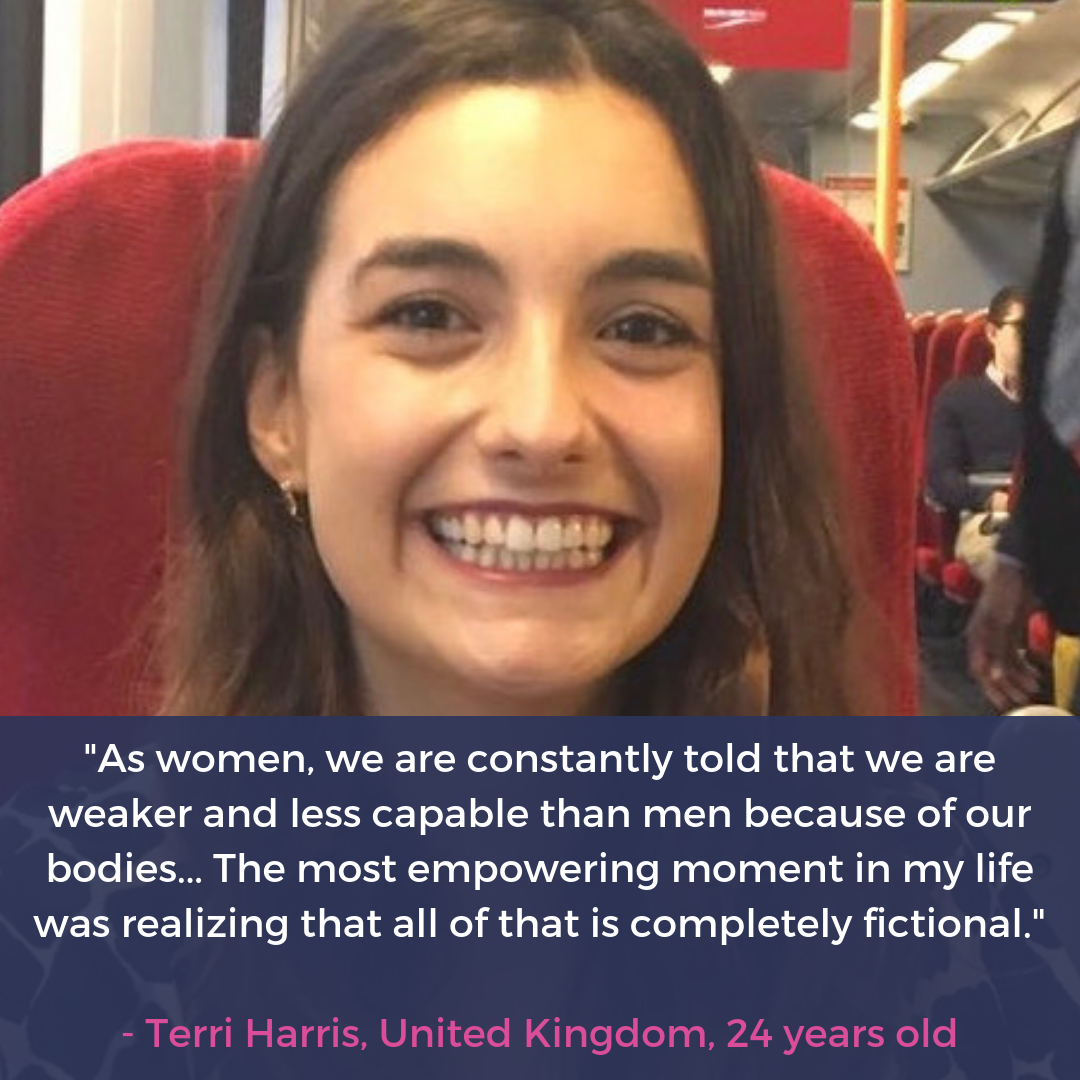
For me, the menstrual cup was my first step into understanding my body and its functions. It was my gateway into taking ownership of my body and acknowledging all the amazing things the female form is capable of. As women, we are constantly told that we are weaker and less capable than men because of our bodies. We are shamed as irrational and dirty because of our hormonal and menstrual cycle. The most empowering moment in my life was realizing that all of that is completely fictional.
The most important thing we can do as women is to love every inch of our bodies and rise above the negativity that is cast upon it. Allow yourself to be empowered by every bodily function and understand the intricacies of your body’s mechanics. Then empower the women and girls in your life to do the same. If we are all able to harness that knowledge, we have the power to do anything.
-
#YoungWomenSay is a partnership with Say It Forward in support of International Youth Day 2018 and culminating on International Day of the Girl. The campaign features blogs from incredible young women from around the world, and is designed to harness the power of storytelling and social media to drive attention to their lived experiences, dreams, and aspirations.
We invite you to follow Say It Forward on Twitter, Facebook, and Instagram and follow The Torchlight Collective on Facebook, Twitter, Instagram, and use our hashtag, #TheTorchlightCollective.

Changing the Narrative - #YoungWomenSay
My journey as a young leader and advocate began when I was about 10 years old. Even as a child, I had so much passion for activism. Together with my fellow young activists, I led many initiatives geared towards advancing the rights of children. However, at the age of 14, my dream was cut short.
By: Musu Bakoto, Gambia
Originally posted on Say It Forward for #YoungWomenSay
My journey as a young leader and advocate began when I was about 10 years old. Even as a child, I had so much passion for activism. Together with my fellow young activists, I led many initiatives geared towards advancing the rights of children. However, at the age of 14, my dream was cut short.
My parents decided to marry me off. At that time, I thought my life had ended. I became a victim of the exact things I campaigned against. I felt betrayed by the system and the people I expected to protect me. For many child brides, marriage means the end of an education and the beginning of lifelong struggles. I didn’t want this to be my story. I wanted an education. Although I couldn’t get out of the marriage, my plan of committing suicide motivated my parents to renegotiate with the groom to allow me to stay in school while married. Under very difficult circumstances, I completed junior and high school.
But I knew this wasn’t it for me. I wanted more, and I deserved more. I fought my way through university, where I pursued a Bachelor of Laws Degree. Despite becoming a mother and subsequently a widow while studying, I managed to complete my studies and pursue a Master of Laws Degree in Human Rights and Democratization in Africa.
My journey as an activist and advocate for women and girls has come with many setbacks. Living in a patriarchal society, where women are often associated with positions of welfare rather than leadership, has shattered many dreams. To many, women have been created to be mothers and wives, and have a responsibility of taking care of the home. My personal story has motivated me to change the narrative of women and girls in my country. I have since committed my life and dedicated time and resources to fight patriarchy and empower women and girls to stand up and speak against the injustices perpetrated against them. No woman or girl should be subjected to the things I had to go through.
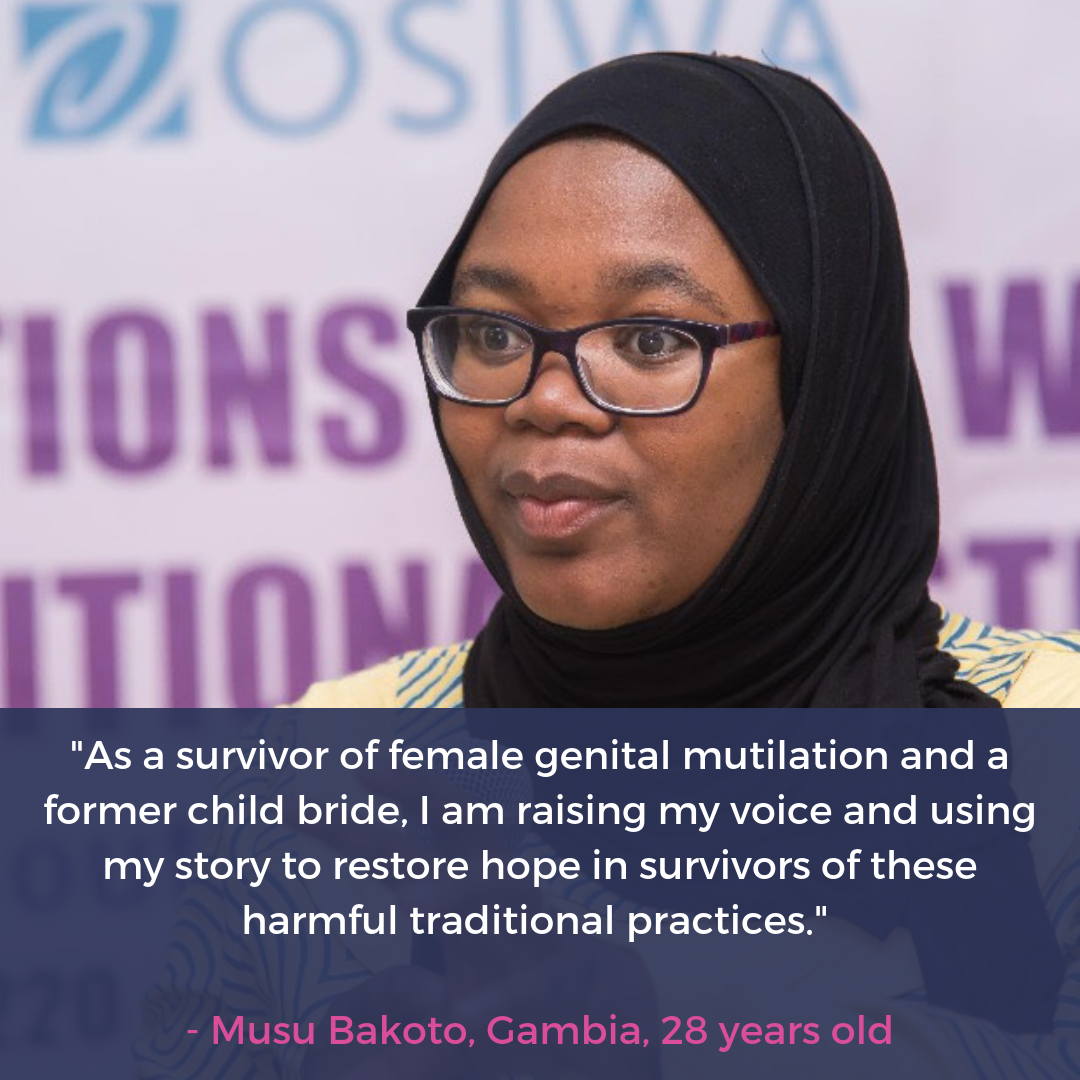
As a survivor of female genital mutilation and a former child bride, I am raising my voice and using my story to restore hope in survivors of these harmful traditional practices. I want my story to give them the much needed motivation to not rest on their laurels as society relegates them into crushed dreams. As young women, we must hold the government accountable and push for policies that serve our interests. Women and girls have been sidelined and underrepresented in decision-making platforms for far too long. Now, as the head of Think Young Women, a young women-led organization, we are creating a new generation of enlightened young women through initiatives to build their capacities and fortify their voices.
I have a vision - it is to see a Gambia where women and girls have equal opportunities to dream and realize those dreams. I am on a mission to create safe spaces for women and girls and to empower and uplift them. Through my work, this is happening. The narratives of women and girls must - and will - change!
-
#YoungWomenSay is a partnership with Say It Forward in support of International Youth Day 2018 and culminating on International Day of the Girl. The campaign features blogs from incredible young women from around the world, and is designed to harness the power of storytelling and social media to drive attention to their lived experiences, dreams, and aspirations.
We invite you to follow Say It Forward on Twitter, Facebook, and Instagram and follow The Torchlight Collective on Facebook, Twitter, Instagram, and use our hashtag, #TheTorchlightCollective.

The Power of Mentorship - #YoungWomenSay
We live at a time where there is more opportunity than ever before. For some young women, the principles of feminism are encouraged. They are supported in their endeavors to get an education, be professional, and be independent. They are given equal opportunities with men in terms of education, employment, and inheritance. But, unfortunately, this is not the case for most. Despite our privileges, my generation must continue the fight for equality.
By: Beverly Nkirote Mutwiri, Kenya
Originally posted on Say It Forward for #YoungWomenSay
We live at a time where there is more opportunity than ever before. For some young women, the principles of feminism are encouraged. They are supported in their endeavors to get an education, be professional, and be independent. They are given equal opportunities with men in terms of education, employment, and inheritance. But, unfortunately, this is not the case for most. Despite our privileges, my generation must continue the fight for equality.
One thing that can help young women as they take this on is the presence of a role model. I feel lucky to have a lot of good role models and examples. One of them is Edith Esinam. The first time I met Edith, I was so envious of her. She was the embodiment of the woman I really wanted to be. Her level of knowledge on the sexual and reproductive health and rights (SRHR) issues of young women in Ghana excited me. And, in a way, I saw myself in her. I was so proud of her and immediately knew I needed to get to know her better. The mere fact that she was a young woman who was stepping into her role as an SRHR youth advocate and ensuring that people heard her views was inspiring.
As I got to know Edith, she gave me a piece of advice that has stuck with me through the years. She told me, “You never work a day in your life if you do what you love.” This is something I try to keep in mind everyday and instill in the young women I work with now. I want to be an inspiration to other young women, and I try to to lead by example, especially to those coming up in the SRHR advocacy space behind me.
At several instances in my life, I have felt frustrated when my work was not effective due to the various challenges that exist in my community. For example, there is still a predominant aspect of male dominance in our society. Women are not given the opportunity and space to voice their views; the only role society prescribes to them is that of a housewife who should be seen, but not heard. This is a key barrier that limits the full potential of young women.
During these more difficult times, I remember the advocates who came before me and repeat Edith’s advice in my head. I am so grateful to my predecessors who have fought - and are still fighting - for the existing spaces, platforms, and programs designed specifically for young women. Were it not for them, the advocacy space would still be hostile to my peers and me.
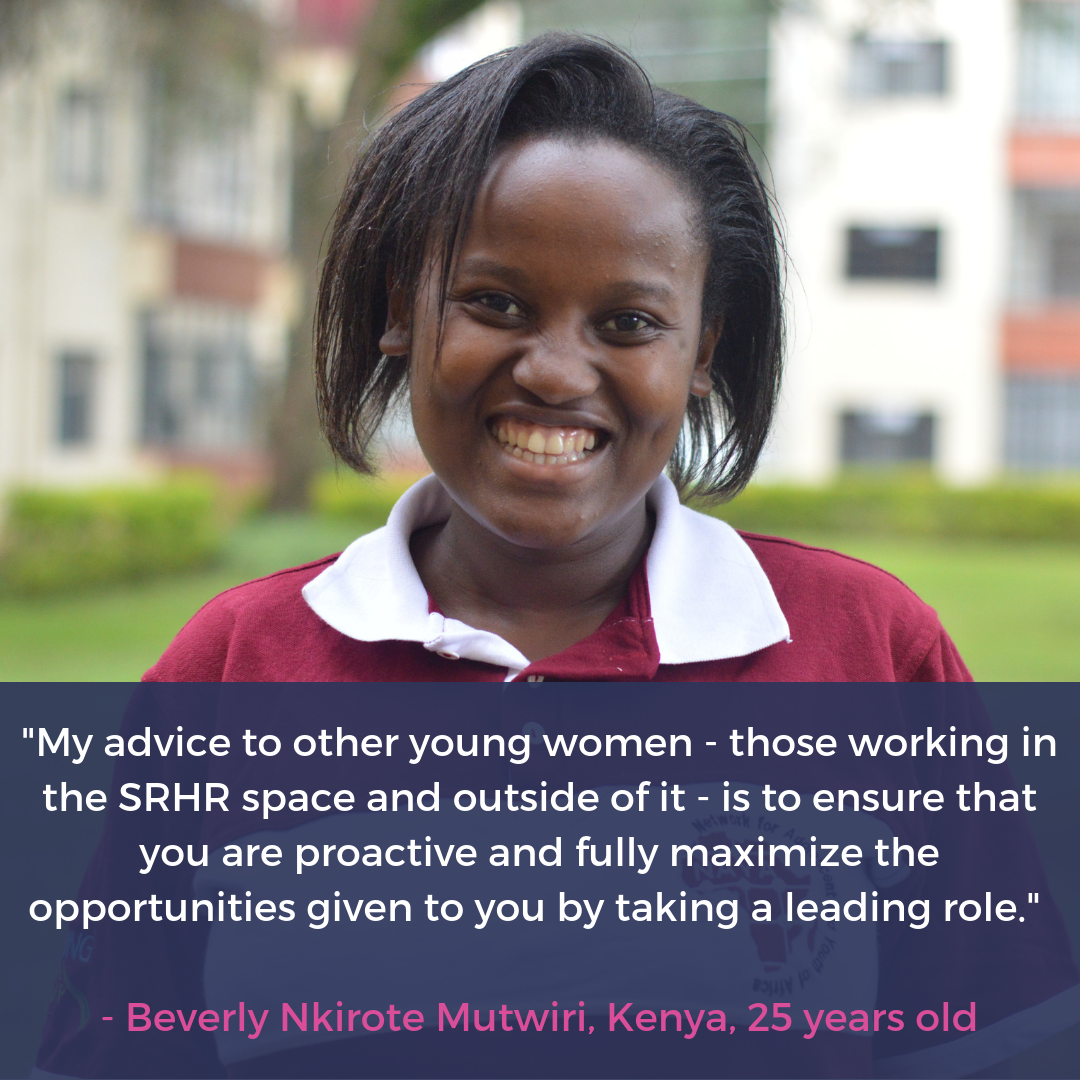
And as I appreciate the advocates who paved the way for me, I also think about those who will take up this fight in the future. My advice to other young women - those working in the SRHR space and outside of it - is to ensure that you are proactive and fully maximize the opportunities given to you by taking a leading role. Remember that you are representing more than just yourself, you are representing the powerful role of young women in your community and around the world. Together, we can break the glass ceiling!
-
#YoungWomenSay is a partnership with Say It Forward in support of International Youth Day 2018 and culminating on International Day of the Girl. The campaign features blogs from incredible young women from around the world, and is designed to harness the power of storytelling and social media to drive attention to their lived experiences, dreams, and aspirations.
We invite you to follow Say It Forward on Twitter, Facebook, and Instagram and follow The Torchlight Collective on Facebook, Twitter, Instagram, and use our hashtag, #TheTorchlightCollective.

Life Advice from a Life Advice Addict - #YoungWomenSay
I am asked more often than I thought I would be how I got to where I am today.
It’s a position I wouldn’t have believed I’d be in ten years ago. When I was nineteen, I was close to exhausting the articles, listicles, and books on the ‘Right Way To Live Your Life,’ and walking away with my head swimming with conflicting, and often irrelevant, standards against which to measure myself.
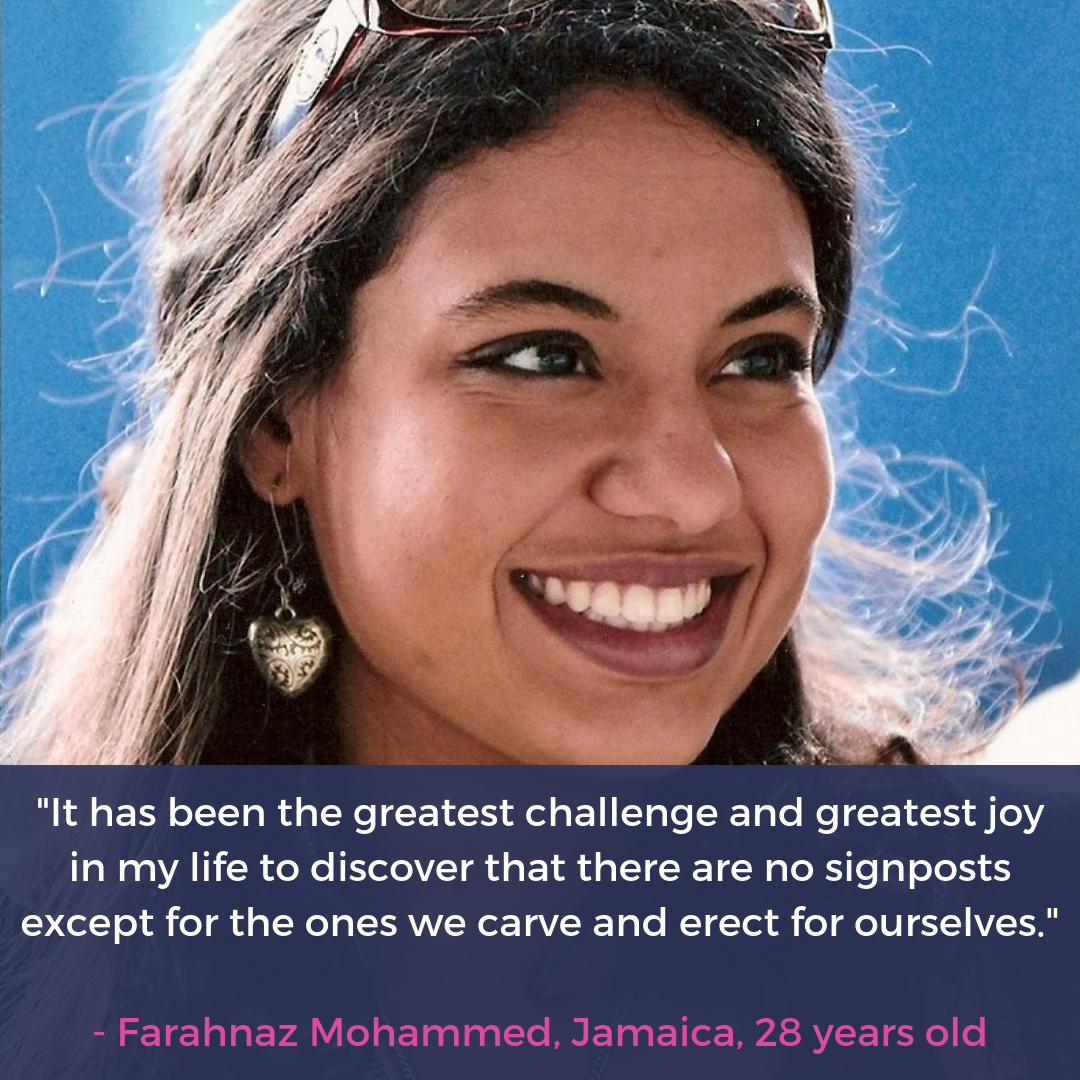
By: Farahnaz Mohammed, Jamaica
Originally posted on Say It Forward for #YoungWomenSay
I am asked more often than I thought I would be how I got to where I am today.
It’s a position I wouldn’t have believed I’d be in ten years ago. When I was nineteen, I was close to exhausting the articles, listicles, and books on the ‘Right Way To Live Your Life,’ and walking away with my head swimming with conflicting, and often irrelevant, standards against which to measure myself.
What career should I pick? Non-profit? Corporate? Should I put family before career? Did I want children? Should I want children? Would I want children? Did I want to get married? Am I a failure if I don’t? What was going to happen? How should I handle it?
Growing up as a mixed race kid in a culture different from my parents’, I was still figuring out my priorities and what made me happy. I was unsure of the future after a financial calamity brought the global economy to its knees and was feeling internally at war with myself, not unlike many nineteen-year-olds. I could find no real answers.
At 21, I earned a degree in Spanish and English Literature (which my scientist parents gamely tried their best to pretend they were happy with) and graduated with a stack of volunteer work under my belt, determined to change the world.
At 23, I was home, unemployed, and searching for career experience after the job market hit me with the reality that a fearless attitude was insufficient on a resume.
At 26, I got a Masters degree and a fellowship in journalism that had me traveling from Chicago to New York to Mexico City to Berlin, guzzling coffee and squeezing in foreign language classes whenever I wasn’t working.
Now, at 28, I am in marketing and just now beginning to figure it all out after nearly three decades, multiple relationships, two degrees, and a mountain of debt.
There is a sea of opinions on how you should live your life, especially as a woman. Finding your own true north is a complex and constantly changing art. When we are young, we think we have a great deal of control over the direction of our lives, and that our character will be reflected in our ability to follow through on our plans.
Life will surprise and frustrate you in astounding and equal measure. Your character and your strength as a woman will mostly like not be the ability to bend life to your will, but to absorb the punches, weather the disappointments, and continue forward, with compassion and heart, courage and good humor.
To everyone who asks, I have to gently admit, I don’t know how I got to where I am today. I stumbled, blindly and often foolishly, until I found my footing. But I can also say, it has been the greatest challenge and greatest joy in my life to discover that there are no signposts except for the ones we carve and erect for ourselves.
-
#YoungWomenSay is a partnership with Say It Forward in support of International Youth Day 2018 and culminating on International Day of the Girl. The campaign features blogs from incredible young women from around the world, and is designed to harness the power of storytelling and social media to drive attention to their lived experiences, dreams, and aspirations.
We invite you to follow Say It Forward on Twitter, Facebook, and Instagram and follow The Torchlight Collective on Facebook, Twitter, Instagram, and use our hashtag, #TheTorchlightCollective.

Reflect, Claim Our Space, and Power On! - #YoungWomenSay
For me, growing up was a series of realizations about the things that I ‘could not’ do, merely because I am a girl. And while my relative privilege allowed me to get an education, start working, and travel independently, the ‘do nots’ list still hasn’t fully disappeared. The need to challenge this reality is what led me to my work as a campaigner.
By: Gopika Bashi, India
Originally posted on Say It Forward for #YoungWomenSay
For me, growing up was a series of realizations about the things that I ‘could not’ do, merely because I am a girl. And while my relative privilege allowed me to get an education, start working, and travel independently, the ‘do nots’ list still hasn’t fully disappeared. The need to challenge this reality is what led me to my work as a campaigner.
For countless women and girls in India - especially those who are the most marginalized because of their caste, religion, ability, or class - violence is an everyday reality. While there seems to be universal agreement across the world that violence against women and girls should not exist, we know that our political work to challenge patriarchy is far harder than just raising awareness about the scale of this problem.
Despite this challenge, I am excited that I’m part of a generation of young women and trans youth who are speaking truth to power in big ways - not just on gender-based violence, but on sexual rights; politics; and social, economic, and climate justice.
What has struck me the most through my own work - whether it be campaigning to ensure young people’s sexual and reproductive rights or pushing for justice for survivors of sexual violence – has been the importance of challenging this culture of accepting violence. This is probably the hardest part, because it doesn’t only have to do with laws or policies but is rather about chipping away at underlying discriminatory attitudes, beliefs, and norms. And this doesn’t happen somewhere ‘out there.’ Challenging power and patriarchy begins literally and figuratively at home: in our houses, workplaces, schools, and streets.
And while this is exciting, it can also be draining. As a woman, I see this culture of violence reflected in my own lived experience, and consistently challenging it can be exhausting. I must keep reminding myself that while I will never stop campaigning, there may be times when the sheer exhaustion of this work takes over. And this is ok.
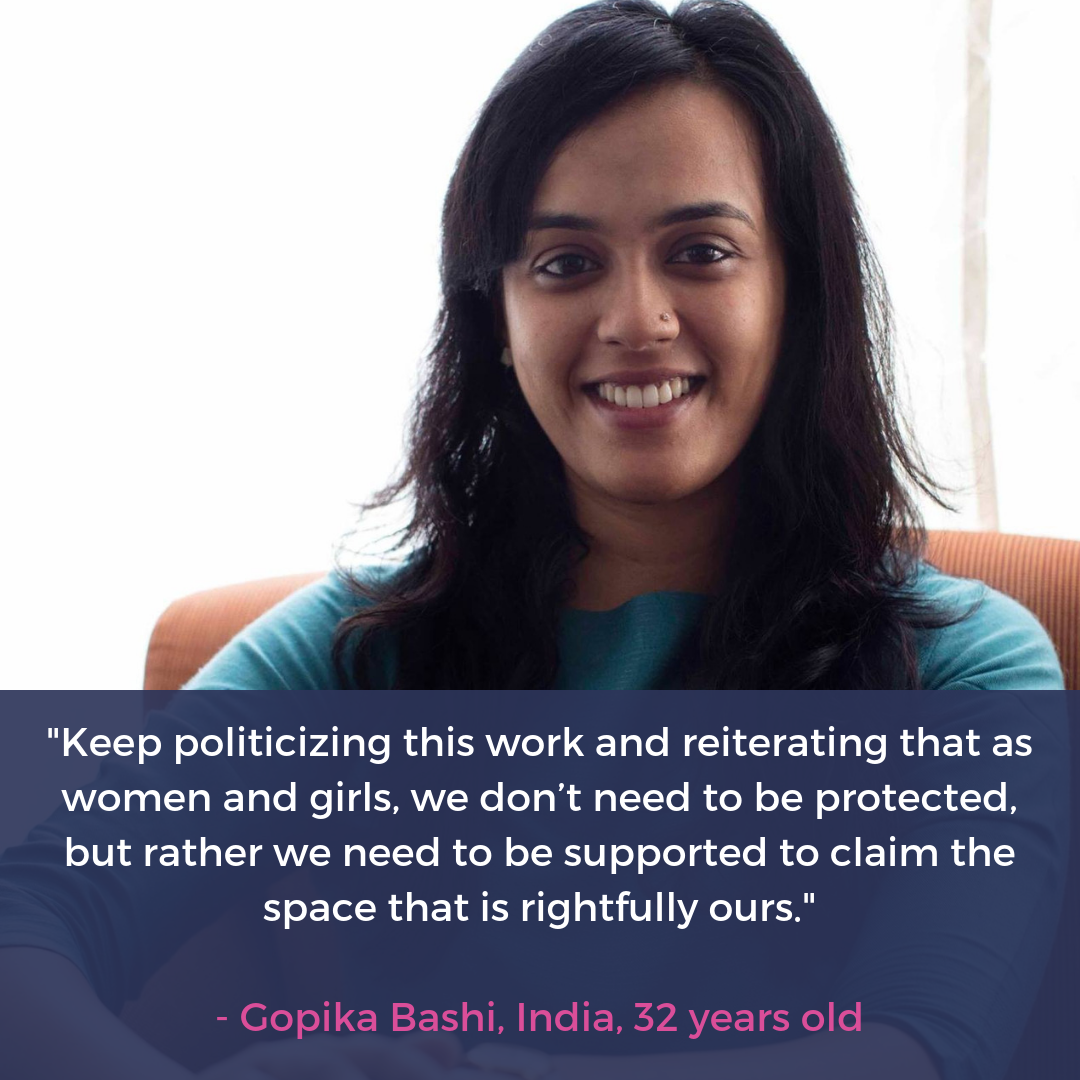
So to others out there doing this work, I say take a moment to reflect. Feel proud of what you’ve accomplished. Keep politicizing this work and reiterating that as women and girls, we don’t need to be protected, but rather we need to be supported to claim the space that is rightfully ours. There is still much work to be done!
-
#YoungWomenSay is a partnership with Say It Forward in support of International Youth Day 2018 and culminating on International Day of the Girl. The campaign features blogs from incredible young women from around the world, and is designed to harness the power of storytelling and social media to drive attention to their lived experiences, dreams, and aspirations.
We invite you to follow Say It Forward on Twitter, Facebook, and Instagram and follow The Torchlight Collective on Facebook, Twitter, Instagram, and use our hashtag, #TheTorchlightCollective.

The Power of Sexuality Education / Puterea Educației Sexuale - #YoungWomenSay
I am 28 years old and I grew up in Bucharest, the capital city of Romania, an Eastern European country that got rid of communism the year before I was born. My parents’ life was fundamentally different than mine. They lived their younger years in a closed society based on fear, and considered family and hard work to be their core values.
By: Anamaria Suciu, Romania
Originally posted on Say It Forward (English and Romanian) for #YoungWomenSay
I am 28 years old and I grew up in Bucharest, the capital city of Romania, an Eastern European country that got rid of communism the year before I was born. My parents’ life was fundamentally different than mine. They lived their younger years in a closed society based on fear, and considered family and hard work to be their core values. Contraception was not available and abortion was criminalized. Relationships quickly turned into marriages and, soon after, into parenthood. Most social gatherings were taking place behind closed doors and, of course, there was no internet. My parents didn’t even have a phone at home until I was about five or so.
My life has been different. I was born a few months after the revolution. I am part of the first generation to live in the democratic and capitalist Romania we know now. I was very lucky to have open-minded parents, who quickly adapted to the new realities and embraced them positively. Still, to some extent, my teen years and my transition to adulthood were not so different from theirs.
I grew up feeling ashamed and somewhat guilty of my body, receiving too much unwanted attention. From colleagues at schools to strangers on the street, it seemed totally natural for strangers to slap my behind or catcall me. I knew this was not right, but also didn’t realize that it was not my fault. I clearly remember one day, in secondary school, when a classmate lifted my skirt. I immediately complained to our teacher, but the teacher didn’t seem bothered at all and said that it was normal for boys to be curious.
Later, when I started my sex life, I had a feeling everybody on the street could tell. I didn’t feel like I did anything wrong, but still, the idea of my parents finding out was terrifying. We never talked about sex in any other way than something I was supposed to avoid until later. When I went to my first gynecological visit, I was accompanied by my friend’s brother, who knew where to go and who to speak to for a consultation. The second time I went to the gynecologist, I received a treatment that I had to do without my parents knowing, as they would have realized that I had started having sex. Some years after, I had to use emergency contraception, and for a long time, I was afraid it would affect my fertility.
Until one day. One lucky day in 2013, I applied as a volunteer for the Society for Contraception on Sexuality and Education and it changed my life. It opened my eyes to the lack of information that young people face and how different things could be. The people I met there (adults!!) were so open to discussing sexuality in a positive way that it took me a while to realize that it was possible to have another attitude towards well-being and self-care. After being trained, I started going to schools to give sexuality education workshops. During my first class, I was so nervous that my heart rate was fast and my feet were weak. I was so sure that nobody would listen to my colleague and me. But I was pleasantly surprised. After a round of laughter, even the most uninterested pupils started paying attention.
I continued in the field and was eventually hired to coordinate an entire network of young people working on comprehensive sexuality education at national and regional levels called YSAFE. Today, I still volunteer, now for YouAct, an organization of youth advocates who are doing their best to make sure young people get the attention they deserve when it comes to their sexual and reproductive health and rights. I have met so many passionate young people who think and act the same as I do, and I am hopeful I will see a fundamental change in young people’s access to sexual health information during my lifetime.
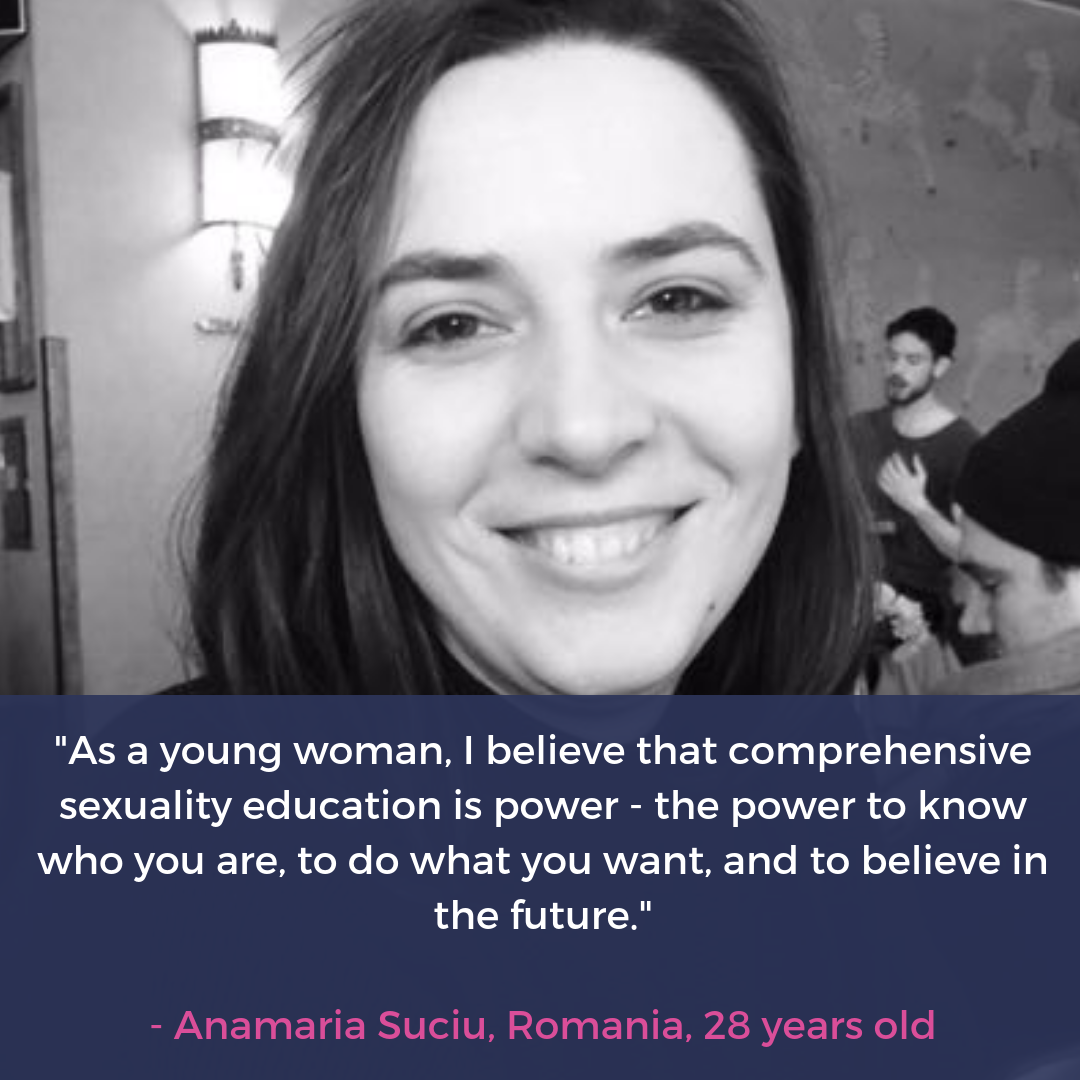
As a young woman, I believe that comprehensive sexuality education is power - the power to know who you are, to do what you want, and to believe in the future.
-
Am 28 de ani și am crescut în București, capitala României, o țară din estul Europei care tocmai scăpase de comunism, cu un an înainte să mă nasc. Viață părinților mei a fost fundamental diferită de a mea. Ei și-au trăit tinerețea într-o societate bazată pe frică și au crescut cu valori precum familia și muncă din greu. Nu existau metode contraceptive și avortul era criminalizat. Relațiile se transformau rapid în căsătorii și la scurt timp după, în parentalitate. Majoritatea petrecerilor aveau loc în spatele ușilor închise, iar internetul, evident, nu apăruse. Părinții mei nu au avut nici măcar un telefon fix acasă până la vârstă mea de 5 ani.
Viața mea a fost altfel. M-am născut la câteva luni după revoluție și sunt parte din prima generație care a trăit în România democratică și capitalistă de azi. Am fost norocoasă să am părinți cu mintea deschisă, capabili să se adapteze rapid la noua realitate și să o accepte cu pozitivism. Și totuși, într-o anumită măsură, anii tinereții și tranziția către vârsta adultă, nu au fost așa de diferite față de experiențele alor mei.
Am crescut rușinată și cumva simțindu-mă vinovată în prinvința corpului meu, care atrăgea prea multă atenție nedorită. Părea complet normal pentru colegii de școală, chiar și pentru străini, să mă plesnească peste fund sau să mă fluiere și să mă strige în tot felul. Știam că nu așa ar trebui să stea lucrurile, dar nu mi-am dat seama că nu era vina mea. Îmi amintesc clar cum într-o zi în școală generală, un coleg mi-a ridicat fusta, iar eu m-am plâns imediat profesoarei. Dar ea nu a părut deloc daranjată și a spus că e normal pentru băieți să fie curioși.
Mai târziu, când mi-am început viața sexuală, aveam senzația că toată lumea din jurul meu poate remarca. Nu simțeam că am făcut ceva greșit, dar mă temeam cumplit ca nu cumva să afle ai mei. Nu am vorbit niciodată despre sex, altfel decât ca fiind un lucru pe care trebuia să îl evit până mai târziu. La prima vizită la ginecolog am mers cu fratele unei prietene, care știa unde să meargă și cui să ceară o consultație. A două oară am primit un tratament, pe care a trebuit să îl fac pe ascuns, pentru ca părinții mei să nu afle că mi-am început viața sexuală. Câțiva ani după, a trebuit să folosesc contracepția de urgență și pentru o lungă perioada de timp, m-am temut că îmi va afecta fertilitatea.
Până într-o zi. O zi norocoasă în 2013 când am aplicat să devin voluntară pentru Societatea de Educație Contraceptivă și Sexuală. Iar acest eveniment mi-a schimbat viața. Mi-a deschis ochii către lipsa de informație în rândul tinerilor și cât de diferit pot sta lucrurile. Oamenii pe care i-am cunoscut acolo (adulți) vorbeau despre sexualitate într-un mod pozitiv, și mi-a luat o vreme să realizez că este posibil să ai o altă atitudine asupra grijii de sine și stării de bine. După ce m-am format, am început să facilitez ore de educație sexuală în școli. La prima clasă, eram atât de stresată că îmi bătea inima să îmi iasă din piept și mi se înmuiaseră de tot picioarele. Mă așteptăm ca nimeni să nu ne asculte, nici pe mine, nici pe colega mea. Dar am fost plăcut surprinsă. După un rând de râsete, chiar și cei mai puțin interesați s-au alăturat discuției.
Am continuat în acest domeniu și am avut ocazia, la un moment dat să coordonez YSAFE, o rețea de tineri care lucrează la nivel național și regional pe tema educației sexuale. Încă mai fac voluntariat, acum pentru o altă organizație, YouAct, formată din tineri care fac tot posibilul pentru ca tinerii să primească atenția pe care o merită atunci când vine vorba despre sănătatea și drepturile lor sexuale și reproductive. Am întâlnit atât de mulți tineri pasionați, care gândesc și acționează că mine și cred că voi trăi să văd o schimbare fundamentală în acest domeniu. Cred cu tărie că accessul la informație despre sănătatea sexuală se va îmbunătății considerabil în timpul vieții mele.
Din postura de femeie tânăra, cred că accessul la educație sexuală cuprinzătoare este putere – puterea de a știi cine ești, de a face ceea ce vrei și de a crede în viitor.
-
#YoungWomenSay is a partnership with Say It Forward in support of International Youth Day 2018 and culminating on International Day of the Girl. The campaign features blogs from incredible young women from around the world, and is designed to harness the power of storytelling and social media to drive attention to their lived experiences, dreams, and aspirations.
We invite you to follow Say It Forward on Twitter, Facebook, and Instagram and follow The Torchlight Collective on Facebook, Twitter, Instagram, and use our hashtag, #TheTorchlightCollective.

Being A Young Lesbian / Ser una lesbiana joven - #YoungWomenSay
Being a lesbian is the best thing that has ever happened to me. I wish I could have imagined this possibility when I was younger, because when I was 11 or 12 years old, all I knew about lesbians were discriminatory things. But when I was teenager, I discovered myself.
By: Brenda Sandoval, Mexico
Originally posted on Say It Forward (English and Spanish) for #YoungWomenSay
Being a lesbian is the best thing that has ever happened to me. I wish I could have imagined this possibility when I was younger, because when I was 11 or 12 years old, all I knew about lesbians were discriminatory things. But when I was teenager, I discovered myself. At first, of course, it was difficult; it is scary to be what people forbid or deny. But over the years, I understood that the problem wasn't me, that being a lesbian isn’t bad or something to be ashamed of. That was the way I found the power of my voice, my body, my feelings, and my ideas.
I was in high school when I decided to tell my friends, and some teachers, that I was a lesbian. I became the person who knew about rights. Some people from school sent me messages to tell me that they were LGBT too and wanted to come out, but didn't know how to do it. I was the one who denounced teachers who said homophobic comments. When I was 17, I represented young lesbians from civil society on an advisory board led by the state government to drive attention to the issue of sexual diversity. That's the way I started my advocacy work for people’s rights.
Today, I work for a lesbian feminist civil society organization. I investigate how lesbians live, how their health services are, how they are treated, and how they exercise their rights. My colleagues and I use this information to create proposals with public institutions or partners that advance the rights of of lesbians in my city, in my country, and in my region.
When I was a child, I never imagined that my life would be what it is now because I was never allowed to dream with freedom. But I love the life that I have made for myself. Unlike everything I heard when I was younger, being a lesbian has allowed me to listen to other women and value their voices, and to value my own voice.
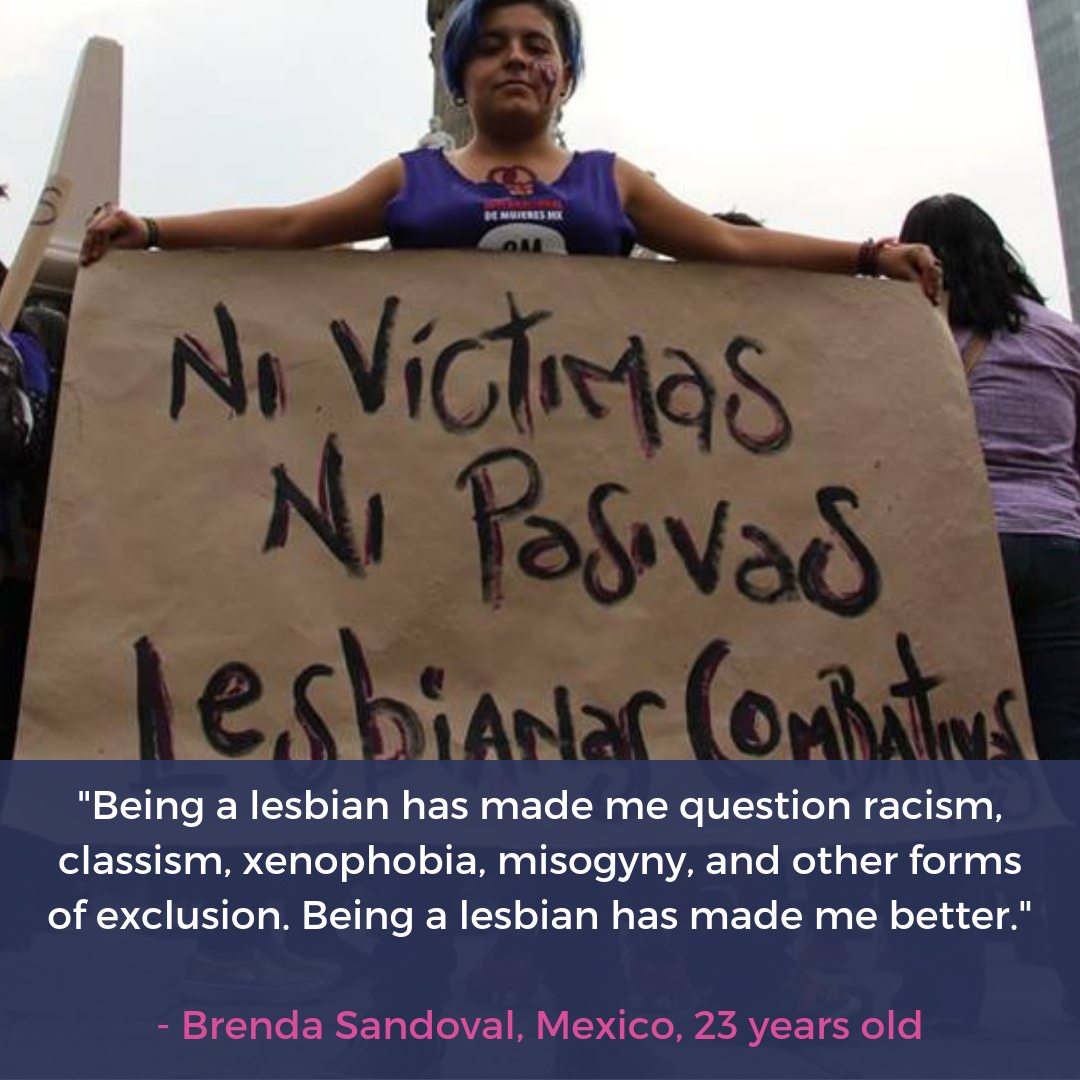
Being a lesbian has allowed me to be proud of who I am. It has allowed me to say "I don’t want to" or "I like that." Being a lesbian has allowed me to recognize the value of difference. It has allowed me to get closer to other women who are trying to build a more open, happier world where all people have a place and have rights - a world where no one imposes their own ways. Being a lesbian has made me question racism, classism, xenophobia, misogyny, and other forms of exclusion. Being a lesbian has made me better.
And I would like to tell other young lesbians that there is a wonderful world to discover. There are other women like you, who are willing to dream together and make those dreams come true.
-
Ser lesbiana es lo mejor que me ha pasado en la vida. Desearía haber imaginado esa posibilidad cuando era más joven porque cuando tenía 11 o 12 años, todo lo que sabía de lesbianas eran cosas discriminatorias, pero en la adolescencia descubrí quién era yo. Claro que al principio fue difícil porque da miedo ser lo que la sociedad prohíbe y niega. Sin embargo, con el paso de los años, entendí que ser quien soy no es un problema, ser lesbiana no es malo ni es algo por lo que avergonzarse. Así fue como descubrí el poder de mi voz, mi cuerpo, mis sentimientos, y mis ideas.
Cuando estaba en la preparatoria decidí contarles a mis amigas y amigos, y algunas profesoras que era lesbiana. Pronto me convertí en la persona que sabía de derechos humanos. Algunas personas de mi escuela me mandaban mensajes para contarme que eran LGBT y que querían salir del clóset, pero que no sabían cómo hacerlo. Yo era quién denunciaba al profesorado que hacía comentarios homofóbicos. Luego, cuando tenía 17 años, fui representante de sociedad civil ante el gobierno del Estado, como lesbiana joven, en Consejo Consultivo de la Dirección de Atención a la Diversidad Sexual. Así me convertí en defensora de derechos.
Hoy en día trabajo en una organización civil de lesbianas feministas. Mi trabajo es investigar cómo viven las lesbianas, cómo son los servicios de salud a las que acuden, qué trato reciben, y cómo ejercen sus derechos. Mis compañeras y yo usamos esta información para generar propuestas a las instituciones públicas o aliadas que promuevan y garanticen los derechos de las lesbianas en mi ciudad, en mi país y en mi región.
Cuando era niña, jamás imaginé que mi vida sería así porque nunca me permitieron soñar libremente. Hoy amo la vida que he construido para mí. A diferencia de todo lo que oí cuando era más joven, ser lesbiana me permitió escuchar a otras mujeres y valorar sus voces, valorar mi propia voz. Ser lesbiana me ha hecho estar orgullosa de lo que soy. Ahora puedo decir “no quiero” o “sí me gusta”. Ser lesbiana me ha permitido reconocer el valor de las diferencias, me ha permitido acercarme a otras mujeres que al igual que yo quieren construir un mundo más libre y feliz, donde quepan todas las personas y todas tengamos derechos, un mundo que no imponga una sola forma de ser. Ser lesbiana me ha hecho cuestionarme el racismo, el clasismo, la xenofobia, la misoginia y otras formas de exclusión. Ser lesbiana me ha hecho mejor persona.
Si pudiera decirle algo a otras lesbianas jóvenes, les diría que hay un mundo increíble por descubrir en el que otras mujeres como ustedes, estamos dispuestas a soñar juntas y a volver esos sueños realidad.
-
#YoungWomenSay is a partnership with Say It Forward in support of International Youth Day 2018 and culminating on International Day of the Girl. The campaign features blogs from incredible young women from around the world, and is designed to harness the power of storytelling and social media to drive attention to their lived experiences, dreams, and aspirations.
We invite you to follow Say It Forward on Twitter, Facebook, and Instagram and follow The Torchlight Collective on Facebook, Twitter, Instagram, and use our hashtag, #TheTorchlightCollective.

Stand Up, Close Your Eyes, and Breathe - #YoungWomenSay
As you read this blog, let my journey inspire you but remember that yours won’t be the same as mine because our dreams are different.
By: Beryl Moraa, Kenya
Originally posted on Say It Forward for #YoungWomenSay
As you read this blog, let my journey inspire you but remember that yours won’t be the same as mine because our dreams are different.
“Moraa, I conceived you when I was in form three, at 17 years old. I had to drop out of school, so always remember that you are my walking form four certificate. I might not provide any luxuries, but I will endeavor to provide the basic needs. I will ensure you access education to whichever level you want; that is what I want to gift to you. And I want you to use it to change the world. You have a choice to make a difference or let history repeat itself.”
This is what my mum told me at the age of 11. It is because of her that I mentor and advocate for the sexual and reproductive health and rights of girls and women, and gender equality. She is my inspiration, and my pillar of strength.
It was tough growing up, seeing my mother struggle to put food on the table. She was - and is still - the sole breadwinner. I have not forgotten those times when we had to wait until late in the night for her to come back because no one would give us vegetables on credit anymore. I also haven’t forgotten the number of times my mother and I spent the night in different neighborhoods just to evade violence from my drunk stepfather. She would apologize on his behalf and tell me that all this would come to pass. Nobody, not even my classmates, ever knew what I was going through.
I remember having to use pieces of cloth during my periods. There was not money to buy disposable sanitary towels; it was simply not a priority. In high school, I always had trouble paying my school fees. A classmate gave me a new blouse, skirt, and socks when my uniforms were worn out, and helped me buy school shoes when the ones I had were torn beyond repair.
When I finished high school, I didn’t have the money to go to college. A neighbor offered to pay my college fee, but only on the condition that he would marry me as a second wife. I refused. Instead, a neighbor sponsored me to attend another school and take the test to earn a government sponsorship - which I did.
I attended Maseno University and became a peer counselor. It was the best decision that I’ve ever made. Becoming a counselor allowed me to stand up, close my eyes, and take a deep breath. I told myself that I wanted to let go of my past and bitterness. Making peace with my past was the first step I took into my new journey of becoming what I had always wanted to be - a mentor and advocate for girls’ and women’s health and rights.
Since then, I have worked for Ipas Africa Alliance and Amref Health Africa’s Youth Advocacy Project. Today, I work for Circles of Adolescent Health - Kenya, which sensitizes adolescent girls and young women on their sexual and reproductive health and rights, with a focus on menstrual hygiene management. It is my goal to elevate the voices of the voiceless.
We all have choices to make, irrespective of the social, cultural, political, religious, and economic challenges that we go through. These choices are what make us different, whether they have positive or negative consequences. You know what your dream is. As I conclude, I would love to share some steps that you too can take into becoming and achieving what you want.
1. Believe wisely in yourself
You have to believe that it’s possible, that you can do it, and that you deserve it. Think outside the box and define your own meaning of success.
2. Behave willingly
Be ready to make the first move and face the consequences and challenges that come your way. Do not expect everything to happen as you have planned, so have a flexible mind.
3. Become valuable
To become valuable, you should know yourself and your worth. Know your strengths and work on your weaknesses.
4. Beware wittily
Know that you can’t always be the best, and that there are times when failure will come your way. Also beware that people will always criticize you to the extent that you may want to quit. But before you do, remind yourself why you started it all.
5. Bestow worldly
Reach out and impart onto others. Be kind and stay humble even if you achieve because it is very tough to go up but very easy to come back down.
-
#YoungWomenSay is a partnership with Say It Forward in support of International Youth Day 2018 and culminating on International Day of the Girl. The campaign features blogs from incredible young women from around the world, and is designed to harness the power of storytelling and social media to drive attention to their lived experiences, dreams, and aspirations.
We invite you to follow Say It Forward on Twitter, Facebook, and Instagram and follow The Torchlight Collective on Facebook, Twitter, Instagram, and use our hashtag, #TheTorchlightCollective.

Scripting My Own Story - #YoungWomenSay
I grew up in a small city called Guwahati, tucked in the far northeast of India. My region is full of abundant resources but also had its own share of issues, like insurgency and violence, that I witnessed from a very young age. I think this is what led me to choose a career in the development space.
By: Megha Kashyap, India
Originally posted on Say It Forward for #YoungWomenSay
I grew up in a small city called Guwahati, tucked in the far northeast of India. My region is full of abundant resources but also had its own share of issues, like insurgency and violence, that I witnessed from a very young age. I think this is what led me to choose a career in the development space.
Growing up, I faced my own battles. I am a survivor of child sexual abuse. A distant grand-uncle molested me when I was about 13 years old. I recall many incidents where I faced harassment from strangers in cinema halls or on public transportation. Being born a girl with a dusky complexion had its own challenges. I was constantly bullied and ridiculed by a group of boys in my class at school. All of these experiences bred insecurities and complexes in my psyche. The constant need for validation of my existence led me to some extremely abusive relationships, including one that resulted in physical and emotional violence by my then boyfriend. The relationship went on for about two years before I realized the toxicity would only end when I choose to end it.
Fortunately, I was always very focused on my career. For my undergraduate degree, I moved out of Guwahati. During my studies, I was chosen as a representative of the women’s support group that I attended at my college in Shillong, Meghalaya. Through this experience, I networked with other women’s groups and learned about the shared experiences we all have. It gave me courage and hope to contribute to the fight for gender equality.
After graduating, I started volunteering for community based NGOs that worked on women’s issues. In 2012, I landed my first professional job with a feminist organization on a collaborative project about gender responsive budgeting with UN Women. After completing the project, I decided to pursue a course on professional social work. I enrolled in a Master’s program at Tata Institute of Social Sciences in Mumbai and went on to do an academic exchange fellowship at Lund University in Sweden, where I took courses on gender.
After completing my coursework, I worked with different organizations that are fighting for the rights of women. Currently, I work for Oxfam India on their Gender Justice team, where I co-manage and lead the Bano Nayi Soch campaign that challenges social norms that perpetuate violence against women and girls.
I believe that my feminist politics are strong because most of my learnings have been from my own lived experiences. From being abused as a child, to facing violence in relationships, to experiencing harassment, I have seen how gender inequality exists everywhere around us. My academic pursuits have helped me understand all of these issues within the theoretical lens of feminism. I practice intersectional feminism every day and speak out against issues of violence around me.
I am an activist and I will continue to take steps to ensure that my efforts contribute to the larger goal of achieving a better world for our girls - a world devoid of gender discrimination and violence.
-
#YoungWomenSay is a partnership with Say It Forward in support of International Youth Day 2018 and culminating on International Day of the Girl. The campaign features blogs from incredible young women from around the world, and is designed to harness the power of storytelling and social media to drive attention to their lived experiences, dreams, and aspirations.
We invite you to follow Say It Forward on Twitter, Facebook, and Instagram and follow The Torchlight Collective on Facebook, Twitter, Instagram, and use our hashtag, #TheTorchlightCollective.

Madame Secretary General From the Slum - #YoungWomenSay
Though my journey has just begun, I hope part one of my life’s story inspires many others, especially girls and young women, to join me on this journey. Do not ever feel greatness does not come from slums.
By Edith Esinam Asamani, Ghana
Originally posted on Say It Forward for #YoungWomenSay
A few days ago, I was asked again a question I receive quite often, “How did you grow up so differently from the ghettos where you were raised?” My answer has always been simple, the Missy Bell kind:
I am destined for greatness; this much I know. Exactly how I will get there, only time will show.
I had always felt I was different, not in a way that made me feel superior to other people but in a way that made me feel responsible for every person in my community, the girls especially.
I grew up in a slum where the first words children learnt were vulgar insults that were used morning, afternoon and night as “friendly greetings,” or would lead to minor conflicts, depending on who was at the receiving end of those insults. Girls who got pregnant were chastised and forced to live together with the boys or men who impregnated them. Girlfriends were made to believe that their boyfriends beat them because they ‘loved’ them. NO never meant no to the men in my community, and especially meant YES when the question was, “Would you have sex with me?
I wondered what the response ‘YES’ meant to them though. Seeing these made my heart bleed, but this was the norm I was brought up to know. I knew though this should not be normal and I needed to do something about this. At age 7, we moved out of this community and have since lived in 2 typical Ga communities. All of them had the same DNA as my first; all slums. But I turned out different because it was only through being different that I could cause the change I dreamt of.
For my basic education, my parents enrolled me in an expensive private school – too expensive, as compared to their monthly earnings. I was being sacked for school fees every term. Sometimes when things got really difficult, I would suggest hesitantly that maybe I should be moved to a public school where the fees were much less. But mum would insist that she wanted her daughter to get the best of education.
All through school, amongst the numerous (ever-changing) dreams I had, I finally settled on hoping to become the United Nations Secretary-General. I wanted my community to change, and thought the world was pretty much the same as my community so would also need a touch of my personalized Midas touch of change. Well, I grew up realizing that different parts of the world faced different challenges and some were better developed than mine. I learnt from being an 11 year old advocate at Curious Minds – a children and youth-led media advocacy organization – that when issues are agreed at the United Nations, they affect everyone. This meant that becoming the UNSG was still a valid dream.

Twenty-six years down the lane, I have contributed to the world’s development framework and agreements. Many girls, including my two younger sisters, look up to me. I have, through Curious Minds, used radio to create awareness and initiated dialogues on issues that many Ghanaians would not want to talk about, even though life-threatening; unsafe abortion, teenage pregnancy, maternal mortality, child marriage, and so on. These dialogues and calls for accountability have caused stakeholders to play their rightful roles in ensuring that young people grow up in a healthy, conducive environment and are empowered to fulfill their full potentials.
Though my journey has just begun, I hope part one of my life’s story inspires many others, especially girls and young women, to join me on this journey. Do not ever feel greatness does not come from slums.
--
#YoungWomenSay is a collaboration between Say It Forward and The Torchlight Collective in support of International Youth Day (#IYD2016). This campaign features blogs from incredible young women from around the world about their experiences overcoming adversity. Each story shared will spark a $5.00 donation to the Midwives Forward campaign of the Family Care International program of Management Sciences for Health. We invite you to follow Say It Forward on Twitter and follow The Torchlight Collective on Facebook, Twitter and #TheTorchlightCollective
About Edith
Edith Esinam Asamani is a strong children, youth and women's rights advocate who is passionate about changing the world with and for young people. Currently, she is the Advocacy Officer for Curious Minds, a young people led media advocacy organisation in Ghana. She was the Conference Coordinator for the 7th Africa Conference on Sexual Health and Rights and a Co-coordinator for the dance4life Changemakers - the international youth-led advocacy group of dance4life. She is a Women Deliver Young Leader and has gained some voluntary work experience with UNFPA and UNICEF in Ghana. She has also been actively involved in the Post 2015 agenda and in all levels of discussions and advocacy on the new Sustainable Development Goals.