

From an African youth’s perspective: The Realities of the African Union Summit
Aren’t processes that affect millions of young people supposed to provide an environment that is conducive towards meaningful youth engagement and inclusion, especially in a year when the focus is on the youth? Aren’t processes supposed to be clear enough for a young man or woman on this continent to understand?
By Nyokabi Njuguna, Kenya
The journey to the A.U pre-summit meetings this January 2017 has been a passionate one for a young African woman representing a continent that is diverse, innovative, and full of young people. The responsibility to represent Kenya has been humbling because majorities of my fellow youth rarely have such an opportunity to be heard on this continental platform.
This year’s theme, ‘harnessing the demographic dividend through investments in youth’ was especially interesting to me because of how little our governments actually allocate to investments specifically for young people. This connects directly with the conversations surrounding young people and the demographic dividend. The demographic dividend refers to benefits that can arise when a country’s working age population has less dependents to care, and governments intentionally invest in education, health, job creation, and governance sectors.
The African Union roadmap, which was generated as a response to the assembly’s decision to have this year’s theme focus on demographic dividend and investment in youth is a multi stakeholder, consultative and transformative document, provides the path the countries on the African continent need to take to transform the youth bulge into a demographic dividend. However, once I went through the road map I realized that the key actions and deliverables were ideal, but majority of them did not have clear timelines which made me question the level of accountability of our member countries to the African Union.
On querying one of the high level delegates who had been part of the consultative meetings on the low level of accountability in the document, I was sadly shut down with the ‘you do not understand the processes surrounding the generation of the themes and documents’ answer. I found myself obsessing over these processes that are always used to shut down questions that arise when reading through documents such as the A.U roadmap. Processes are linked actions that convert inputs into outputs by utilizing available resources. Going by the spirit of the definition, aren’t processes supposed to be improved on through lessons learnt? If the processes of generating important documents such as the A.U roadmap are truly consultative, shouldn’t there have been one or two high level delegates who should have pointed out the importance of the S.M.A.R.T approach in ensuring that there are proper accountability mechanisms for the implementation of the key deliverables and goals? Aren’t processes that affect millions of young people supposed to provide an environment that is conducive towards meaningful youth engagement and inclusion especially in a year when the focus is on the youth? Aren’t processes supposed to be clear enough for a young man or woman on this continent to understand?
These questions I believe can start a discussion on the current processes that are used at the African Union to engage the whole continent, not just those who matter enough to be in the space and especially for young people such as myself who are somewhat involved in the set processes yet feel so isolated. I was especially offended when the youth consultation meeting deemed it fit to allocate just under 45 minutes for the young people such as myself to come up with 2 recommendations on four thematic areas for a document that we had just received that morning and had not analyzed thoroughly. If these are the processes that were set up by individuals who at the time felt that they will help achieve the continent’s goals, then it is time for these processes to be challenged, reinvented and rebuilt.
Future generations may question what my role as a youth representative was and one of the things that is on top of my list is to make sure that these processes are reinvented to ensure that future generations get better answers to questions that affect them from institutions such as the African Union. I am motivated to research and analyze what these processes are and how they have become barriers rather than enablers of real and meaningful youth engagement; I see this as a first step in making the necessary and long overdue changes. I believe that this will help in ensuring that young people do not feel that they are put in a position where they feel like they are being batted for public relations purposes but should feel that their voice and needs are truly considered in determining what the future of the African continent will be for them.
About Nyokabi
Nyokabi Njuguna is the founder and executive director of Impacting Youth Trust and is a youth development specialist who has actively been advocating for the involvement and recognition of the youth in the overall long term development of Kenya with her focus being on adolescents. She is also the Siemens Stiftung-Germany’s Kenya project consultant for the Experimento project that encourages the practical teaching of S.T.E.M in schools in Sub-Saharan Africa and Latin America. She has a Masters in international Co-operation and Development, a bachelor in international business administration with a concentration in management and an advanced diploma in human resource management. Additionally, she has a certificate in information technology and is a basic self-taught programmer who mentors university graduates on the correlation between technology and development. She has over six years’ experience working in development-orientated sectors such as the micro-finance, real estate and development of human capital areas where she has gained first-hand experience in the importance of youth empowerment and overall investment in the low income strata of the economy. She strongly believes in the holistic provision of S.R.H.R services to adolescents in Kenya. Nyokabi has been nominated as one of the young people making a difference in Nairobi by Awesome Foundation, has participated in the Al Jazeera Canvas hackathon in Doha, has participated in the New York University-Abu Dhabi hackathon for social good as a mentor, participated in the i*Hub summer data jam as a mentor, is a YALI East Africa Leadership centre fellow, DO School Africa Education challenge fellow and was a finalist in the 2016 Brightest Young Minds-Africa summit. She has volunteered as a mentor with the A*Sistem S.T.E.M young girls project in Nigeria and the Queen’s young leaders program.
Youth Innovation Centers, Skills-building and SRH Needs in Kenya
With our recommended intervention, we the Kenyan youth will feel, and say, that the Innovative Youth Intervention Center, is ours, ni yetu!
By Michael A. Asudi
The African Union (AU) has declared 2017 the year of harnessing the demographic dividend through youth investments. This theme encourages AU member countries to prioritize youth investments that simultaneously address the four pillars of the demographic dividend:
- Employment and Entrepreneurship
- Education and Skills Development
- Health and Wellbeing
- Rights, Governance and Youth Empowerment
The demographic dividend is the economic benefits that come from a change in population structure where a country moves towards a larger, educated, healthy, and employed working age population with a smaller dependent population. This year’s AU theme offers a rare opportunity to address not only SRHR investments -- or the contraception and reproductive health services that will change the population structure -- but offers young people the opportunities to tie in the multi-sectorial investments that will empower youth with better education, more accessible health facilities, and job creation initiatives.
On the subject of jobs, the focus of many African youth who are taking part in this year’s Summit is on job creation and skills-building programs. Kenya for example is facing a myriad of challenges with its young population that could be better engaged in productive skills-building activities.
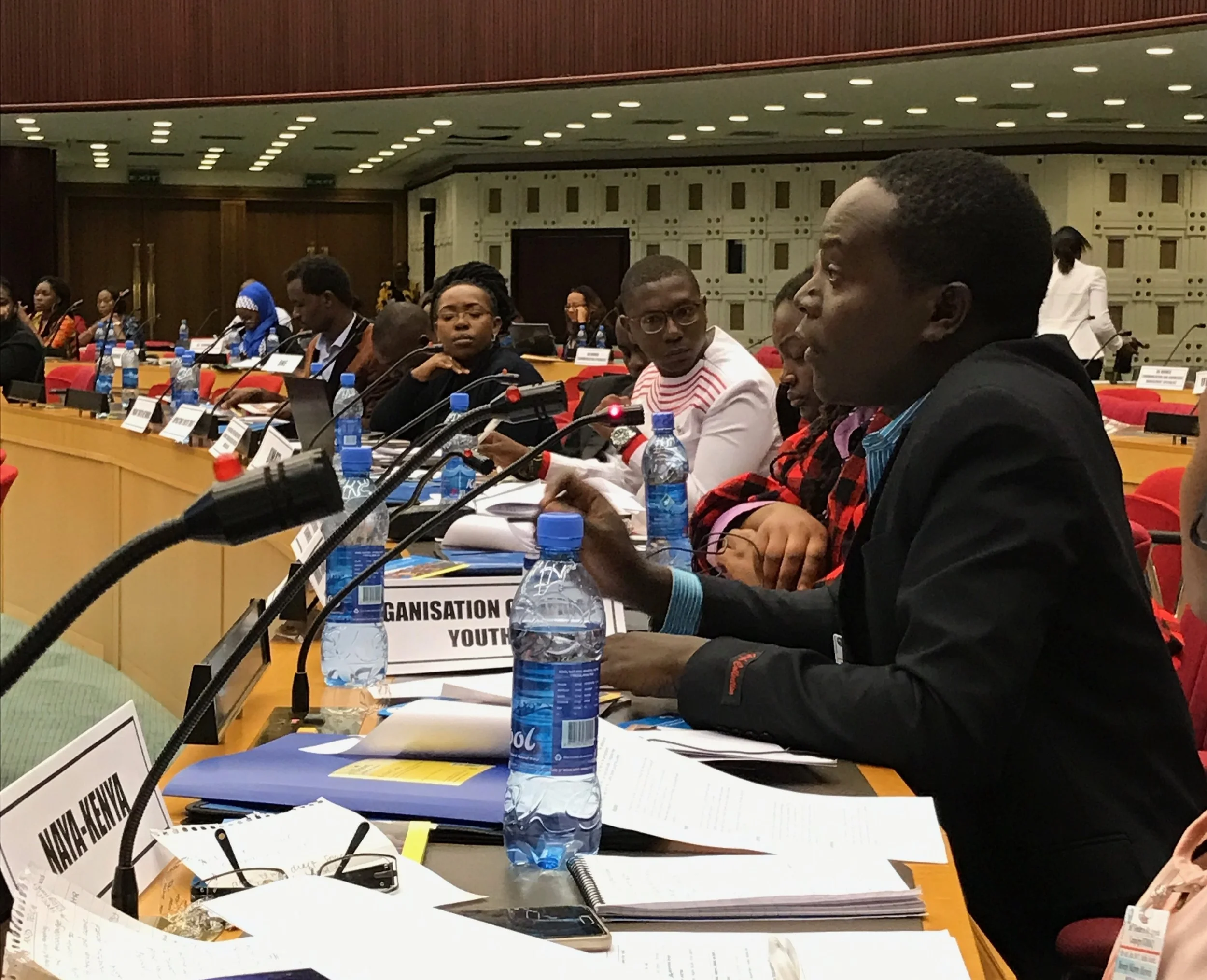
Therefore, this year’s AU Summit could bring about an honest conversation about the necessary youth investments to ensure our productivity and competitiveness in the job market. Our coalition of young Kenyan SRHR advocates were trained on the demographic dividend in Nairobi this month, and while at the Summit we identified certain recommendations and solutions to the challenges faced in the education and skills development pillar of the demographic dividend. We believe that in Kenya, innovation centers could address skills building AND SRHR needs.
We believe that a multi-sectorial solution could be Innovative Youth Intervention Centers, or Youth Friendly Centers, that are open 24 hours and include skills-building programs, resume development, youth friendly SRH services, sports, and entertainment spaces.
These centers should be in both urban and rural zones, well-equipped and have paid staff trained to deliver youth-friendly services’. Through such interventions, the youth will seek assistance freely and without fear of judgment or fear of someone ‘watching’ his/her moves. As Kenyan youth ourselves, we believe that if these centers have clear systems of accountability, and offer the information sought objectively and without stigmatization or judgments, they could make a huge impact in education, health, and preparing for the job market.
With our recommended intervention, we the Kenyan youth will feel, and say, that the Innovative Youth Intervention Center, is ours, ni yetu!

Youth Spaces at 28th African Union Summit
We demand this narrative to change, and young people, if given the chance, are the best ones to bring about this change. The Africa we want is a healthy, educated, productive, and youthful continent.
By Maureen Odour, Kenya
The African Union (AU) has set its annual theme for 2017 AU Summit as Harnessing the Demographic Dividend through Investments in Youth. This means that the AU kicks off the year of its deliberations and activities in its January meetings, and the rest of the year is shaped by this theme. It goes without saying that adolescents, young women, and young men are very important stakeholders in this effort to realize this development agenda throughout the continent.
The decision to implement programs and policies that yield a demographic dividend will determine the future of the continent. The demographic dividend is the economic benefit arising from a significant increase in the ratio of working-aged adults relative to young dependents. This is the agenda that the AU has selected to help bring about development in Africa, and there is no question as to whether the issues here are urgent; The question is how this will happen and how.
In Tanzania, we still experience very high rates of underemployment and unemployment among young people. Agriculture is highly underdeveloped and vulnerable to climate change. Teenage pregnancies are robbing girls of changes to remain in school and widen their opportunities and job prospects. Currently, the impact of investments in health can be summed up by high maternal mortality rates, which are not going down (and in many communities, are going up...).
For Tanzania to implement and achieve a demographic dividend, the government needs to prioritize a holistic investment in adolescents, young men, and young women. In order to EARN the demographic dividend, Tanzania can catalyze fertility decline by supporting the sexual and reproductive rights of young women and men; this means access to youth-friendly SRH services, comprehensive sexuality education, and access to contraction. In order to invest in the other four wheels of the demographic dividend -- which include health, education, governance/accountability, and economic reform, job creation -- Tanzania must start with SRHR.
We need real investment in family planning because it will mean that girls and young women can make decisions about their future and their fertility; that more girls and young women will stay in schools, and more women can get involved in economic activities. They will better able to bring up healthy and educated children who can contribute to the society.

photo credit: Lindsay Menard-Freeman / The Torchlight Collective
The Tanzanian Youth Coalition on SRHR is a coalition formed by young people in Tanzania focused in ensuring dignity, access, and quality access of sexual rights services to adolescent and young people in Tanzania. We are passionate about working with the government to ensure they are able to invest in adolescents and young people through improved access of health services, specifically SRHR.
As a participant of the 29th AU Summit Consultative meeting on gender mainstreaming in Africa Union, known as the Gender Is My Agenda Campaign (or GIMAC), I was very happy to see participation of young people in the room. We couldn’t keep quiet about the social injustices on health, employment, and education that continue to rob the young girls and women of Africa key opportunities to live a happy life. Young women were tired of singing the usual songs for help yet witness no changes.
We called upon governments to implement meaningful participation of young people in the policies framework. We asked questions like: “Why should we still call child marriage MARRIAGE?” We all concluded that this is not marriage; this is abuse, oppression, trafficking. At the end of this Summit and 2017 -- the year of harnessing the demographic dividend by investing in young people -- the African girl must not remain the poster for child marriage.
We demand this narrative to change, and young people, if given the chance, are the best ones to bring about this change. The Africa we want is a healthy, educated, productive, and youthful continent.
Cover photo credit: Birgitta Lund / Women Deliver
About Maureen
Maureen Oduor is young ASRH activist and alumnus of Women Deliver Young Leaders Program born and raised in Kenya, with over eight years’ experience working directly in grass root communities, advancing adolescent girls and women access to reproductive health rights and needs. Currently in Tanzania, she works with Service Health and Development for People Living Positively with HIV/AIDS Muheza branch (SHDEPHA+) as ASRH regional coordinator. Prior to joining SHDEPHA+, she worked on youth mobilization at African Peace Ambassadors Tanzania and Kisumu Medical education trust in Kenya, a leading grass roots reproductive health advocacy and provider in western part of Kenya. Maureen is also Co-founder of Tembea Youth Center for Sustainable Development a youth led organization in Western Kenya. She developed an mobile app allowing young people to access comprehensive and confidential sexual health information. Maureen was a critical facilitator in creating the Marie Stopes International Youth Films in Tanzania.

Madame Secretary General From the Slum - #YoungWomenSay
Though my journey has just begun, I hope part one of my life’s story inspires many others, especially girls and young women, to join me on this journey. Do not ever feel greatness does not come from slums.
By Edith Esinam Asamani, Ghana
Originally posted on Say It Forward for #YoungWomenSay
A few days ago, I was asked again a question I receive quite often, “How did you grow up so differently from the ghettos where you were raised?” My answer has always been simple, the Missy Bell kind:
I am destined for greatness; this much I know. Exactly how I will get there, only time will show.
I had always felt I was different, not in a way that made me feel superior to other people but in a way that made me feel responsible for every person in my community, the girls especially.
I grew up in a slum where the first words children learnt were vulgar insults that were used morning, afternoon and night as “friendly greetings,” or would lead to minor conflicts, depending on who was at the receiving end of those insults. Girls who got pregnant were chastised and forced to live together with the boys or men who impregnated them. Girlfriends were made to believe that their boyfriends beat them because they ‘loved’ them. NO never meant no to the men in my community, and especially meant YES when the question was, “Would you have sex with me?
I wondered what the response ‘YES’ meant to them though. Seeing these made my heart bleed, but this was the norm I was brought up to know. I knew though this should not be normal and I needed to do something about this. At age 7, we moved out of this community and have since lived in 2 typical Ga communities. All of them had the same DNA as my first; all slums. But I turned out different because it was only through being different that I could cause the change I dreamt of.
For my basic education, my parents enrolled me in an expensive private school – too expensive, as compared to their monthly earnings. I was being sacked for school fees every term. Sometimes when things got really difficult, I would suggest hesitantly that maybe I should be moved to a public school where the fees were much less. But mum would insist that she wanted her daughter to get the best of education.
All through school, amongst the numerous (ever-changing) dreams I had, I finally settled on hoping to become the United Nations Secretary-General. I wanted my community to change, and thought the world was pretty much the same as my community so would also need a touch of my personalized Midas touch of change. Well, I grew up realizing that different parts of the world faced different challenges and some were better developed than mine. I learnt from being an 11 year old advocate at Curious Minds – a children and youth-led media advocacy organization – that when issues are agreed at the United Nations, they affect everyone. This meant that becoming the UNSG was still a valid dream.

Twenty-six years down the lane, I have contributed to the world’s development framework and agreements. Many girls, including my two younger sisters, look up to me. I have, through Curious Minds, used radio to create awareness and initiated dialogues on issues that many Ghanaians would not want to talk about, even though life-threatening; unsafe abortion, teenage pregnancy, maternal mortality, child marriage, and so on. These dialogues and calls for accountability have caused stakeholders to play their rightful roles in ensuring that young people grow up in a healthy, conducive environment and are empowered to fulfill their full potentials.
Though my journey has just begun, I hope part one of my life’s story inspires many others, especially girls and young women, to join me on this journey. Do not ever feel greatness does not come from slums.
--
#YoungWomenSay is a collaboration between Say It Forward and The Torchlight Collective in support of International Youth Day (#IYD2016). This campaign features blogs from incredible young women from around the world about their experiences overcoming adversity. Each story shared will spark a $5.00 donation to the Midwives Forward campaign of the Family Care International program of Management Sciences for Health. We invite you to follow Say It Forward on Twitter and follow The Torchlight Collective on Facebook, Twitter and #TheTorchlightCollective
About Edith
Edith Esinam Asamani is a strong children, youth and women's rights advocate who is passionate about changing the world with and for young people. Currently, she is the Advocacy Officer for Curious Minds, a young people led media advocacy organisation in Ghana. She was the Conference Coordinator for the 7th Africa Conference on Sexual Health and Rights and a Co-coordinator for the dance4life Changemakers - the international youth-led advocacy group of dance4life. She is a Women Deliver Young Leader and has gained some voluntary work experience with UNFPA and UNICEF in Ghana. She has also been actively involved in the Post 2015 agenda and in all levels of discussions and advocacy on the new Sustainable Development Goals.

Wings of Change
The elixir of a healthy city
with leafy green lungs.
A peaceful home,
where all fears are gone.
a poem by Cecilia Garcia Ruiz, originally posted in Chasing Tomorrow by UNESCO
I open my eyes,
I observe.
The damp grass beneath my feet
confirms it.
It’s the time of the butterflies,
a ballet of bright blue wings.
It’s the time of “las mariposas”,
those who danced to eternity,
and planted the seeds
to fight for our equal rights.
There used to be days
when the suffocating air
clouded our eyes
and our minds.
Wasting the planet in a blink of an eye;
blindly devouring our life.
I open my eyes and I realize
those days are behind.
A dazzling peel.
Heavy, tropical scent. A fruit
grown by my hands.
I taste its fresh yellow pulp.
The gurgle of running water,
like a polished mirror
exalts the rejuvenated landscape.
The elixir of a healthy city
with leafy green lungs.
A peaceful home,
where all fears are gone.
I open my eyes and I see her.
Sitting next to me,
her tousled hair in the wind.
Daydreaming.
She knows she can go
as far as she wants,
even beyond the stars.
A free spirit she is,
no one to hold her back.
It is the legacy of the butterflies,
those who inspired until the last breath of their life.

The Adolescent Girl Puzzle - #YoungWomenSay
As a girl growing up in a rural community, I never had resources or power to help out my peers. This meant I witnessed a lot of suffering. All the same, I realized eventually that my voice is a very powerful tool that I can use to help girls my community, and that drove me to action.
By Maureen Odour, Kenya
Originally posted on Say It Forward for #YoungWomenSay
In my community, being a girl is like putting together a really difficult puzzle. Being a girl can often mean that the different pieces of you don’t quite fit together. You should not be well-educated, and your place is in the kitchen. You should learn to take care of your husband and children, but at the same a girl can be a child herself when she becomes a bride. She shouldn’t be confident enough to questions issues, make choices, and explore her potential, but must be strong enough to carry these burdens. This makes it difficult to be a girl in my community.
I broke through this painful reality to become a women’s rights activist. I didn’t want to see even one more girl go through this process of trying to fit these jagged pieces together. For many girls, this can feel like imprisonment, where their voices are silenced and their rights are violated. This drives me to support these girls and women to live a worthwhile life that they love.
My zeal to talk loudly about reproductive health was born when I witnessed a girl die helplessly due to unsafe abortion. She didn’t have access to information or resources about how to prevent pregnancy in the first place, and she also lacked choices when it came to accessing reproductive health options, including safe abortion services. As a girl growing up in a rural community, I never had resources or power to help out my peers. This meant I witnessed a lot of suffering. All the same, I realized eventually that my voice is a very powerful tool that I can use to help girls my community, and that drove me to action.
In my community, a super woman and decent girl is one who dies in silence and let others make decisions for her. I have seen situations where a pregnant woman in labor cannot be allowed to rush to the health facility because the husband is still yet to give consent. This usually means they end up in a grave. I am talking of a community where a normal biological process such as menstruation can shatter a girl’s future; sometimes it means she misses school because there are no facilities; sometimes it means she must trade sex for pads, which can lead to teenage pregnancy, unsafe abortion, or HIV/AIDS. People in my community pretend not to know that just like girls need books, school uniforms, and pens, they need sanitary towels and supplies. This is still a dream in my community.

At the decision-making table, where resources are allocated, young women and adolescents girls are not welcome. Their voices are never heard nor do their perspectives count, even though the outcome affects them the most adversely. Even though there is legislation in the Kenyan parliament right now that would help to address gender inequality in all its forms, the male-dominated parliament ensures that this dream of equality is yet to become a reality.
These are just few of major challenges women go through in my community. However this doesn't mean that things cannot change. I am a believer in lasting change, and I strongly believe that if efforts, investments, and good will are all put towards women and girls in my community things will change for brighter economy and society. This will come true if we engage at different levels, and if everyone does a small part. When a few people come together and use their voices in support of women and girls, we become one very loud collective voice that nobody can ignore.
Girls and women are the drivers of development and powerful agent of change in our communities. They not only deliver for themselves if enabled, but for the families, communities, and societies. If their opportunities are taken away because they are married early or face an unplanned pregnancy, or because they can’t go to school when they have their period, the entire world suffers the consequences. Women have the power to deliver babies and make world beautiful, but we can’t do that if the pieces fall apart during our adolescence.
--
#YoungWomenSay is a collaboration between Say It Forward and The Torchlight Collective in support of International Youth Day (#IYD2016). This campaign features blogs from incredible young women from around the world about their experiences overcoming adversity. Each story shared will spark a $5.00 donation to the Midwives Forward campaign of the Family Care International program of Management Sciences for Health. We invite you to follow Say It Forward on Twitter and follow The Torchlight Collective on Facebook, Twitter and #TheTorchlightCollective
About Maureen
Maureen Oduor is young ASRH activist and alumnus of Women Deliver Young Leaders Program born and raised in Kenya, with over eight years’ experience working directly in grass root communities, advancing adolescent girls and women access to reproductive health rights and needs. Currently in Tanzania, she works with Service Health and Development for People Living Positively with HIV/AIDS Muheza branch (SHDEPHA+) as ASRH regional coordinator. Prior to joining SHDEPHA+, she worked on youth mobilization at African Peace Ambassadors Tanzania and Kisumu Medical education trust in Kenya, a leading grass roots reproductive health advocacy and provider in western part of Kenya. Maureen is also Co-founder of Tembea Youth Center for Sustainable Development a youth led organization in Western Kenya. She developed an mobile app allowing young people to access comprehensive and confidential sexual health information. Maureen was a critical facilitator in creating the Marie Stopes International Youth Films in Tanzania.

A Girl from Sinking Bottom - #YoungWomenSay
There were days I walked miles to and from high school, which was miles away in the neighboring community. There were days when I sold coconuts in the village and snacks on the school bus in order to make money for school fees. Despite this hardship, I was determined to complete high school.
By Victoria Melhado-Daley, Jamaica
Originally posted on Say It Forward for #YoungWomenSay
(Dedication: Dedicated to my late father, Everton Melhado Oct.1961-July 2016)
Early in my childhood, my parents separated and eventually got divorced. My sister and I went to live with our grandmother in rural Jamaica. We lived in a farming community called James Hill, down a rocky road at the foot of a hill called “Sinking Bottom.”
For years we couldn’t afford modern amenities like electricity and television, and I studied with a kerosene lamp. We used an outside pit latrine and water supply was from neighboring springs or rain water.
My parents tried very hard to provide for us, even though they were separated and each only had secondary education. My mother got pregnant as a teenager and became a domestic helper. My dad did several jobs at various times, including farming. Despite their hard work, it was still really hard financially.
There were days I walked miles to and from high school, which was miles away in the neighboring community. There were days when I sold coconuts in the village and snacks on the school bus in order to make money for school fees. Despite this hardship, I was determined to complete high school.
As a teen, I felt the devastating effects of physical and sexual abuse. Looking back, it feels like my teen years aligned with my home at Sinking Bottom. Eventually I sank further into low self-esteem, marijuana use, feelings of rejection and depression and attempted suicide.
Yet, I was determined to break the cycle of poverty in my family, and rise from the sinking bottom. I was determined to rise. I determined I was going to have University education.
Throughout my life, my grandmother bestowed her decades of wisdom, courage and strength on us, and inspired me to dream big. She inspired me to believe in my unseen potential and to have unwavering faith in God. She taught me to respect others and to look out for the vulnerable.
Today, I am still transforming — like we all are — and still trying to bring about the positive change I want to see in the world. Life is about embracing change and overcoming challenges. Today, I am a Registered Nurse and a midwife, a youth leader, youth advocate, national ambassador and mentor in the Governor General’s ‘I Believe Initiative’. I am also the Founder and Director for a Youth focused NGO Be Inspired International, and the author of two books called, “Be Inspired” and “Seven Secrets of Successful People.”
I am the girl from “Sinking Bottom” who is still rising. In the words of Lupita Nyong’o: “Your dreams are valid and possible.”
--
#YoungWomenSay is a collaboration between Say It Forward and The Torchlight Collective in support of International Youth Day (#IYD2016). This campaign features blogs from incredible young women from around the world about their experiences overcoming adversity. Each story shared will spark a $5.00 donation to the Midwives Forward campaign of the Family Care International program of Management Sciences for Health. We invite you to follow Say It Forward on Twitter and follow The Torchlight Collective on Facebook, Twitter and #TheTorchlightCollective
About Victoria
Victoria Melhado-Daley is a Jamaican youth leader and advocate. She is also a registered nurse and a midwife. Melhado-Daley has spearheaded several successful Anti-Child abuse and Anti-Human Trafficking initiatives. She has also been a guest presenter/panelist at numerous local, regional and international forums. Victoria is a member of the Nurses Association of Jamaica and was the youngest winner at that time, to cop the prestigious National Nurse of the Year 2012-2013 title. Victoria was recognized by the Caribbean Nurses Organization as an outstanding Regional Nurse of the Year (Oct. 2014). Melhado-Daley is a past facilitator for a support group of persons living with HIV/AIDS and is a featured ‘Vital Voice’ in the Pulitzer Centre for Crisis Reporting 2007 Documentary on ‘LiveHopeLove.com’ which has since won 3 international awards, A People’s Voice Webby Award (09) An Emmy Award (09), and A Gracie Award (2010). Victoria has mentored pregnant teenage mothers living in the inner-city since 2007 and served for a number of years on the National Youth Month Planning Committee. In September 2012, Victoria represented Jamaica as a youth leader at the CIVICUS World and Youth Assemblies in Montreal, Canada, where she Co-chaired youth discussions on the Post-2015 Agenda. In May 2013, Victoria represented Jamaica at the Women Deliver Conference in Kuala Lumpar, Malaysia ‘among 100 Young Leaders from across the world’. She was also a part of the Jamaican delegation to International Council of Nurses 25th Quadrennial Congress in Melbourne, Australia. Melhado-Daley was one of 6 young midwife contest winners sponsored by Ipas to the 30th Triennial Congress of the International Confederation of Midwives, Prague, Czech Republic, June - 2014.

Building Support and Trust Through Volunteering - #YoungWomenSay
Being a volunteer was something rather new for our generation, and so were civic education, youth rights and the concept of participation. For that reason most of our parents had little knowledge and understanding of why this was important to me and my peers, as participation had political and negative connotations and sex and sexuality were generally a taboo.
By Ana Rizescu, Romania
Originally posted on Say It Forward for #YoungWomenSay
When I was 15 years old, I joined Youth for Youth, a Romanian non-governmental organization working on youth sexual and reproductive health and rights (SRHR). I became a volunteer and a peer educator, and I went into the role with very little knowledge about what SRHR even meant. My awareness, self-confidence, and dedication grew with every new volunteer I met, every workshop and training I attended, every outreach activity and session I delivered in high schools, and every young person with a question I could answer.
It was challenging to be a peer educator on SRHR at that young age. My parents, friends and the community around me were casting their protective shield, making it clear to me that they wanted me to prioritize high school studies. “You must make sure that preparing for university admission is your main focus,” they all said to me.
Being a volunteer was something rather new for our generation, and so were concepts of civic education, youth rights, and participation. For that reason most of our parents had little knowledge and understanding of why this was important to me and my peers, as participation had political and negative connotations and sex and sexuality were generally a taboo. But I was lucky to have my parent’s trust and support. They played an instrumental role in allowing me to explore, to develop my analytical thinking and leadership skills, to follow the paths I thought were right, and to learn from my own mistakes.
My high school principal and teachers saw my interest in being engaged in different projects and extracurricular activities, my devotion to this cause, and my accomplishments, and they have guided and supported me to pursue my aspirations. When I was 19 years old, I was allowed and encouraged by my parents and teachers to undertake a 3 month youth fellowship in the Peer Education Training and Research Institute in Sofia, Bulgaria. I truly believe this was a key milestone and the tipping point in my activism, as the experience and the people I met then shaped my life and who I am today.
When I was young, some of my parent’s friends and some teachers thought I was wasting my time with volunteering instead of studying and said this wouldn’t bring any contribution to building a career path. They advised me and my parents to reconsider my decisions. There still are people who think this and who would not allow their daughters to do the things I did.
Having a supportive environment, one that includes not only your parents, your family members, your teachers and friends, but also the entire community can be life-changing. It can allow girls and young women to pursue their potential, while its absence can hinder their aspirations. And this has a cascading effect on the society and its growth and development.
I see how Romania and the Eastern European region have undergone major transformations when it comes to the concept of volunteering, leadership, and participation. The opportunities for young women and girls to be developing analytical and soft skills, for developing effective interpersonal relationships, for nurturing leadership skills, and enabling them to exercise their rights must continue growing. These opportunities must be inclusive of young women and girls in all their diversity.
As I look back and as I look forward, trust and support remain the key words. This means trust and support from those around us and from within ourselves, as we must believe in our own strength and be driven by our inner voice.
--
#YoungWomenSay is a collaboration between Say It Forward and The Torchlight Collective in support of International Youth Day (#IYD2016). This campaign features blogs from incredible young women from around the world about their experiences overcoming adversity. Each story shared will spark a $5.00 donation to the Midwives Forward campaign of the Family Care International program of Management Sciences for Health. We invite you to follow Say It Forward on Twitter and follow The Torchlight Collective on Facebook, Twitter and #TheTorchlightCollective
About Ana
Ana Rizescu is the Coordinator of YouAct, the European Youth Network on Sexual and Reproductive Rights. She builds on more than ten years of volunteering and work focusing on youth participation, health and rights. Ana gained significant experience in the youth area while working as Youth Consultant for the UNFPA Eastern Europe Central Asia Regional Office, as International Coordinator of Y-PEER, Youth Peer Education Network, as an International Fellow at the Peer Education and Research Institute in Bulgaria, as Youth Focal Point for Y-PEER and Peer Educator at the Youth for Youth Foundation in Romania. Ana holds a BA in Communication and Public Relations from the University of Political and Administrative Sciences in Bucharest and is currently enrolled in a MA on Development, International Cooperation and Humanitarian Aid. She has lived in Istanbul for the last 2 years and currently is based in Bucharest.
#YouthDay2016 - A Collective Reflection
We talk about how we’ve grown up in these movements, what inspires us about these movements, what we’ve learned from the dynamics and people these movements are comprised of, and how these movements have changed (and have changed us).
August 12th marked the celebration of the 16th International Youth Day. Amidst the fury of activities -- Tweet chats and online consultations and webinars and blog series -- members of The Torchlight Collective wanted to take a moment to reflect on what International Youth Day has meant for us over the years. We share perspectives on how far we’ve seen youth movements come in our lifetime, what barriers still appear to remain, and what makes us hopeful about young people organizing around key health and human rights issues.
We talk about how we’ve grown up in these movements, what inspires us about these movements, what we’ve learned from the dynamics and people these movements are comprised of, and how these movements have changed (and have changed us).
We call you to action. We ask you to reflect. We hope to challenge you. We hope you remain committed to supporting youth-led initiatives and movements.
The youth movement was really the first opportunity I had to engage in political activism and organising within a community. I cut my teeth on anti-war organising in the US as an adolescent. We would meet in a church with a long history of opening its doors to the arts, local programmes, and social movements. Here we'd organise the youth block in marches, walk outs, and protests. It was bittersweet, because it was also the first time I realised that unequal power structures carry through even to places and spaces that consciously want to dismantle inequalities. I think the youth movement is a force for so much hope and change. Its vitality is its ability to keep diversifying, and keep ensuring new voices are heard. I think the movement is increasingly aware of that, and that young people are organising more than ever in a way that is collective, inclusive, and increasingly cognisant of how intersectional and interrelated key issues really are.
- Grace
Youth movements, especially as they intersect with queer, feminist, black, indigenous, LGBTQ, etc., have changed (and continue to change) the world for the better. Young people are active leaders for our present and future lives, societies and environments. As adolescence and youth gain attention in all spheres of society, investments and trust will increase to make the world really inclusive for different voices. Unfortunately, the opportunities, information, and services that adolescents and youth have access to today are so unequal, and it is my hope that they are not fighting to get their rights recognized over the next 15 International Youth Day celebrations.
- Daniel
One of the things I've loved about being a member and admirer of youth movements is watching the way we've struggled to blend together our identities and be real and whole with each other. We all had to learn how to check our privileges, internalized biases, and assumptions at the door. It was never easy, but as a result we've built something that is capable of (if not always perfectly successful at) reaching out to marginalized, excluded, or otherwise vulnerable young people wherever they are. Youth movements continue to strive to be better, more inclusive, and more self-aware: we’ve learned a ton from other progressive social justice movements, and other movements are now starting to see what they can learn from young people.
- Chelsea
Today there are more people and governments talking about youth engagement, meaningful participation, and the relevance of working for and with youth. This has taken lots of work from lots of young people and allies over the years and across many sectors. Yet, the barriers to achieve young people's full access to sexual and reproductive health and rights are still the same (if not worse off) in many parts of the world. Everything from the criminalization of same-sex activity to lack of access to modern contraception to a lack of comprehensive sexuality education in schools, and so on. Sometimes there is a lot of noise and little action. Plain and simple: Young people and youth-led organizations need money and resources to increase their capacities and do more. Many stakeholders expect young people to be volunteers, learn by themselves, and reach decision-making spaces with little or no support. Without money behind these words, the promises related to youth are empty.
- Ricardo
I can't imagine what my life or work would be without youth movements. I was one of the lucky ones who found youth movements at a very young age and was able to participate in, nurture, and build on that. Working in these spaces gave me my sense of self and understanding of the impact I might have in my community and on our world. I grew with the understanding that being involved and working to improve lives, policies, and experiences was a requirement for me to operate. It's taught us to be solid in our convictions and strong in the face of opposition, taught us compassion for those different than us or struggling in different ways, while finding the threads that connect us to find some shared ground.
- Reshma
To work within the youth movement opens up a world of possibilities to transform realities, building on the capacity, commitment, and strength of a generation that mobilizes ideas, resources and the will of individuals and communities to build societies where everyone can realize their fundamental human rights. It is uncertain what the future holds for adolescents and youth, but as long as they continue to thrive together we can say that we are right on track to achieve what we've envisioned.
- Ceci
We have reached a tipping point in our global health and development efforts. It is no longer an anomaly to hear a CEO or a Prime Minister or a Minister of Health or the Secretary General of the UN include statistics or talking points in their speeches about why young people should be a priority. There is a critical mass of decision-makers and influencers who get why engagement and participation are important. Every sector has a stake in the youth movement. But these speeches are one pieces of the paradigm shift puzzle. It’s time to follow up these commitments with lasting, sustainable, and meaningful support for youth civil society initiatives. In the global health and development space, we need to move beyond funding our “favourite” young person to attend events and speak on behalf of young people everywhere. We need to challenge ourselves to ask adolescents and young people -- especially those who are hard to reach, who are marginalized, who don’t fit the perfect mold of what it means to be a youth activist -- what they need so that they can support their community, their peers, their country, their issue, their movement. It’s time to listen, listen, listen, listen, listen, ask question, listen, listen, and offer your resources to this movement. It has been time.
- Lindsay
--
Follow us on Facebook and Twitter at @Torchlight_org and #TheTorchlightCollective.
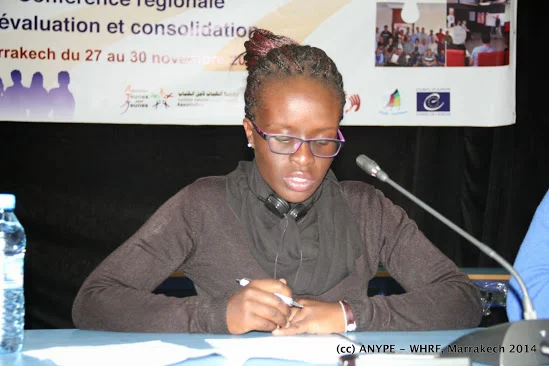
You Are The Change - #YoungWomenSay
I made friends and enemies alike but the message was clear. I was a force to reckon with, a girl who had grown into a young woman in a not so supportive society who wanted the world to be different for other girls.
By Yvonne Bellys Akoth, Kenya
Originally posted on Say It Forward for #YoungWomenSay
As a girl growing up in Kenya, a patriarchal society with a strong cultural heritage, I knew from the onset that achieving my goals was not going to be a walk in the park. Most of the time, I often considered myself a coward for the decisions I made. Many of the decisions I made as a young woman meant being cautious and taking preventive measures to avoid the social, economic and cultural issues that affected women in my society.
We were taught in school that conflict is natural but violence is not. Violence against women and girls in my community seemed natural, commonplace, normal. I witnessed friends and women in my extended family experience violence, including economic violence, and suffer the consequence of this violence, and I watched it affect their social, mental, and physical well-being. Others struggled with low self-esteem, poverty, disabilities, or mental health complications related to the violence they experienced.
This is why I chose to play an active role in my community to support women and girls by working towards violence prevention. I did this by taking the bull by its horns. I worked with children, youth groups and adults alike, championing human rights, social justice and gender equality in my community and later in broader society. I made friends and enemies alike but the message was clear. I was a force to reckon with, a girl who had grown into a young woman in a not so supportive society who wanted the world to be different for other girls.
My passion, courage, and commitment to improve the situation of the most vulnerable members of our society — women and girls — catapulted me to the international platform. The opportunity to represent my country in international policy forums and taking up leadership roles in regional and international youth networks and organizations afforded me the opportunity to influence young change makers and global leaders. Over the years, I have seen more young women — from Kenya to Rwanda, Madagascar to India — take up leadership roles and join in the spirit of championing a violence free society for women and girls.
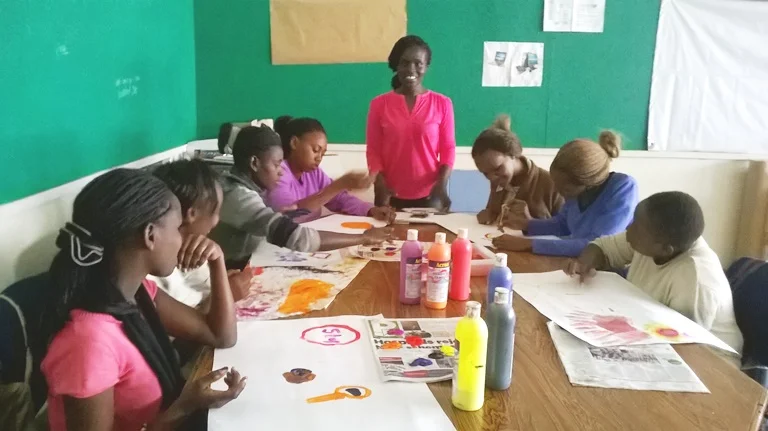
Today, I am proud to have founded an organization that champions sustainable peace and promote violence prevention among youth in local communities. Young women have immense potential in them to create change which will have a ripple effect in their community. So many times, all it takes is courage and confidence to take the first leap. Having served as a young woman youth advocate leading from the front, I believe that everyone can be a changemaker. My advice to young women around the world is this: trust yourself, take the first step, and make it happen the best way you know how. You are the change your community needs. You are the change we need in this world.
--
#YoungWomenSay is a collaboration between Say It Forward and The Torchlight Collective in support of International Youth Day (#IYD2016). This campaign features blogs from incredible young women from around the world about their experiences overcoming adversity. Each story shared will spark a $5.00 donation to the Midwives Forward campaign of the Family Care International program of Management Sciences for Health. We invite you to follow Say It Forward on Twitter and follow The Torchlight Collective on Facebook, Twitter and #TheTorchlightCollective
About Yvonne
Yvonne Bellys Akoth is a peace advocate and a violence prevention strategist. She is also a Generation Change Fellow of the United States Institute of Peace (USIP) and a Post2015 Ambassador of the World Association of Girl Guides and Girl Scouts (WAGGGS). Yvonne runs a local non-profit organization ‘Impart Change,’ that focuses on championing sustainable peace and promoting violence prevention among youth, with special focus on girls and young women in local communities. As a peace advocate, she has sat in various global committees that include the World Health Organization – Violence Prevention Alliance (WHO-VPA) and contributed in the development of a global non-formal educational curriculum ‘Voices against Violence’, a partnership project between WAGGGS and UN Women. Yvonne has been an official youth delegate representing Kenya and Africa in numerous regional and global conferences, and selected a key speaker and a panellist in global events such as the 1st Global Forum on Youth Policies in Azerbaijan, the 2nd World Human Rights Forum in Morocco, Open Square Summit in Washington and the 2015 United Nations ECOSOC Youth Forum in New York, USA. Yvonne is an avid campaigner of a violence free society and would like to see more girls and young women participate in sustainable peace and development initiatives.
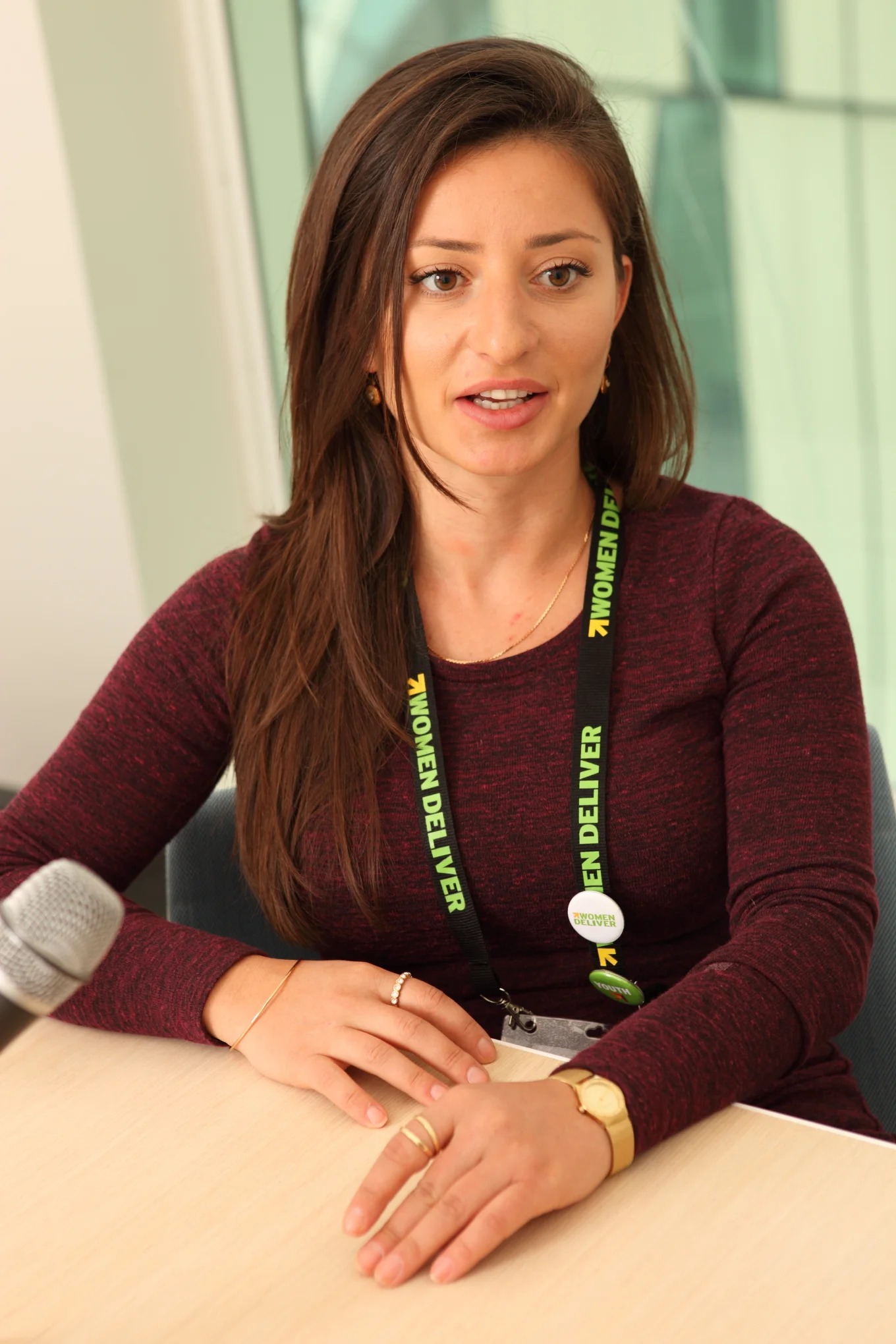
The Limitless Power of Girls - #YoungWomenSay
It seemed like the inequalities for girls were abundant no matter where I looked. I started to realize that something was wrong, that there was a power trying to keep me down and that didn’t want me to be confident and strong.
By Gvantsa Khizanishvili, Georgia
Originally posted on Say It Forward for #YoungWomenSay
I first uncovered the inequalities and challenges that girls face at a very young age. When I was a girl, I loved basketball. It made me feel free, fast, strong, and in control of my own power and body when I played. But I learned really quickly what gender inequality means and how girls experience challenges that boys simply don’t. I was judged and told that playing sports was not something that girls do. I was told that it wasn’t “lady-like” and that nice girls are sweet instead of athletic. But I played basketball anyways. Because I was doing something that “only boys should and could accomplish,” it made me feel both exceptional and powerful but also rejected and discouraged.
As an adolescent girl growing up in post-war Georgia, I continued to uncover inequalities. Boys were considered intelligent and strong, and girls were cute and possessed an inherently “inferior intellect.” Girls were supposed to stay home while boys were allowed to have fun. Girls were told to keep their virginity for boys and boys could do anything they wanted.
It seemed like the inequalities for girls were abundant no matter where I looked. I started to realize that something was wrong, that there was a power trying to keep me down and that didn’t want me to be confident and strong.
As a young woman, I saw many girls around me forced into marriage and deprived of education. Other girls felt the social and cultural pressure to have children and become caregivers, usually without having any knowledge of how to control their own fertility. I talked to young girls in my community about the taboos, lack of education, and stigma around sex, sexuality, and unintended pregnancies. I was not able to close my eyes on the issues that surrounded me. On the contrary, I wanted everyone to know that girls are strong and have limitless power. It was simply unacceptable to me that girls were prevented from living out their full potential.
This is not only my story, but a story familiar to many women, both in Georgia and around the world. I became a young advocate because there was an innate discomfort with these apparent inequalities. I was empowered and hurt why many young girls are not given the opportunities to find their power, exercise equal rights, and most importantly, voice and express their needs and aspirations.
Through the years of overcoming the multiple barriers and fighting for young people’s sexual and reproductive rights and social justice, I realized I am fortunate to grow up with family and friends who taught me that I should believe in myself. They didn’t expect me to adhere to social norms. Despite being raised during war, my parents provided access to the best education available, while, most importantly, inspiring me to be who I am. For many young girls and women around the world, there is no option for school and these rights are non-existent.
I want to change that, and I work every day to do so.
This is why I am dedicated to fight the inequalities and continue to work to provide opportunities that give girls and women the platform to realize their true potential. There is no price that can be put on the empowerment of girls and women. This is why I played basketball anyway, and why I talked to girls about sex even when it was taboo. This is why I went on to become a doctor, and why I run marathons today. When girls challenge the limited opportunities that are presented to them and strive for something bigger, they are shattering the norms that keep them down.
I am always inspired by other women and I am dedicated to dismantling structures that make girls feel powerless and worthless. The voices of girls must be heard, and girls should be given opportunities to learn and uncover their excellence and the exceptional qualities they bring to the world. I believe that empowered girls are central to equality and peace, and the only way that girls can make change is if they can access their limitless potential
--
#YoungWomenSay is a collaboration between Say It Forward and The Torchlight Collective in support of International Youth Day (#IYD2016). This campaign features blogs from incredible young women from around the world about their experiences overcoming adversity. Each story shared will spark a $5.00 donation to the Midwives Forward campaign of the Family Care International program of Management Sciences for Health. We invite you to follow Say It Forward on Twitter and follow The Torchlight Collective on Facebook, Twitter and #TheTorchlightCollective.
About Gvantsa
Gvantsa is a medical doctor and human rights activist. In her role as advocate she works to strengthen the current critical health and human rights challenges and ensure an appropriate national and international policy and program response. Currently, she works as public health expert for health and human rights projects; “Bridging the gaps: health and rights for key populations” funded by Dutch Ministry of Foreign Affairs, in cooperation with the AIDS Foundation and Safe Blood State Program for National Center for Disease Control and Public Health. Gvantsa served as a World Contraception Day Ambassador 2015-2016 for Eastern Europe and Central Asia. Thought this initiative she is implementing a project in Georgia using creative digital storytelling techniques to uncover the realities that young people in their communities face when trying to access their sexual and reproductive health and rights, particularly contraceptive information and services. Previously, Gvantsa worked in a different public health programs, such as USAID Tuberculosis Prevention Project, reproductive health project with national Planned Parenthood Association, cancer prevention program with the National Cancer Center and youth healthy lifestyle education with UNFPA Georgia as well as consultant for the Humanity for the Children in Rwanda. Gvantsa also serves on various national and international boards; she is Women Deliver Young Leader and One Young World Ambassador from Georgia. Gvantsa has strong passion for international development, strengthening public health systems, youth empowerment and education, women’s rights, and social entrepreneurship. She earned a Doctor of Medicine (MD) degree from Tbilisi State Medical University as well as a Master in Public Health (MPH) from the University of Missouri-Columbia in the United States.

The Voice of a Survivor - #YoungWomenSay
These initiatives are empowering because these young people are able to openly talk about sex through comprehensive sexuality education modules and make choices about their bodies. The programs are also reassuring for a brighter future in the women's rights movement because girls can openly discuss and suggest solutions to their own problems.
By Oumie Sissokho, The Gambia
Originally posted on Say It Forward for #YoungWomenSay
During the three decades I have lived as a woman, I have experienced, felt, and witnessed many discriminatory practices, especially harmful traditional practices such as female genital mutilation and child/forced marriage against women and girls in my community. In most instances, the victims of such discriminations have little or no power to end the injustices they face. This situation is the sad reality for many, just because they are a girl or woman in such environments.
I am a thirty year old woman who decided to question such inequalities, and am still demanding change in my community against these cultural practices and patriarchal norms that undermine the rights, freedoms and integrity of women and girls.
This journey, I must confess, started at a time when I didn’t fully understand what these harmful practices were in the first place. I couldn’t even categorize them as harmful but felt that something is just wrong with denying girls and young women from enjoying the right to their bodily integrity. It is patriarchal norms that allow for women to be sexually controlled and pinned to the needs of men and boys. I also couldn’t understand how girls can be pulled out of school to be married off to relatives, neighbors and even strangers. At that young age, I was convinced that any man who forces a girl to marry him is not a good man, regardless of who he is.
Religious reasons, health benefits, social cohesion, virtuousness and cleansing of women and girls are some of the reasons put forward by the proponents of female genital mutilation. For child marriage, it is usually justified with the prevention of teenage pregnancy or “dishonour” caused by it, and poverty, among others. All these justifications are backed by gender inequality and the exploitation of girls. In a society where social security mostly rests on the extended family system, women and girls become economic tools for the social stability of their families. This is not only wrong but terrifying for any girl to live through.
From a very conservative ethnic group, I was socialised to believe that FGM, like other traditional practices are in the best interest of women and girls. The consequences of the practice became very obvious to me when I started teaching myself about the inequalities girls of my tribe face in their daily lives. Illiteracy and unemployment put us all vulnerable to economic deprivation, dependency and a vicious cycle of poverty. I wanted to break this ritual to become an educated girl who will make things happen for my mother and other women in a community that continuously deprive them from achieving greatness or even when they do so, their recognition often is attached to the men in their lives.
Being the first girl to attain university education in my paternal extended family, I thought I deserved great respect and admiration. I wanted to serve as a role model to girls to attain education and build livelihood skills to live productive and independent lives. My expectation to be an exemplary young woman turned into a nightmare when I narrowly escaped a forced marriage. At the age of twenty-five, I couldn’t imagine that a marriage was being arranged on my behalf without my consent. I declined the proposal based on the reason that I will decide how I live my life by choosing my own partner without any form of coercion.
Through this experience, in addition to the scars I carried from FGM, I felt even more compelled to do so something for the many girls in my community who can’t protect themselves from such violence. Despite all the odds, I believe in myself. I knew I can be the voice to demand for equality, freedom and social justice for the oppressed and marginalized. I set myself on a personal journey to change this situation.
Turning the prevalence rates of FGM from 77% to 0% and child marriage from 36% to 0% has become a life commitment. The reality is this is such a giant goal and a vision that is overwhelmingly complex, yet with commitment, I am convinced that it is attainable. I don’t have all the answers, neither do I understand all the complexities that hitch my ambition to end FGM but my devotion is deep. Although gender-friendly laws and policies are required in order to fully address gender-based violence, I am conscious that a social change movement must be the bedrock for any meaningful change to attain for women and girls. With few friends, I had an idea to create an initiative that will contribute to this movement.
In 2011, I co-founded The Girls’ Agenda, an organization led by young women in my community to address several issues that undermine the progress of young women and adolescent girls. Through this organization, I educate, campaign, lobby and demand for the respect and protection of the sexual and reproductive health rights of girls and young women by addressing child marriage and FGM among others.
My best strengths lie in my social mobilization skills and ability to initiate community friendly initiatives to educate my people about the human rights violations and consequences of child marriage and FGM and how we can work together to uphold the rights of every young woman and girl. Through this work, I am transforming lives.
Working with local politicians, religious leaders and institutions, custodians of tradition, parents and guardians, I have been able to initiate discussions regarding sex, sexuality; openly talked about the clitoris, vagina and penis and other reproductive health right matters with very conservative and sometimes difficult populations. Surely, these sessions were sometimes hard to manage but the necessity to penetrate these individuals and or their institutions will enable me to achieve any meaningful progress for my beneficiaries.
In addition, I also lead activities that exclusively target young people. To end FGM, child marriage, honour killing or virginity testing in my generation, it will be through the voices and actions of young people. It definitely will be through the initiatives we lead to create change for girls and women to thrive. Seminars with young researchers and academics, conferences with young people, exclusive summer camps for girls and trainings for young people going to religious institutions, experience sharing/story telling sessions with teenage mothers and survivors of FGM are some of the activities I lead.
These initiatives are empowering because these young people are able to openly talk about sex through comprehensive sexuality education modules and make choices about their bodies. The programs are also reassuring for a brighter future in the women’s rights movement because girls can openly discuss and suggest solutions to their own problems.
These efforts have turned me into a young leader conscious of my rights and those of my peers as we tirelessly work to ensure these rights are respected and protected. This has enabled me to become a change agent by mobilizing young people to lead this process. We are gaining grounds by breaking the most difficult barriers, glass ceilings and stereotypes that draw us back. It is possible for every young woman or girl to be a leader of transformation, a voice for the voiceless and a beacon for a free society where women and girls’ human rights will be protected and guaranteed.
--
#YoungWomenSay is a collaboration between Say It Forward and The Torchlight Collective in support of International Youth Day (#IYD2016). This campaign features blogs from incredible young women from around the world about their experiences overcoming adversity. Each story shared will spark a $5.00 donation to the Midwives Forward campaign of the Family Care International program of Management Sciences for Health. We invite you to follow Say It Forward on Twitter and follow The Torchlight Collective on Facebook, Twitter and #TheTorchlightCollective
About Oumie
Oumie has more than ten years of experience in the non-profit and voluntary sector working for and with underserved groups and communities. She is the co-founder of The Girls’ Agenda, a community youth organization. Through this organization, she campaigns for the rights of girls and young women in her country by demanding for investment in their education and reproductive health. Currently, she focuses mostly on harmful cultural practices such as female genital mutilation, arranged and forced marriages. This role allows her to conduct capacity building programs on comprehensive sexuality education, life skills, and leadership development for adolescent girls. She also worked with the Network against Gender-Based Violence- The Gambia for almost a year, advocating for the elimination of violence against women and all forms of discrimination by targeting policy-makers and religious leaders. In that position, she worked closely with young people to galvanize voices against gender-based violence. Oumie spent nine years with the Nova Scotia Gambia Association, a non-profit group that works on health promotion in schools and communities. During those years, she focused on adolescent development through peer education, mentorship and leadership skills transfer to keep vulnerable girls in school.
Because of her commitment to the advancement of the status of women and girls in her country, Women Deliver awarded her the “Global 100 Young Leaders Award” in 2012. Also, during her graduate program, she did a fellowship with the Carnegie Council for Ethics in Global Affairs where most of her researches were on women’s human rights in global politics. Presently, she leads successful campaigns such as exclusive summer camps for teenage girls where they learn about crucial reproductive health matters and build their assertiveness skills to protect themselves from discrimination. Further, Oumie and her team engages excluded young people in religious institutions to train them on gender-based violence and encourage them to join the ongoing advocacy for women's empowerment. Through these activities, she gained an extensive experience in initiating and managing health and reproductive rights projects in remote, poorer and under-served locations. She has keen interest working for and with groups that empower girls through education and the elimination of all forms of degrading and harmful traditional practices. Her latest leadership role is a board position with Fashion Redefining Justice, a New York-based organization working to empower adolescent orphans and vulnerable children in Sub-Saharan Africa.

Building Intergenerational Bridges - #YoungWomenSay
Sharing from my experience I would like to say that young women should be able to challenge the society, social norms, and the status quo. Challenge the structures. Challenge people who challenge you! Keep doing what you do and one day people will see what you mean and realize the impact you are making. We can’t make everyone happy, nor should we be required to try.
By Sarah Soysa
Originally posted on Say It Forward for #YoungWomenSay
I started my work as a volunteer and I still volunteer. Late at night, in the weekends, travelling in and out of my city alone for 10 hours for both work and volunteer work, sometimes I get to travel in groups and that is much more fun and safe. As a feminist activist, I work hard to break barriers and voice my frustration over rights violations, inequality, injustice and challenge the sexist system. BUT this story is not about that. This is a story about all my feminist friends, mostly young women.
Many of my friends studied the same degree with me, and we started volunteering with a lot of motivation and passion. We were determined to make a difference, but lost the opportunity as a result of a range of discriminatory cultural norms and values. They were not allowed to travel freely, associate with boys, work too late, talk about sexuality, talk about equality, and challenge the norms.
They were challenged, demotivated, and stopped by their parents, boyfriends, brothers, neighbors, relations and some even by social media trolls. I succeeded mainly because I received support throughout from my parents and my mentors. They believed in me even when others didn’t.They strengthened me to fight trolls.They guided me well and stood up for me. I am truly grateful to have met the right mentors who shared their expertise, experience and stories with me to make me strong.
I would suggest and request kindly from all feminists and veterans in the field to help younger feminists! Support them. Lift them up and share your experience with them. It is critical for younger feminists to respect and acknowledge the older generations and vice versa for their contribution, creativity and capacities. Intergenerational work is truly important to build a movement and strengthen existing movements.

Now I see a greater sense of acceptance and admiration for my work in the country than when I started. People have seen the transformation our work can create and have started believing in them. I now easily talk about very taboo topics like sexual violence, abortion or sexuality education on national TV and in policy-making fora where I am accepted as a value addition to their conversations.
Sharing from my experience I would like to say that young women should be able to challenge the society, social norms, and the status quo. Challenge the structures. Challenge people who challenge you! Keep doing what you do and one day people will see what you mean and realize the impact you are making. We can’t make everyone happy, nor should we be required to try! Don’t let anyone keep you down. Not even your parents. I wish I tried less to make everyone happy…
--
#YoungWomenSay is a collaboration between Say It Forward and The Torchlight Collective in support of International Youth Day (#IYD2016). This campaign features blogs from incredible young women from around the world about their experiences overcoming adversity. Each story shared will spark a $5.00 donation to the Midwives Forward campaign of the Family Care International program of Management Sciences for Health. We invite you to follow Say It Forward on Twitter and follow The Torchlight Collective on Facebook, Twitter and #TheTorchlightCollective.
About Sarah
Sarah Soysa is a feminist and a global advocate on Gender and development with a social focus on Sexual and Reproductive Health and Rights. She has completed her bachelors in Social Work in Sri Lanka and her Masters in Gender and Development Studies in the University of Melbourne as the youngest recipient of Australia Awards Scholarship in 2014 from Sri Lanka. She has been volunteering and working with National, Regional and faith based organizations such as IPPF, Family Planning Association of Sri Lanka, University of Melbourne youth research division, Cousera- University of Melbourne, South Asia Regional Youth Network, YPEER Sri Lanka, Young Women’s Christian Association Sri Lanka and Australia, Asia Safe Abortion Partnership to name some. She is a current advisor for FRIDA Feminist Fund and the coordinator of the Commonwealth Youth Gender and Equality Network. Sarah is the sexual and reproductive health coordinator for Sri Lanka working with Medicines du Monde (Doctors of the World) and she is the founder and Director of her own organization; Youth Advocacy Network Sri Lanka. She hopes to continue her challenging work as a global, regional, and national level advocate building capacities of young women and other marginalized groups.

Every Woman is Powerful - #YoungWomenSay
I believe that every woman is powerful, and just needs to explore her inner strengths. This is a story of an ordinary woman who opened her eyes in the very normal middle class family, where no women was allowed to seek/find and or explore her abilities to challenge the family norms and traditions against women.
By Sana Sohail, Pakistan
Originally posted on Say It Forward for #YoungWomenSay
I believe that every woman is powerful, and just needs to explore her inner strengths. This is a story of an ordinary woman who opened her eyes in the very normal middle class family, where no women was allowed to seek/find and or explore her abilities to challenge the family norms and traditions against women.
I first recognized my inner strength at age 13 when I started my social activism. I wanted to challenge the inhumane behaviors of men of the family against women and girls, many who were being forced to kill their dreams and desires on the name of family honor. These women had no say in the family matters. They didn’t have permission to decide things for themselves, or and make decision regarding their own education, employment, marriage or sexuality. The men of the family decided everything for them.
When she was just 15, one of my female cousins was forced to marry a man three times her age. Her voice wasn’t heard by members of my family even when she tried to resist. Yet all of the women of the family were silent.
I knew I had to do something.
This terrible incident broke something within me but also made me feel empowered enough to talk to my mom and other women of the family. I tried to convince them to speak against this terrible thing that was happening to my cousin but she asked me to stop and bear everything silently and accept it as a tradition of our family.
Few days later, I had to face the similar situation, which I refused to accept and my whole family started blaming my mother for this as till that time we were only four sisters, and on every single thing my mother had to bear the blame for only producing girls. We had nowhere to turn, and I finally convinced mother to take action. She took my sisters and me away, rented a house and started working as domestic worker to feed us. I admire her for her strength and courage, and this changed me, showing me that every woman is powerful enough to speak out against injustice.
In 2004, I started a theater group called Chanan Theater Group (now called Chanan Development Association), a national youth-led organization to raise awareness and educate women and girls about their basic and fundamental rights in my community. My group become the part of a national civil society campaign against Hadood Laws and other discriminatory laws against women in Pakistan. Through this campaign, we reached over 300,000 women, girls, and youth to raise awareness about these laws against women and to encourage them to become the agents of change within their families and communities to stop them.

Many people are inspired by this idea of using theater to raise awareness on such issues to stop violence and discrimination against women and girls. Many women become activists against child and forced marriages, and even saved many lives by spreading the messages about women’s rights, girls education, right to employment, etc.
Until August 2009, I had no ability to express myself in the general public other than theater. That was how I found my voice, but there were limits for me. I wanted to find power within me to explore my own abilities and passion to take my vision even further.
In 2009, I attended the International Congress on AIDS in Asia and the Pacific (ICAAP) in Bali, Indonesia. I was there for more than 10 days, and I barely spoke a single word in front of other people because I felt low and incapable to speak in front of public, and especially in English. I was also keeping myself away from the public and wasn’t able to grab opportunities to grow in the development field, I never applied for any event because I always thought that I might not be able to express me and my work in English Language as I never went to formal school due to financial constraints and did all my studies as private candidate.
But while coming back home, I realized that there were so many people like me who have had similar experiences and are doing the same type of work. If they can communicate, speak and express themselves then why not me? It was the movement of my life when I decided to seek my inner abilities and find myself to not only express things for me but for others as well.
There was another event that I attended in 2010 -- the Women Deliver conference in Washington DC -- which also contributed to my personal and professional growth. The conference and the people present helped me identify and grow my inner strengths, changed my way of expression and thinking, and broadened my ideas. This opportunity alone increased my motivation and innovation, and completely changed my perspective towards not just my own personal empowerment but women’s empowerment in general.
There are a few things I wish someone had told me when I was younger. Never underestimate yourself. Try to find the hidden abilities and skills within you, and you will see big positive changes in your life and the lives of others. Women around the world face so many injustices on a daily basis, and when women come together to show their strength then this world can be most beautiful and peaceful place to live in.
--
#YoungWomenSay is a collaboration between Say It Forward and The Torchlight Collective in support of International Youth Day (#IYD2016). This campaign features blogs from incredible young women from around the world about their experiences overcoming adversity. Each story shared will spark a $5.00 donation to the Midwives Forward campaign of the Family Care International program of Management Sciences for Health. We invite you to follow Say It Forward on Twitter and follow The Torchlight Collective on Facebook, Twitter and #TheTorchlightCollective.
About Sana
SANA SOHAIL is the Founding Director of Chanan Development Association (CDA), a national youth-led organization working for the empowerment and rights of youth with a particular focus on women and young girls. CDA works to ensure their meaningful participation in all kinds of decision-making and policy-making processes without discrimination based on gender, age, race, religion, caste etc. in support of a healthy, just, democratic and peaceful society. She started her social activism at the age of 13, when she experienced gender discrimination within her own family. Mental and physical violence on her mother and other women and girls by the men of the family become her motivation to stop discrimination against women from her family and community.
Now through the platform of CDA, she is engaging, educating and empowering women and girls to explore their hidden potentials and leadership skills to bring about a positive and sustainable change in their own and others’ lives. She has more than 15 years of professional experience in the development sector and has been using community engagement, peer education and interactive/forum theater for raising awareness and advocacy on gender, women rights, youth participation, human rights, peace, gender based violence, child marriages, sexual reproductive health and rights, HIV/AIDS.
She serves as national focal point of Youth Peer Education Network (Y-PEER) in Pakistan and also serving with many networks in support of women’s empowerment, sexuality and counter violent extremism. She was named one of the Women Deliver 100 Young Leaders; she has received inspirational women award 2012; she was named a Fellow of Programme on Women’s Economic, Social, Cultural Rights (PWESCR) 2013; and she has completed a Master’s degree in Political Science.

Simply Because It Is Yours - #YoungWomenSay
I also wish I’d known that I’m the most important person for me. Learning now to be OK, really OK with who I am, to do anything. That it’s always possible for me to be afraid, because fear is part of been a human being, so that I have to learn to see that thing (or thought) that scares me and find the way to be boosted by this fear instead of being paralyzed by it.
By Tania Martínez, Mexico
Originally posted on Say It Forward for #YoungWomenSay
For the last eight years I’ve been working on HIV and sexual and reproductive health and rights (SRHR) in Mexico but also globally, and I really feel that I have one of the most beautiful jobs ever.
How can I say that this is the most beautiful job ever? I get to learn all the time; I have the most open-minded and smart colleagues; and with every single project I have the opportunity to obtain such a wonderful intellectual and personal experience.
I focused my work on negotiate with decision makers in order to have better public policies, for this I have to do a lot of research on certain topics, attend meetings with colleagues and key targets and sometimes I get the chance to hold workshops to promote new leaderships within young people.
There are so many things that I would have loved to know when I was a teenager. I wish that somebody would have told me that I can actually do whatever I want. I had my parents and all the time they told me that I should do whatever makes me feel happy, but you never get to believe that you can do whatever you want until you try. I’m not saying that you only have to “wish” and then things happen. There are certainly sociocultural, political, and economic factors that make things harder for women, especially for young women, to pursue their dreams and find professional success. It can be more difficult to be heard, to be included, to be visible, but it’s actually also truly possible.
I also wish I’d known that I’m the most important person for me. Learning now to be OK, really OK with who I am, to do anything. That it’s always possible for me to be afraid, because fear is part of been a human being, so that I have to learn to see that thing (or thought) that scares me and find the way to be boosted by this fear instead of being paralyzed by it.
I had a professor who told us that there are always people that manage to change things, to make them better in every group or family or community, and that maybe we were that person. While I may not be the “best” person of my family, I really try to make my life worthy and to enjoy it in the meanwhile of course.
I only want to say to other young women out there that you really can do it if you want to. Sometimes you have to try, to study, to learn, to speak, to say the things you want or you don’t want to. You have to use your fear as a boost to help you reach your goals. There are so many other young people with whom you can unify efforts and be creative in order to deal with some obstacles. You can trust that there are a lot of people like you, like me, who want to have a better world and will do the impossible to achieve this.
Your life is worthy, simply because it is yours.
--
#YoungWomenSay is a collaboration between Say It Forward and The Torchlight Collective in support of International Youth Day (#IYD2016). This campaign features blogs from incredible young women from around the world about their experiences overcoming adversity. Each story shared will spark a $5.00 to the Midwives Forward campaign of the Family Care International program of Management Sciences for Health. We invite you to follow Say It Forward on Twitter and follow The Torchlight Collective on Facebook, Twitter and #TheTorchlightCollective
About Tania
Tania studied International Relations at the National Autonomous University of Mexico (UNAM). Currently, she is the HIV Programme Director at Espolea; at the same time, she coordinates ACT!2015 Mexico. Tania is also an adviser in various organizations that work on HIV key populations, LGBTI themes, youth, human rights and development. She has deep knowledge and experience on HIV and Aids, Sexual and Reproductive Health and Rights, discrimination, gender, human rights and youth. Additionally, she has co-written and supervised different publications related to the post-2015 process, the 2030 Agenda, among some others on discrimination, HIV key populations, sexual comprehensive education, youth engagement and accountability.
She has worked for national and international Non-Governmental Organizations, and participated in advocacy and political incidence, as well as in the creation of national and international collaboration networks. She has been a member of the official delegation of her country in international high-level negotiations (Agenda 2030 and the HLM on ending Aids), and speaker on behalf of the United Nations Major Group for Children and Youth in plenary and side events. Tania is also a member of the Editorial Board of a nationwide newspaper (Reforma) and member of the Consultative board of the Mexican Alliance Positive Youths Finally, Tania has been a speaker at various national and international events focused on the significant participation of young people and their rights, especially those related to their sexual and reproductive health.

Young People Leading the Way in Accountability for Women’s, Children’s and Adolescents’ Health
Originally posted on Youthcoalition.org - After the strong results of the Global Strategy for Women’s and Children’s Health, launched in 2010 by the UN Secretary General, and the push from different organizations and agencies to increase attention on adolescent health, it is great to welcome a new Global Strategy that includes adolescents and incorporates the priorities of young people.

Glogal Dispatch: Ireland's March for Choice
Originally posted on Feministing.com - The sound of rolling suitcases rumbled from Dublin’s main thoroughfare to the Parliament as abortion rights activists took to the streets in Ireland’s third annual March for Choice on Saturday.

Real Commitment Needed to Uphold the Rights of Persons with Disabilities
Originally posted on resurj.org - India’s policies towards ensuring the rights of People Living with Disabilities has long been challenged in country by civil society groups and activists, despite it being one of the first countries to ratify the United Nations Convention on the Rights of Persons with Disability.

@CriSzis sobre bareback y prevención de VIH
Ricardo gives an interview about the HIV epidemic among young men who have sex with men in Mexico.

To the Point: Meaningful Youth Engagement
Ceci gives a "To The Point" talk about meaningful youth engagement at the Women Deliver conference in Copenhagen Denmark.