

Youth Innovation Centers, Skills-building and SRH Needs in Kenya
With our recommended intervention, we the Kenyan youth will feel, and say, that the Innovative Youth Intervention Center, is ours, ni yetu!
By Michael A. Asudi
The African Union (AU) has declared 2017 the year of harnessing the demographic dividend through youth investments. This theme encourages AU member countries to prioritize youth investments that simultaneously address the four pillars of the demographic dividend:
- Employment and Entrepreneurship
- Education and Skills Development
- Health and Wellbeing
- Rights, Governance and Youth Empowerment
The demographic dividend is the economic benefits that come from a change in population structure where a country moves towards a larger, educated, healthy, and employed working age population with a smaller dependent population. This year’s AU theme offers a rare opportunity to address not only SRHR investments -- or the contraception and reproductive health services that will change the population structure -- but offers young people the opportunities to tie in the multi-sectorial investments that will empower youth with better education, more accessible health facilities, and job creation initiatives.
On the subject of jobs, the focus of many African youth who are taking part in this year’s Summit is on job creation and skills-building programs. Kenya for example is facing a myriad of challenges with its young population that could be better engaged in productive skills-building activities.
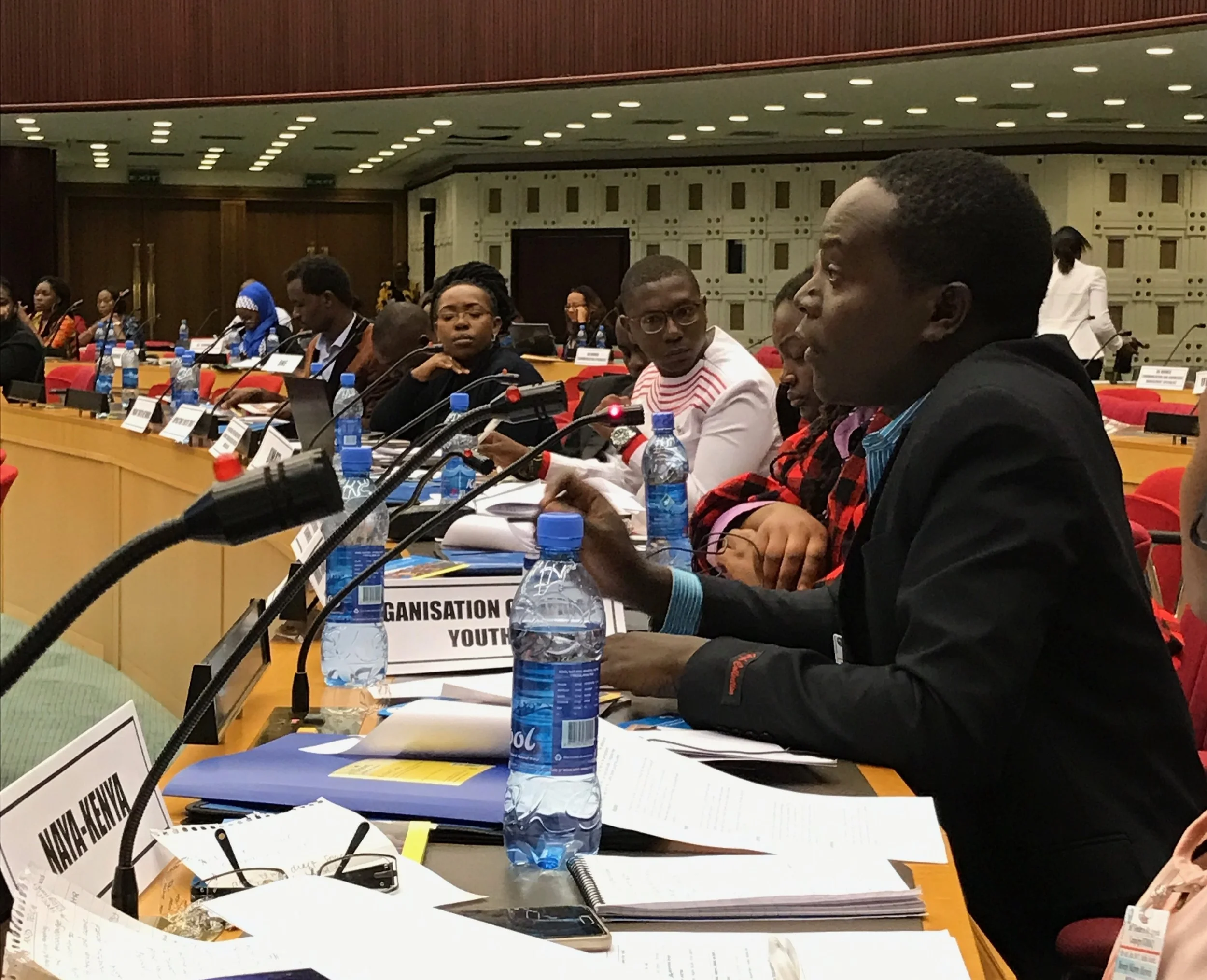
Therefore, this year’s AU Summit could bring about an honest conversation about the necessary youth investments to ensure our productivity and competitiveness in the job market. Our coalition of young Kenyan SRHR advocates were trained on the demographic dividend in Nairobi this month, and while at the Summit we identified certain recommendations and solutions to the challenges faced in the education and skills development pillar of the demographic dividend. We believe that in Kenya, innovation centers could address skills building AND SRHR needs.
We believe that a multi-sectorial solution could be Innovative Youth Intervention Centers, or Youth Friendly Centers, that are open 24 hours and include skills-building programs, resume development, youth friendly SRH services, sports, and entertainment spaces.
These centers should be in both urban and rural zones, well-equipped and have paid staff trained to deliver youth-friendly services’. Through such interventions, the youth will seek assistance freely and without fear of judgment or fear of someone ‘watching’ his/her moves. As Kenyan youth ourselves, we believe that if these centers have clear systems of accountability, and offer the information sought objectively and without stigmatization or judgments, they could make a huge impact in education, health, and preparing for the job market.
With our recommended intervention, we the Kenyan youth will feel, and say, that the Innovative Youth Intervention Center, is ours, ni yetu!

Youth Spaces at 28th African Union Summit
We demand this narrative to change, and young people, if given the chance, are the best ones to bring about this change. The Africa we want is a healthy, educated, productive, and youthful continent.
By Maureen Odour, Kenya
The African Union (AU) has set its annual theme for 2017 AU Summit as Harnessing the Demographic Dividend through Investments in Youth. This means that the AU kicks off the year of its deliberations and activities in its January meetings, and the rest of the year is shaped by this theme. It goes without saying that adolescents, young women, and young men are very important stakeholders in this effort to realize this development agenda throughout the continent.
The decision to implement programs and policies that yield a demographic dividend will determine the future of the continent. The demographic dividend is the economic benefit arising from a significant increase in the ratio of working-aged adults relative to young dependents. This is the agenda that the AU has selected to help bring about development in Africa, and there is no question as to whether the issues here are urgent; The question is how this will happen and how.
In Tanzania, we still experience very high rates of underemployment and unemployment among young people. Agriculture is highly underdeveloped and vulnerable to climate change. Teenage pregnancies are robbing girls of changes to remain in school and widen their opportunities and job prospects. Currently, the impact of investments in health can be summed up by high maternal mortality rates, which are not going down (and in many communities, are going up...).
For Tanzania to implement and achieve a demographic dividend, the government needs to prioritize a holistic investment in adolescents, young men, and young women. In order to EARN the demographic dividend, Tanzania can catalyze fertility decline by supporting the sexual and reproductive rights of young women and men; this means access to youth-friendly SRH services, comprehensive sexuality education, and access to contraction. In order to invest in the other four wheels of the demographic dividend -- which include health, education, governance/accountability, and economic reform, job creation -- Tanzania must start with SRHR.
We need real investment in family planning because it will mean that girls and young women can make decisions about their future and their fertility; that more girls and young women will stay in schools, and more women can get involved in economic activities. They will better able to bring up healthy and educated children who can contribute to the society.

photo credit: Lindsay Menard-Freeman / The Torchlight Collective
The Tanzanian Youth Coalition on SRHR is a coalition formed by young people in Tanzania focused in ensuring dignity, access, and quality access of sexual rights services to adolescent and young people in Tanzania. We are passionate about working with the government to ensure they are able to invest in adolescents and young people through improved access of health services, specifically SRHR.
As a participant of the 29th AU Summit Consultative meeting on gender mainstreaming in Africa Union, known as the Gender Is My Agenda Campaign (or GIMAC), I was very happy to see participation of young people in the room. We couldn’t keep quiet about the social injustices on health, employment, and education that continue to rob the young girls and women of Africa key opportunities to live a happy life. Young women were tired of singing the usual songs for help yet witness no changes.
We called upon governments to implement meaningful participation of young people in the policies framework. We asked questions like: “Why should we still call child marriage MARRIAGE?” We all concluded that this is not marriage; this is abuse, oppression, trafficking. At the end of this Summit and 2017 -- the year of harnessing the demographic dividend by investing in young people -- the African girl must not remain the poster for child marriage.
We demand this narrative to change, and young people, if given the chance, are the best ones to bring about this change. The Africa we want is a healthy, educated, productive, and youthful continent.
Cover photo credit: Birgitta Lund / Women Deliver
About Maureen
Maureen Oduor is young ASRH activist and alumnus of Women Deliver Young Leaders Program born and raised in Kenya, with over eight years’ experience working directly in grass root communities, advancing adolescent girls and women access to reproductive health rights and needs. Currently in Tanzania, she works with Service Health and Development for People Living Positively with HIV/AIDS Muheza branch (SHDEPHA+) as ASRH regional coordinator. Prior to joining SHDEPHA+, she worked on youth mobilization at African Peace Ambassadors Tanzania and Kisumu Medical education trust in Kenya, a leading grass roots reproductive health advocacy and provider in western part of Kenya. Maureen is also Co-founder of Tembea Youth Center for Sustainable Development a youth led organization in Western Kenya. She developed an mobile app allowing young people to access comprehensive and confidential sexual health information. Maureen was a critical facilitator in creating the Marie Stopes International Youth Films in Tanzania.