

4 things I learned from the 28th AU Pre-summit Sessions
One of the questions that kept coming up was, “Given our current fertility rate and the traditional belief in children as a blessing, how are we going to manage our population structure?” The answer lies in investing in family planning methods that are available for people to choose of their free will and free from coercion.
By Christine Sayo, Kenya
My name is Christine Sayo, I am a 29-year-old Kenyan and current President of Junior Chamber International (JCI). I am a member of the Kenya Adolescent and Youth Sexual Reproductive Health and Rights Network. At the beginning of the year, I was tasked to lead a session for JCI members in discussing the African Union (AU) summit theme “Harnessing the Demographic Dividends through Investing in Youth.” Later we met with fellow young people from across the country who had conducted similar sessions to share our findings. 5 of us were then selected to participate in the AU pre-Summit sessions that happened in Addis Ababa, Ethiopia from 19th January to 27th January. It has been a period of intense reflections, interrogation, and learning. Here are 4 of my key takeaways from the sessions:
- For Africa to be first, youth must come first. The AU has declared 2017 the year of the African Youth and dedicated the theme for the year to young people. I fell in love with this theme because it puts young people at the center of development and explores the benefits Africa can gain by investing in her most productive generation. During our pre-Summit sessions we looked at the four pillars of the demographic dividend -- health, education, governance, and economics -- and developed key asks for the Kenyan government to work on if they are to benefit from the youth who form 35% of her population. The future is bright, and Africa can come first if she puts her youth first.
- Managing our population structure should be done with human rights at the center. I led a team of young people from my organization in discussions on the demographic dividend and why it really mattered for Africa. One of the questions that kept coming up was, “Given our current fertility rate and the traditional belief in children as a blessing, how are we going to manage our population structure?” The answer lies in investing in family planning methods that are available for people to choose of their free will and free from coercion. As young advocates, we must ensure governments invest in methods of managing its population dynamics that put the health and rights of women and girls at the center of its policies if we are to truly harness the demographic dividend.
- Gender should be everyone’s agenda. One of the events I attended was the Gender is My Agenda Campaign (GIMAC) meeting. The two-day meeting was a great opportunity to listen to and participate in sessions on the place of the African young women in the demographic dividend. I loved the energy in the room. I loved the ideas that were being shared. I loved the questions that were being asked. What I loved most was the caliber and diversity of participants; everybody was present: young women, old women, young men, old men, Christians, muslims, rural women, women from urban areas. They were all speaking one language - Gender Is My Agenda. It gives me great hope to see people from all walks of life speaking out on gender issues in a continent where discussing gender matters has happened either behind closed doors or not at all for long been seen.
- Art can be a great advocacy tool. I attended a session bringing together artists from all over the world to showcase how they had used art to raise a voice on social issues. In one of the presentations, an artist from Uganda showcased how he had used photography to portray child marriage and got the attention of policymakers in the country. I learned that art is a tool that can help bring about change. I learned that art has the power to change society by inspiring creativity and artivism can help young advocates communicate with young people as well as governments.
About Christine
Christine is a Communications professional with a passion for youth empowerment. She has worked as a Communications and Advocacy Manager for different Non-Governmental organizations in Kenya, Uganda and Rwanda, including Digital Opportunity Trust, Volunteers for Africa and Development Research and Social Policy Analysis Center, and the African Women's Development and Communication Network (FEMNET), where she focused specifically on using both traditional and new media to effectively communicate organizational programs, activities and objectives to different audiences. Christine was selected by the African Women’s Development and Communications Network (FEMNET) as the 2015 fellow for Fredskorpset – a Norwegian government professional exchange program for young people across the world. As a Fredkorpset fellow, she was posted to work in Uganda as a communications expatriate helping amplify voices of women in small scale mining in Kitumbi and Hoima areas. She has also delivered key note speeches at different fora including the 2nd Africa Youth Conference on Democracy and Good Governance, Global Peace Leadership Conference, 4th International Volunteer Conference, KBC TV and Urban TV. Write-ups to these conferences and TV shows are available on her blog www.csayosays.blogspot.com. She holds Master of Arts Degree in Communications from the University of Nairobi and a Bachelor of Arts Degree in Linguistics, Media and Communications from Moi University, Eldoret.

From an African youth’s perspective: The Realities of the African Union Summit
Aren’t processes that affect millions of young people supposed to provide an environment that is conducive towards meaningful youth engagement and inclusion, especially in a year when the focus is on the youth? Aren’t processes supposed to be clear enough for a young man or woman on this continent to understand?
By Nyokabi Njuguna, Kenya
The journey to the A.U pre-summit meetings this January 2017 has been a passionate one for a young African woman representing a continent that is diverse, innovative, and full of young people. The responsibility to represent Kenya has been humbling because majorities of my fellow youth rarely have such an opportunity to be heard on this continental platform.
This year’s theme, ‘harnessing the demographic dividend through investments in youth’ was especially interesting to me because of how little our governments actually allocate to investments specifically for young people. This connects directly with the conversations surrounding young people and the demographic dividend. The demographic dividend refers to benefits that can arise when a country’s working age population has less dependents to care, and governments intentionally invest in education, health, job creation, and governance sectors.
The African Union roadmap, which was generated as a response to the assembly’s decision to have this year’s theme focus on demographic dividend and investment in youth is a multi stakeholder, consultative and transformative document, provides the path the countries on the African continent need to take to transform the youth bulge into a demographic dividend. However, once I went through the road map I realized that the key actions and deliverables were ideal, but majority of them did not have clear timelines which made me question the level of accountability of our member countries to the African Union.
On querying one of the high level delegates who had been part of the consultative meetings on the low level of accountability in the document, I was sadly shut down with the ‘you do not understand the processes surrounding the generation of the themes and documents’ answer. I found myself obsessing over these processes that are always used to shut down questions that arise when reading through documents such as the A.U roadmap. Processes are linked actions that convert inputs into outputs by utilizing available resources. Going by the spirit of the definition, aren’t processes supposed to be improved on through lessons learnt? If the processes of generating important documents such as the A.U roadmap are truly consultative, shouldn’t there have been one or two high level delegates who should have pointed out the importance of the S.M.A.R.T approach in ensuring that there are proper accountability mechanisms for the implementation of the key deliverables and goals? Aren’t processes that affect millions of young people supposed to provide an environment that is conducive towards meaningful youth engagement and inclusion especially in a year when the focus is on the youth? Aren’t processes supposed to be clear enough for a young man or woman on this continent to understand?
These questions I believe can start a discussion on the current processes that are used at the African Union to engage the whole continent, not just those who matter enough to be in the space and especially for young people such as myself who are somewhat involved in the set processes yet feel so isolated. I was especially offended when the youth consultation meeting deemed it fit to allocate just under 45 minutes for the young people such as myself to come up with 2 recommendations on four thematic areas for a document that we had just received that morning and had not analyzed thoroughly. If these are the processes that were set up by individuals who at the time felt that they will help achieve the continent’s goals, then it is time for these processes to be challenged, reinvented and rebuilt.
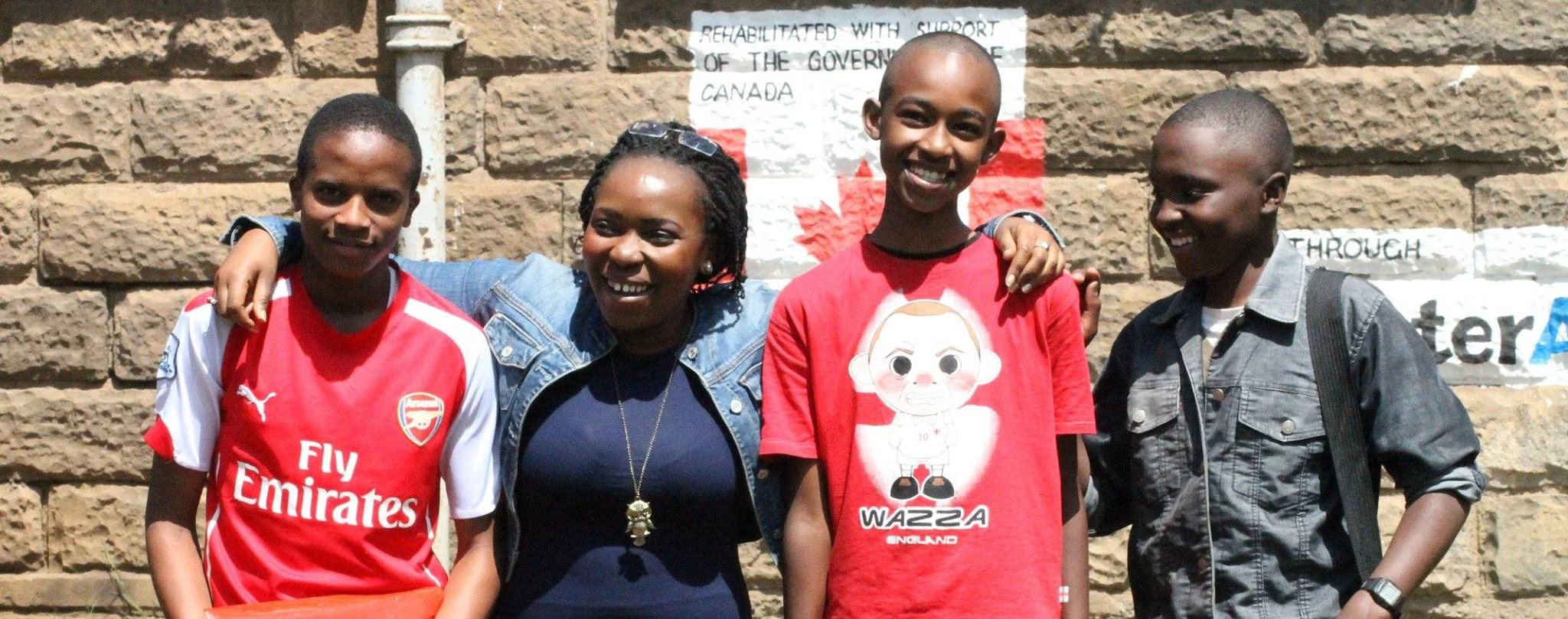
Future generations may question what my role as a youth representative was and one of the things that is on top of my list is to make sure that these processes are reinvented to ensure that future generations get better answers to questions that affect them from institutions such as the African Union. I am motivated to research and analyze what these processes are and how they have become barriers rather than enablers of real and meaningful youth engagement; I see this as a first step in making the necessary and long overdue changes. I believe that this will help in ensuring that young people do not feel that they are put in a position where they feel like they are being batted for public relations purposes but should feel that their voice and needs are truly considered in determining what the future of the African continent will be for them.
About Nyokabi
Nyokabi Njuguna is the founder and executive director of Impacting Youth Trust and is a youth development specialist who has actively been advocating for the involvement and recognition of the youth in the overall long term development of Kenya with her focus being on adolescents. She is also the Siemens Stiftung-Germany’s Kenya project consultant for the Experimento project that encourages the practical teaching of S.T.E.M in schools in Sub-Saharan Africa and Latin America. She has a Masters in international Co-operation and Development, a bachelor in international business administration with a concentration in management and an advanced diploma in human resource management. Additionally, she has a certificate in information technology and is a basic self-taught programmer who mentors university graduates on the correlation between technology and development. She has over six years’ experience working in development-orientated sectors such as the micro-finance, real estate and development of human capital areas where she has gained first-hand experience in the importance of youth empowerment and overall investment in the low income strata of the economy. She strongly believes in the holistic provision of S.R.H.R services to adolescents in Kenya. Nyokabi has been nominated as one of the young people making a difference in Nairobi by Awesome Foundation, has participated in the Al Jazeera Canvas hackathon in Doha, has participated in the New York University-Abu Dhabi hackathon for social good as a mentor, participated in the i*Hub summer data jam as a mentor, is a YALI East Africa Leadership centre fellow, DO School Africa Education challenge fellow and was a finalist in the 2016 Brightest Young Minds-Africa summit. She has volunteered as a mentor with the A*Sistem S.T.E.M young girls project in Nigeria and the Queen’s young leaders program.

Youth Spaces at 28th African Union Summit
We demand this narrative to change, and young people, if given the chance, are the best ones to bring about this change. The Africa we want is a healthy, educated, productive, and youthful continent.
By Maureen Odour, Kenya
The African Union (AU) has set its annual theme for 2017 AU Summit as Harnessing the Demographic Dividend through Investments in Youth. This means that the AU kicks off the year of its deliberations and activities in its January meetings, and the rest of the year is shaped by this theme. It goes without saying that adolescents, young women, and young men are very important stakeholders in this effort to realize this development agenda throughout the continent.
The decision to implement programs and policies that yield a demographic dividend will determine the future of the continent. The demographic dividend is the economic benefit arising from a significant increase in the ratio of working-aged adults relative to young dependents. This is the agenda that the AU has selected to help bring about development in Africa, and there is no question as to whether the issues here are urgent; The question is how this will happen and how.
In Tanzania, we still experience very high rates of underemployment and unemployment among young people. Agriculture is highly underdeveloped and vulnerable to climate change. Teenage pregnancies are robbing girls of changes to remain in school and widen their opportunities and job prospects. Currently, the impact of investments in health can be summed up by high maternal mortality rates, which are not going down (and in many communities, are going up...).
For Tanzania to implement and achieve a demographic dividend, the government needs to prioritize a holistic investment in adolescents, young men, and young women. In order to EARN the demographic dividend, Tanzania can catalyze fertility decline by supporting the sexual and reproductive rights of young women and men; this means access to youth-friendly SRH services, comprehensive sexuality education, and access to contraction. In order to invest in the other four wheels of the demographic dividend -- which include health, education, governance/accountability, and economic reform, job creation -- Tanzania must start with SRHR.
We need real investment in family planning because it will mean that girls and young women can make decisions about their future and their fertility; that more girls and young women will stay in schools, and more women can get involved in economic activities. They will better able to bring up healthy and educated children who can contribute to the society.

photo credit: Lindsay Menard-Freeman / The Torchlight Collective
The Tanzanian Youth Coalition on SRHR is a coalition formed by young people in Tanzania focused in ensuring dignity, access, and quality access of sexual rights services to adolescent and young people in Tanzania. We are passionate about working with the government to ensure they are able to invest in adolescents and young people through improved access of health services, specifically SRHR.
As a participant of the 29th AU Summit Consultative meeting on gender mainstreaming in Africa Union, known as the Gender Is My Agenda Campaign (or GIMAC), I was very happy to see participation of young people in the room. We couldn’t keep quiet about the social injustices on health, employment, and education that continue to rob the young girls and women of Africa key opportunities to live a happy life. Young women were tired of singing the usual songs for help yet witness no changes.
We called upon governments to implement meaningful participation of young people in the policies framework. We asked questions like: “Why should we still call child marriage MARRIAGE?” We all concluded that this is not marriage; this is abuse, oppression, trafficking. At the end of this Summit and 2017 -- the year of harnessing the demographic dividend by investing in young people -- the African girl must not remain the poster for child marriage.
We demand this narrative to change, and young people, if given the chance, are the best ones to bring about this change. The Africa we want is a healthy, educated, productive, and youthful continent.
Cover photo credit: Birgitta Lund / Women Deliver
About Maureen
Maureen Oduor is young ASRH activist and alumnus of Women Deliver Young Leaders Program born and raised in Kenya, with over eight years’ experience working directly in grass root communities, advancing adolescent girls and women access to reproductive health rights and needs. Currently in Tanzania, she works with Service Health and Development for People Living Positively with HIV/AIDS Muheza branch (SHDEPHA+) as ASRH regional coordinator. Prior to joining SHDEPHA+, she worked on youth mobilization at African Peace Ambassadors Tanzania and Kisumu Medical education trust in Kenya, a leading grass roots reproductive health advocacy and provider in western part of Kenya. Maureen is also Co-founder of Tembea Youth Center for Sustainable Development a youth led organization in Western Kenya. She developed an mobile app allowing young people to access comprehensive and confidential sexual health information. Maureen was a critical facilitator in creating the Marie Stopes International Youth Films in Tanzania.